Blog
Five late summer flowering perennials


Five late summer flowering perennials
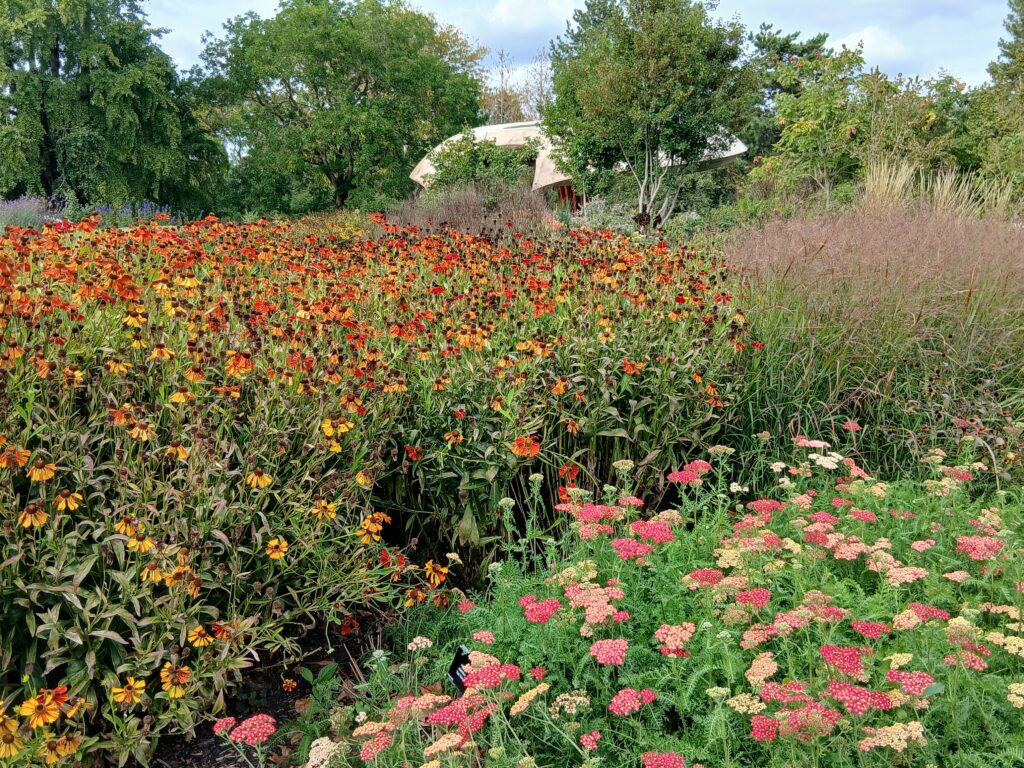
Sweeping borders filled with swathes of late summer classics heleniums, rudbeckias and those workhorses of shady areas, Japanese anemones, are a familiar sight to those of us who have been lucky enough to visit public gardens recently. But there are other herbaceous perennials that look good on their own or in small numbers and are perhaps better suited to the spaces that most of us cultivate. Planting them now helps stave off the slightly gloomy feeling that shortening days can bring, brightening up the garden as the season changes.
The five perennials described below flower from late summer to autumn and are generally hardy to between -5 and -10 degrees C, although some are more robust. They should survive winter through most of the UK, however, it’s almost impossible to predict what the dark season has in store. So it’s wise to be prepared and protect more borderline hardy plants with cloches, horticultural fleece, or a thick mulch. Alternatively grow smaller specimens in pots and move to a frost-free, sheltered place over winter. Plants in pots can also be protected with fleece and grouped together next to house walls to fight off the cold.
Hesperantha coccinea
Starry, six-petalled flowers in red, pink or white with long stamens are held on wiry, dainty stems, sometimes until the first frosts. Members of the iris family and known until relatively recently as schizostylis, hesperantha have slim, semi-evergreen, strappy leaves and resemble small gladioli. Producing multiple flowers on each stem in the right conditions, they also make excellent cut flowers.
With a native range from South Africa, where they grow on mountainsides near streams and in damp, grassed areas, to Sudan, they do best in full sun but will tolerate a little shade. Generally reaching around 60cm in height, they’re also popular with bees and other pollinators. Grow in moist, well-drained soil.
The species form, H. coccinea, has coral red flowers.
H. coccinea ‘Wilfred H. Bryant’ has palest pink flowers opening from deeper pink buds. Said to be a resilient plant, good for coastal gardens.
The white flowers of H. coccinea ‘Ice Maiden’ have a sunny yellow eye and anthers.
Irish cultivar H. coccinea ‘Mrs Hegarty’ has pink flowers with darker pink markings.
Hedychiums
Often spicily scented, stately ginger lilies have large, exotic-looking spires of spidery flowers. H. coccineum ‘Tara’, with apricot blooms and scarlet stamens, is the hardiest, coping with temperatures of between -5 and -10 degrees C. At up to 2m tall it’s a high impact plant, with strappy leaves climbing the strong stems and flowers popping out at the top. There are white and yellow forms too, but these are less often found and are more tender than ‘Tara’. White H. coronarium is even taller at 3m, while yellow H. gardnerianum is pale yellow.
Hedychiums should do well in sun or part shade and prefer rich soil. They can be lifted in winter and stored dry or left in situ and mulched. Native to Asia, including mountainous areas in Nepal and the Himalayas, it seems strange that at least some species grown in the UK are not fully hardy. This is, however, because they grow in microclimates with warm, moist air and plenty of leaf litter which adds to soil fertility as well as forming a thick, protective mulch in winter.
Agastache
Bee-magnet agastache have bottlebrush spikes of multiple, tiny but nectar-laden flowers. Generally blue and purple, there are also cultivars in pink, white and orange. Their aromatic, gently serrated leaves look, and often smell, rather like mint. Not all varieties, including the species form A. foeniculum, are frost hardy, but they are fairly drought-tolerant. Often relatively short-lived, they compensate for this slight shortcoming by being efficient self-seeders. Varying in height from about 40-60cm, they thrive in sun and with good drainage. A natural fit for Mediterranean plantings, they also work well as cut flowers and the seedheads are a valuable source of food for birds in autumn.
Taller at 1m, as well as hardier than most, A. ‘Blue Fortune’ has violet blue flowers and should cope with temperatures of between -10 and -15 degrees C once established although it may need winter protection until then. A. ‘Tango’ (to 50cm) is orange, while white A. foeniculum ‘Alabaster’ is taller at about 90cm. A. ‘Beelicious Pink’ has pale rose pink flowers with a dark base. https://www.gardenersworld.com/how-to/grow-plants/how-to-grow-agastache/
Ceratostigma plumbaginoides
Embrace the autumn blues with this woody herbaceous perennial. Often underrated, it deserves a front row seat, its small but bright sapphire blue flowers highlighted by soft green leaves which turn fiery crimson and plum before falling in late autumn. Hardy to -10 to -15 degrees C, it prefers sun but will tolerate part or dappled shade and becomes fairly drought tolerant once established. Growing to approximately 40 x 40cm, its bushy and mat-forming characteristics make it useful ground cover for the front of the border. It’s very similar to its larger relative C. willmottianum which grows to 1 x 1m and is also hardy.
Kniphofias
Very much at home in hot-themed borders, with flowers in red, yellow and all shades in between, the blooms of grassy-leaved red hot pokers are composed of numerous small, tubular, nectar-rich flowers. These open gradually upwards from lower down the stems. Green, white and salmon pink forms are available too and there are often colour gradations on the flower heads as the blooms mature. Most die back in winter but a few are evergreen. Preferring fertile but well drained soil, they do best in sun but some will cope with part shade too. Many are hardy to -10 to -15 degrees C (an RHS rating of H5) although some are a little more tender.
In their native southern Africa, brightly coloured sunbirds and their less flamboyant cousins, sunbirds, use their long, thin tongues to sip kniphofias’ nectar, often pollinating the flowers at the same time. Here, insect pollinators love them. https://thepost.org.za/nectar-in-the-garden/
Plants vary in height from 50cm to 2m. Most don’t need winter protection but they do dislike being wet, so cut back and cover the crown with horticultural fleece if this is a concern. All the plants listed below have a hardiness rating of at least H5.
K. rooperi is evergreen with deep orange-red flowerheads more oval in shape than some that mature to pale yellow. 1.2m tall.
K. ‘Moonstone’ will cope with part shade and has pale apricot flowers fading to cream. To 1.2m.
K. ‘Green Jade’ has cool green flowers which fade to cream and white and a hardiness rating of -15 to -20 degrees C. 1.2m.
Relatively small K. ‘Little Maid’ grows to 60cm tall with pale lemon flowers fading to white.
Also smaller than average at 90cm tall, K. ‘Timothy’ has gorgeous salmon pink flowers. https://www.gardenersworld.com/how-to/grow-plants/how-to-grow-red-hot-pokers/
We may not have all the plants listed in our stores but staff will be happy to suggest alternatives.
You’ll find other ideas here:
Gardeners World – Plants for late Summer colour
RHS – 10 award winning late flowering perennials
As with most flowers, deadheading regularly down the base of the flower stems should encourage blooms to keep coming well into autumn. Leave late agastache flower heads for the birds though.
This summer has been so long that it feels as though it should be completely over, and indeed some trees and plants seem to have the same idea, with leaves already on the turn. Autumn, it seems, is arriving early this year. But there are still blooms to be had and there’s no reason for beds, borders and pots to lack colour and cheer just yet.