Blog
Green roofs


It’s been quite a summer, and one during which I’ve offered up profound thanks that I moved out of London a few years ago to the relatively cooler climes of East Sussex. City temperatures are higher than those in non-urban areas because the surrounding buildings act like enormous storage heaters, pumping up heat levels. And flooding, too, can be worse after heavy rains, partly because there are more hard surfaces which don’t absorb water. Increasing planted areas, alongside other measures, helps mitigate both of these problems. So as our climate changes and summers get hotter and winters wetter, it’s sensible to think of new ways to increase green surface areas. Planting at ground level and growing climbers up walls and fences makes an important contribution, but how about using roof areas for extra coverage too?
Green roofs can be tiny, from the top of a bird box, guinea pig hutch or hedgehog house right up to large commercial roof gardens on high rise buildings. Most are somewhere in between, on bike stores, garden sheds and shoffices and over porches, garages and extensions.
Why have one?
Green roofs:
· Slow water run off: a little like a hedge filtering wind, the plants absorb and slow the flow of rainwater, helping to reduce the possibility of flooding.
· Help lower urban temperatures: they can be 10-15 degrees C lower than roofs with no planting.
· Add insulation, absorbing heat in summer and helping with heat retention in winter, thus potentially reducing energy use. A Canadian study showed a 26% reduction in heat loss over non-green roofs, although it seems likely that this will vary with the type of roof installed.
· Can absorb significant amounts of carbon. According to one supplier, an average-sized green roof absorbs 3.1 kg of carbon dioxide annually. If every house in the UK had one, together they’d soak up a whopping 83,530,000kg a year, said to be equal to the amount produced by 28,986 flights to Spain. As songstress and TV presenter Cilla Black might have put it, that’s a lorra lorra CO2.
· Add to the sum total of habitats for wildlife: depending on the type and planting, they can provide both shelter and food for insects and birds. And collectively they help to build the network of green spaces needed to support wildlife, particularly valuable in areas where these are at a premium.
· Can contribute to better air quality because of some plants’ ability to trap pollutants.
· Can help to absorb noise.
They’re also considerably more pleasing to the eye than many conventional roofs.
Green roof basics
Green roofs can be:
Extensive – consisting of low-maintenance, low-growing plants such as sedums, available on ready-planted mats. Sedums are evergreen too, so should continue to look good through winter.
Semi-extensive – using planting cells filled with compost and planted with relatively light plants like grasses, wildflowers and perennials which are low-growing. They’re fairly low maintenance once established although they need input for the first year to 18 months. They can include some evergreen grasses but at least some of the plants are likely to be deciduous.
Intensive – roof gardens with containers and sometimes sizeable plants like shrubs, climbers, herbaceous perennials and even small trees.
Both extensive and semi-extensive roofs can be installed on flat or gently sloping roofs, provided their structure is able to take the weight.
Extensive green roofs can be installed as a home project but certain regulations should be checked first (see below). Alternatively, specialist green roof contractors are a good option. Larger and complicated intensive green roofs are a different beast altogether, they’re heavier and may have different drainage requirements, so it’s wise to consult a specialist architect or surveyor.
The layers
All need some form of drainage. For simple extensive green roofs on a small animal shelter or bike store, a sloping roof may be sufficient. Usually, however, extensive and semi-extensive plantings need:
· Waterproofing
· A root barrier
· A drainage layer
· A growing medium
· Plants
This may sound complicated, but don’t be deterred! Kits are available which make installation simple.
An additional filter layer will help stop the growing medium or substrate from blocking drains, while a water retentive layer will further slow rainwater runoff. Depending on the type of planting, a top dressing of gravel may also be helpful to help prevent weeds growing.
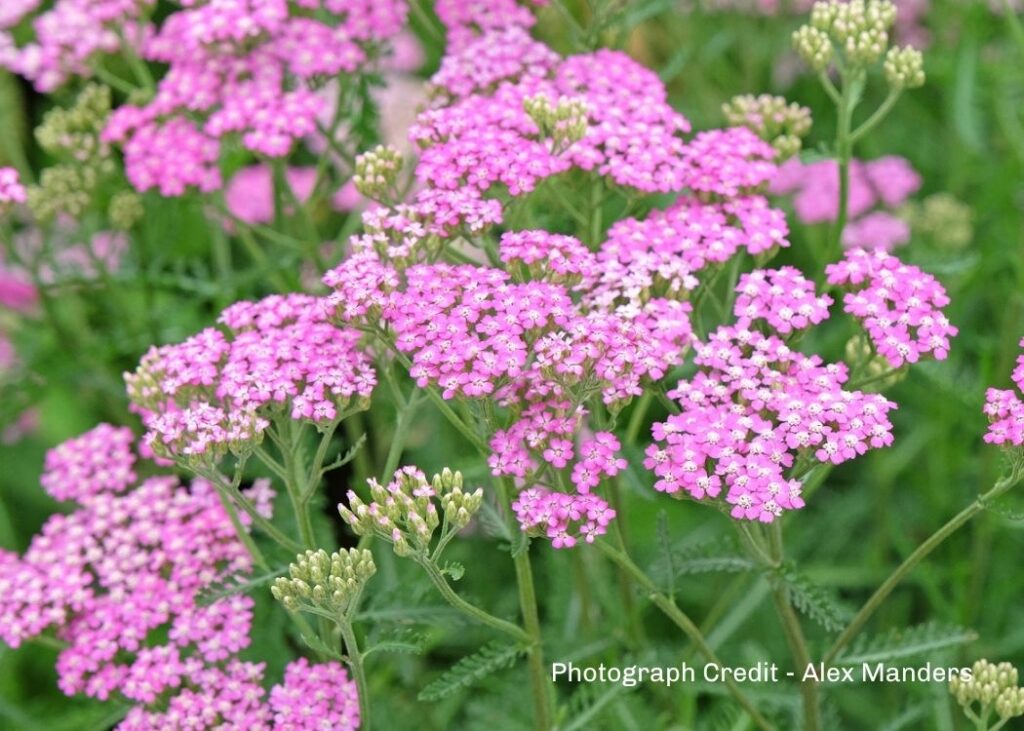
In general, a lightweight growing medium with a relatively small proportion of organic matter (which is heavy and holds water) and a high proportion of inorganic matter like perlite is preferable. Because of this, plants that thrive in poor soils are the best option – this is why grasses, wildflowers and sedums are a good choice. Other suitable plants include achillea and dianthus.
Check before you build
Planning permission:
Generally, planning permission isn’t necessary for green roofs on sheds and existing flat roofs. But there are exceptions, including buildings in conservation areas, those that are listed, and flats and maisonettes. Your local authority can advise.
Building regulations:
Although planning permission may not be needed, compliance with building regulations is required for house and sometimes for garage roofs. This simply means checking that the roof will be able bear the weight of the plants, their growing medium and structural under-layers. So talk to a structural engineer or surveyor first.
Building regulations don’t usually apply to bike stores or small garden sheds, however, as long as they don’t contain sleeping accommodation.
If your green roof is a DIY project, particularly on a flat garage roof, it’s advisable to check construction details on a reputable website such as:
https://www.rhs.org.uk/garden-design/build-green-roof
https://www.rhs.org.uk/garden-design/roof-gardens-balconies
https://www.rhs.org.uk/garden-features/green-roofs
Roof gardens to visit
There are a number of places with roof gardens in London. The Garden at 120 (Fen Court) in the City, Culpepper Roof Garden and Cardinal Place Roof Garden are all open air, as is Queen Elizabeth Hall Roof Garden on the South Bank (currently closed but set to re-open in spring next year). The Sky Garden and Crossrail Place Roof Garden are both enclosed under glass. Most are attached to bars and restaurants and are free, although presumably it’s appreciated if eating and/or drinking form part of your visit.
Heat reduction, flood mitigation, carbon capture and wildlife support – all are benefits of the simple marvel that is green roofs. And all, whatever their size, make a difference, adding to the vital greening of urban and rural spaces.
Further reading:
https://thegreenroofer.co.uk/planning-permission-green-roof
https://www.labc.co.uk/news/does-my-new-outbuilding-need-building-regulations-approval