Blog
Managing gardens for drought and flooding


This July was the driest for 190 years – as far back as records go – and August isn’t looking promising either. Yet last winter several areas of the UK experienced significant, repeated downpours and flooding. As established climate patterns break down, the only thing that seems certain is that we and our gardens will experience more extreme and more unpredictable weather. This has resulted in considerable head-scratching about how to manage our gardens.
Reacting to what we see around us is instinctive. So with gardens looking brown rather than green our response might be to turn to drought-resistant planting. But autumn and winter may bring heavy rains which Mediterranean plants will struggle with. So much the best approach is to exert a degree of control over the environment on your doorstep. And this is a matter of planning and management, of a more strategic approach to gardening than we may have taken until now.
There are three main issues to consider: soil management, water management and choice of plants.
Soil management
A healthy growing medium has always been the foundation for a healthy garden, but it’s even more important when dealing with extremes of weather. Healthy soil has a crumbly structure which allows it to hold air and enough, but not too much, moisture. It’s rich in nutrients and also rich in life; soil invertebrates, microbes and fungi recycle dead flora and fauna, adding fertility and improving the structure.
Add organic matter: regular doses of bulky organic matter go a long way towards improving soil structure and nutrient levels as well as supporting and increasing invertebrates, microbes and fungi. Leafmould, homemade compost, bark or wood chippings, well-rotted manure and soil conditioner or improver will all do nicely.
When dealing with extremes of weather, mulching (placing a layer on the soil surface) has the advantage over digging in – it helps to prevent the evaporation of moisture from soil as well as acting as an insulating layer in winter. Coarser matter is best left on the soil surface to gradually rot down and be worked in by invertebrates anyway, rather than being dug in. To lock in moisture it’s best to mulch after watering or rain. A layer of mulch should be at least 5cm thick to be effective.
Water management
The effects of drought on gardens are currently self-evident, while prolonged heavy rain can not only waterlog plants and lawns but cause erosion of soil too.
Install a rain butt: Storing water makes it more available during dry periods, avoids waste and can help reduce flooding from overloaded drains in downpours. Rainwater, having no added chemicals, is better for plants too. Using it also reduces metered water bills!
Rain butts come in a variety of shapes and sizes so it should be possible to find one to suit even a small garden. Diverters can be fitted which mean that once butts are full, water is directed back to downpipes.
Build a rain garden or swale: A rain garden is a dip or shallow area that collects runoff during wet periods. It’s usually fed by a channel or rill taking overflow from a drainpipe or diverter. Not just a useful temporary storage space, the idea is to fill it with plants that are able to cope with waterlogging for a couple of days, creating a practical yet enticing garden feature. Some planning and various checks will ensure that the chosen area is suitable. https://www.rhs.org.uk/garden-features/rain-gardens
A swale is a shallow channel which collects and gradually drains excess water, guiding it through planting in a way that slowly allows it to soak into the soil instead of gushing madly past. Similar to a ditch in some ways, it’s much shallower and often curved or wavy and planted with wildflowers, grasses and herbaceous perennials that enjoy these conditions. https://www.rhs.org.uk/gardening-for-the-environment/swales
Prevent soil erosion: Areas of bare soil are prone to gradually being washed away during heavy downpours. Mulching with coarse material lessens the impact as does the use of ground cover plants; foliage stops rain pounding directly onto the ground while roots bind the soil together.
Plant choices
‘Right plant, right place’ has always been a good rule to garden by and it’s a vital starting point for dealing with extremes of weather. Beyond this there are some remarkable plants that are able to cope with both very wet and very dry soils. Do be aware though that these are remarkable but not miracle plants. They’ll tolerate extremes but may not thrive or do as well as they would in ideal environment.
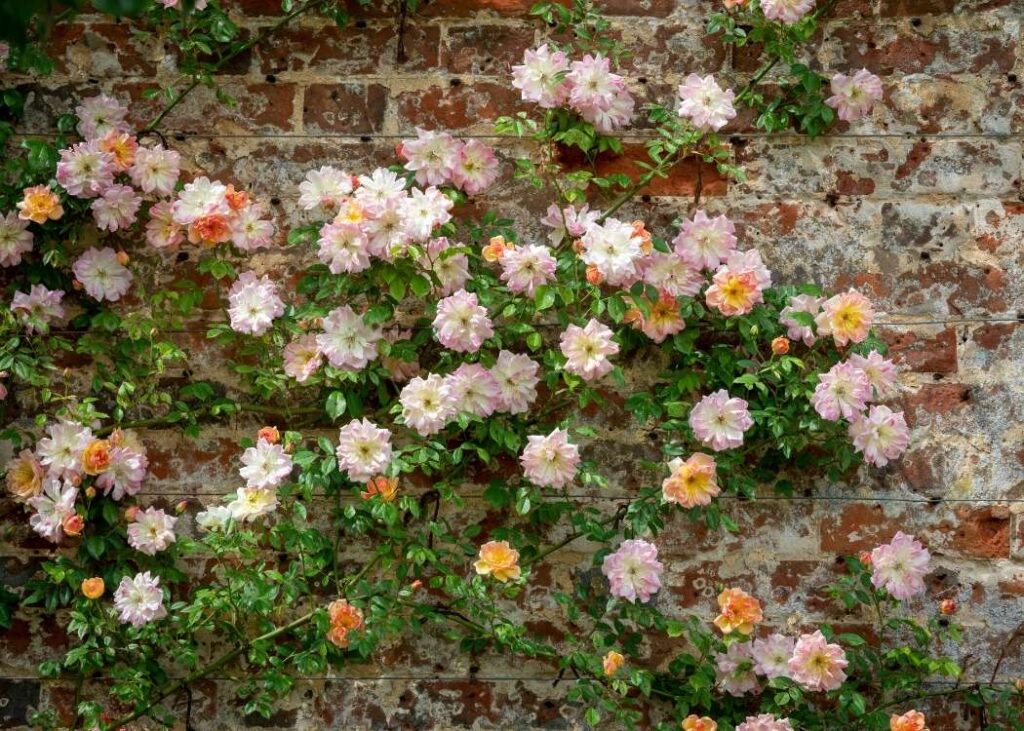
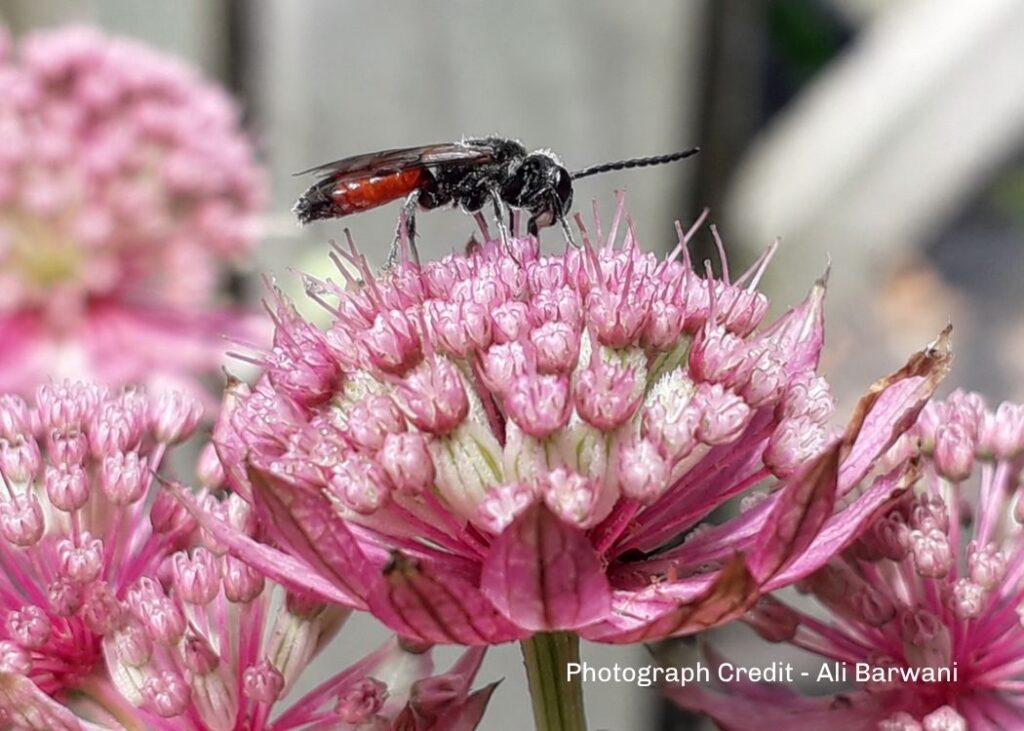
RHS suggestions include flowering shrubs such as white-flowered osmanthus, red-berried cotoneasters (both generally evergreen) and Rosa rugosa. Astrantia, some geraniums, persicaria and phlomis as well as euphorbias should all cope too. Grasses like calamagrostis and various evergreen carex are worth considering, and some spring bulbs, like scillas and snowdrops, despite their delicate appearance, are said to be able to withstand drought and very wet conditions as well.
https://www.rhs.org.uk/plants/for-places/wet-dry-soils
Tips:
Plants need to establish to cope well. Most are unlikely to be drought-tolerant for a while after planting and will need watering for their first couple of growing seasons. Planting in autumn helps roots to grow in still-warm soil and bed in properly before winter. There’s a chance of rain too.
Include plants that self-seed. They’re usually consummate survivors, good at finding a suitable niche. Verbena bonariensis, aquilegia, Welsh poppies and centranthus (valerian) are all worth a try.
Species or wilder forms of herbaceous perennials are often tougher and more adaptable than highly-bred cultivars.
Plants will do better in the ground than in pots. They’re less prone to waterlogging (particularly if saucers have been forgetfully left in place) and during dry periods moisture is able to seep in from a larger area and roots to spread further to seek it out.
Climate breakdown brings not just the possibility of flooding and drought but of strong winds and freezing temperatures too. And while UK weather has always tended towards the unpredictable, uncertainty about what the weather is going to throw at us from month to month is now in a different league altogether. There’s no magic bullet to deal with this, but we can build resilience into our gardens. Feeding the soil and the creatures that live in it, managing water well and including plants that are tough enough to deal with both too much and too little water will all contribute and help to keep our personal oases both green and pleasant.
The RHS has plenty more ideas and advice.
https://www.rhs.org.uk/garden-design/sustainable-planting-combinations/soils/wet-and-dry https://www.rhs.org.uk/garden-inspiration/get-gardening/climate-change-garden