Blog
A Journey Through Borde Hill Garden


Set in 383 acres of parkland in the green and rolling High Weald of Sussex, Borde Hill is a plant lovers’ paradise, home to an eclectic collection of plants from around the world. The house and garden have a history stretching back to the Elizabethan era and count Stephen Borde, grandson of Henry VIII’s herbalist, among previous owners. However, it was Stephenson Clarke, acquiring them in the 19th century, who had the grand vision for the garden that has led to what it is today, adding to the estate land and gathering plants from around the globe, collecting them himself and sponsoring hunting expeditions by others. Today’s garden has thirteen ‘rooms’ and one of largest privately owned collections of Champion Trees, the largest of their species at a particular regional level.
Avoid the temptation to browse as you enter through the shop and walk straight out to the Old Rhododendron Garden. The rhododendrons, early introductions to the garden by renowned plant hunters Joseph Hooker and Robert Dalton, have finished flowering in late June but the textural and patterned foliage of rodgersia, Brunnera ‘Jack Frost’ and other shade-tolerant understory plants still draws the eye. It’s a good place to relax on the grass, look at the garden map, and plan your visit.
Just ahead of you is the first star feature, Jay Robin’s Rose Garden, but take a few minutes to veer left out onto the huge, sunny lawn, sprinkled at this time of year with bright yellow bird’s foot trefoil. Stand under one of the huge, mature oaks, listen to the cooling breeze sighing through the branches and admire the view over the undulating parkland. Don’t miss the Mid Summer Border, where the fiery tangerine blooms of Rosa ‘Super Trouper’ stand out amongst other, softer purples, pinks and yellows.
An orchard in Elizabethan times and subsequently an area of herbaceous borders, the Rose Garden was designed in 1996. Although the layout is formal, the planting mostly, and wisely, avoids the traditional ‘roses surrounded by bare earth’ look. Instead, lavenders spill over onto old brick paths and the roses mingle happily with irises, limey euphorbias and spires of electric blue delphiniums. Lilies, salvias and stately veronicastrum display their wares and a woven steel maiden offering up flowers as if in worship to the sun forms a gently trickling fountain. Off to one side is another, grassy garden room, its borders planted with day lilies, geraniums, wafting thalictrum and eryngiums. Sit under the tree on the comfortable C-shaped bench, its gently waved seat offering a supremely comfortable resting place, and contemplate your glorious surroundings. On the opposite side of the garden the abundant pink blooms of Rosa ‘Blush Rambler’ drape gracefully off swathes of rope.
Don’t miss the tumbledown Victorian Greenhouses behind ‘Blush Rambler’. Rather than being restored at vast expense, they’ve been imaginatively transformed into garden features. Figs ripen in one, where the rusted skeletons of greenhouse machinery reflect the bronze tones of canna lily leaves below. Another has collapsed almost entirely but the space is now a small Mediterranean haven with Trachycarpus fortunei providing welcome shade and planted terracotta pots dotted around.
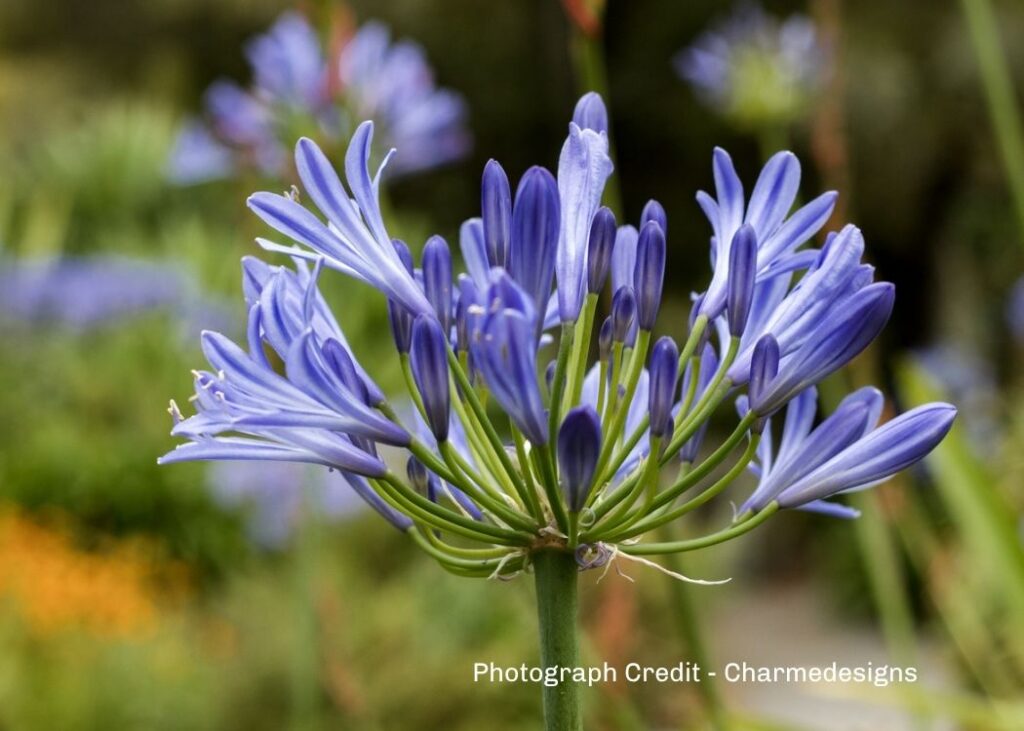
Stop to buy an iced coffee or dragon fruit and mango smoothie at the Summerhouse Café and wander with it back across the bird’s foot trefoil lawn, park yourself on a bench, take in the view anew and listen to the contended buzzing of bumblebees foraging in the flowers. Then stroll across the grass and lose yourself in the maze of tree-lined paths beyond, past the towering eucalyptus and pines until you suddenly, magically find yourself emerging into the Italian Garden. Pink waterlilies float serenely on the surface of a formal oblong pond fed by a rill, which tumbles down from a small pool hung with daisy-like Erigeron karvinskianus and blue campanula. Rising above it is another sun-worshipping maiden, her arms wide open, embracing the sky. Agapanthus and canna lilies in large terracotta pots and coned yews line the edges of the pond. Dragonflies dart over the water searching for insect prey and the central water feature, although steely and modern, has organic curves and cleverly fits into this very traditional setting. Best of all is the huge knarly-barked Discaria discolor, its pendulous branches bowing down towards the water, a Champion Tree.
Next, follow the steps down to the aptly named Paradise Walk, a riot of colour, also with a distinctly Mediterranean feel, redesigned by Chris Beardshaw four years ago. A few paces along, the Round Dell appears, its cool overhead canopy formed by the large leaves of sub-tropical plants. Pass under the giant hands of tetrapanax leaves and immerse yourself in a jungle of figs, many-fingered schefflera, scarlet-flowered Lobelia tupa and oversized hostas with spikes of lilac flowers. Look in awe upon the vast, canoe-paddle leaves of Musa basjoo (Japanese banana) and the gargantuan gunnera, and follow the sound of gushing water to a swamp cypress, its knobbly roots protruding from the earth next to a pond fed by a waterspout. This is a soap opera of a garden – with planting that doesn’t hold back. It has the feel of a rainforest, only partly tamed by white paths and low concrete retaining walls over which the plants spill, with an extraordinary profusion of foliage of contrasting shapes and textures vying for attention and jostling for position.
Leaving the drama behind, pass through the weathered wrought iron gates to the calm of the Old Potting Sheds next door. Used in their former lives to propagate plants for the gardens, these fell into disrepair and have been left to find their own way into old age in a similar manner to the Victorian Greenhouses. Now the ruins provide sheltered places for tender and unusual plants and the softly crumbling brickwork forms an attractive backdrop for spidery, white-flowered gillenia, the red, bottlebrush blooms of callistemon, and pink, white and green leaved climber Actinidia kolomikta.
There’s a great deal more to see at Borde Hill. Open from mid-February until Christmas, there are camellias, azaleas and historic magnolias in spring, roses and herbaceous perennials in summer, glorious autumn leaf colour and mature woodland to explore. With benches thoughtfully scattered throughout the formal garden, there are plenty of opportunities to sit, look and listen before moving on the next stop on your journey.
https://www.treesandshrubsonline.org/articles/discaria/discaria-chacaye/