Blog
The Christmas Amaryllis

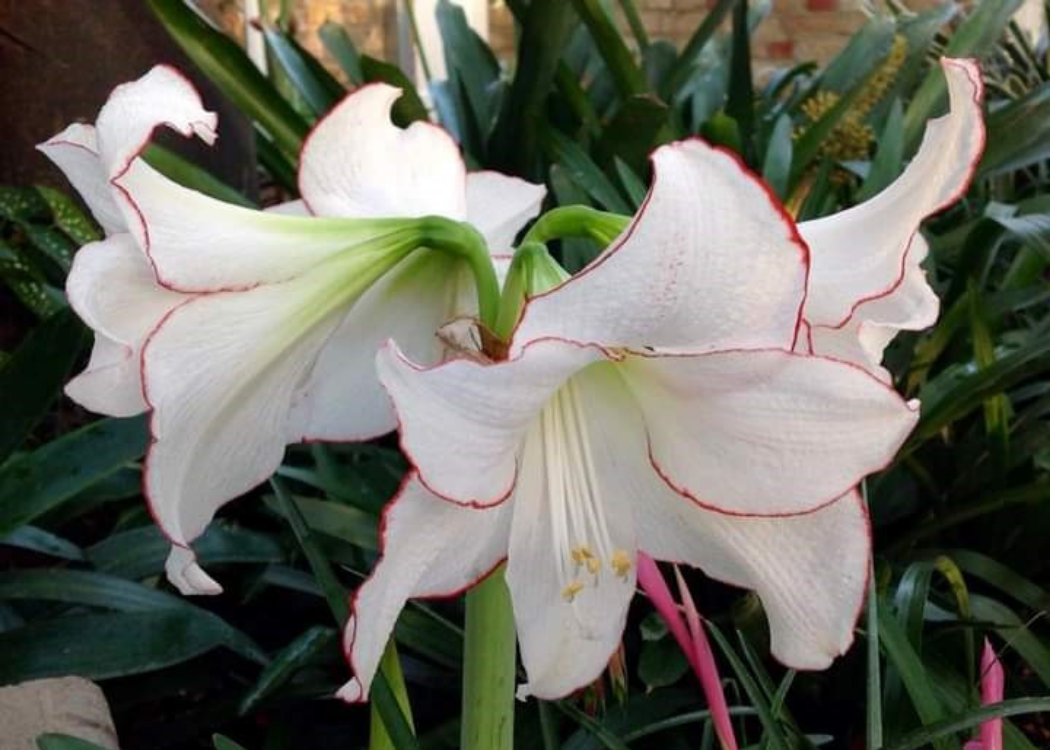
The Christmas Amaryllis.
During these dark months of winter, our homes tend to lack fresh-life and colour. Few houseplants produce blossoms at this time. However, there is one flowering bulb guaranteed to cheer you up and deliver a stunning display on your windowsill or table at this time of the year – the flamboyant Amaryllis! They are as festive as any decoration and should be part of every Christmas.
Amaryllis or Hippeastrum?
Q: When is an Amaryllis not an Amaryllis?
A: When it is a Hippeastrum!
This isn’t just a bad joke. The naming of these bulbous plants is a bit confusing. However, it doesn’t matter if you prefer to call them Amaryllis or Hippeastrum – as the Bard wrote in Romeo and Juliet:
‘What’s in a name? That which we call a rose
By any other name would smell as sweet.’
The correct botanical name for these tropical-looking blossoms is Hippeastrum, although they have long been known as Amaryllis.
In fact, the association of the name Amaryllis is so strong that most bulb growers market their Hippeastrum bulbs as ‘Amaryllis’!
The true Amaryllis is a genus of similar-looking bulbous plants, but they are not the same as the large flowers we enjoy in our homes at Christmas. The true Amaryllis is a South African bulb with only one species in the genus (Amaryllis belladonna).
The Story of the Hippeastrum.
These lovely flowering bulbs hail from South and Central America. In the wild, Hippeastrum species occupy a range of habitats from the warm and moist tropical rainforests to the heights of the Andes Mountains. The rainforest species have broader leaves and larger flowers compared to the mountain types.
Hippeastrum were first introduced to Europe by the Dutch in the Eighteenth century. It was not long before various cultivars and hybrids began to be developed. The first Hippeastrum hybrid to be recognised was bred in 1799 by a British watchmaker called Arthur Johnson. The Dutch pioneered the production of hybrid potted Hippeastrums for indoor display.
Today, there are around 90 species recognised and more than 600 cultivars and hybrids of Hippeastrums. The flowers can be large and blowsy, or thin and delicate. They come in reds and scarlets, deep purple, pinks, rose and green, green and creams and whites. The velvet textured petals can be single or double, exotic, striped or picotee.
Buying Your Hippeastrum.
Hippeastrum cultivar bulbs are large and packed with life and energy. They make ideal houseplants because they are easy to grow, requiring little more than a pot and some moist potting compost to start growing. The bulbs do best near to a window, or in a position with some natural light.
At Capital Gardens you will find a range of gift-boxed bulbs. These indoor growing kits include a range of ‘Amaryllis’ varieties to choose from. The kits includes a flowering size bulb, pot and compost all presented in a decorative box. The standard range costs £8.99, and the Premium varieties cost £10.99. Our boxed ‘Amaryllis’ kits make a superb living Christmas gift.
The large bulbs we supply will produce two flower stems, one following the other. Every stem will carry two, three or four large blooms.
Planting an Amaryllis bulb with a child or grandchild is fantastic way to introduce a loved one to the magic and beauty of nature.
How To Grow Your Boxed Bulb.
All our boxed ‘Amaryllis’ kits come with complete instructions. Simply plant the big bulb in the pot using the compost provided. I like to plant the bulbs so that the neck of the bulb can be seen above the soil surface.
Put the potted bulb in a warm location. Water very lightly until you see the first signs of growth. Once the flowering stem has reached about 10cm tall move it to the place where you want it to flower. The bulb’s growth is rapid and speedy. The spectacular blooms are produced around 6 to 10 weeks after planting. During this time the soil should be kept moist, but never too wet.
Potted Hippeastrum Bulbs.
If you want a more instant injection of seasonal colour and can’t wait for your bulbs to sprout – we also sell pot-grown ‘Amaryllis’ in bud. The potted bulbs will produce two spikes of flowers and start from £6.99 per pot. Potted Hippeastrum bulbs are available now, and up until Easter. If you buy a sprouting bulb every two weeks, you can have fresh, homegrown flowers throughout winter.
Three Hippeastrum bulbs placed in an antique bowl or tureen, topped with sphagnum moss makes a stunning Christmas table centre piece.
After Flowering Care Tips:
If you want to keep the plant for next year, then try following these simple tips:
1) After the flowers have finished simple cut each one off.
2) After all the flowers have finished cut the flower spikes down near the base.
3) Keep watering the plants carefully and apply a liquid fertilizer every fortnight.
4) Allow the new leaves to emerge after the flowers have finished and keep them growing until September. The bulbs can be placed outside in a shady spot during summer.
5) In mid-September, move the pot to a cooler location for 8 -10 weeks. Stop watering and allow the bulb to enter dormancy. This cooler rest is to re-initiate flowering. The leaves should be cut back near to the neck as they dry and shrivel.
6) After its dormancy, restart the bulb as if it is a new bulb. I top-dress my bulbs with fresh compost at this point.
It is not easy to get the bulbs to re-flower. So, if you enjoy a challenge why not give it a go? With so many beautiful colours and combinations available, the hardest thing is to choose which ones you want to grow.
For more information on Hippeastrum care, including an alternative method of after care, visit:
https://www.rhs.org.uk/plants/hippeastrum/growing-guide
To learn more about growing bulbs indoors, visit our blog:
https://www.capitalgardens.co.uk/blog/bulbs-in-the-home/
We stock a range of decorative woven baskets planted with ready to flower hyacinths, Muscari, crocuses and tete-a-tete daffodils to bring spring joy into your home.
To learn about caring for your Christmas poinsettia plants:
https://www.capitalgardens.co.uk/blog/poinsettias-their-story-and-5-care-tips-for-success/
For Some bulb inspiration for next summer:
https://www.capitalgardens.co.uk/blog/6-handsome-summer-flowering-bulbs-and-how-to-plant-them/