Blog
More than just mistletoe: ideas from nature for your festive decorations


More than just mistletoe: ideas from nature for your festive decorations
Hosting Christmas this year? Feeling slightly frazzled? We have the perfect way to soothe your troubled mind; fashioning wreaths and decorations from foliage, berries and seedheads. Making festive posies and table runners is incredibly quick and easy and also immensely satisfying. And if you really haven’t time to do it yourself, sending your kids – or any other family members – outside to gather and create is a good way of getting them out from under your feet if they’re hindering rather than helping.
One of the joys of decorations made from plant material is that they can be really simple. You might be surprised at how effective a few swathes of ivy can look used as bunting or wrapped around your banisters entwined with fairy lights. Or how about sprigs of cypress and flowering Viburnum tinus laid down the centre of the dining table with a few pine cones scattered along the way?
Your garden is the ideal place to gather material. If you have evergreen shrubs, you’re more or less equipped. And your decorations will be biodegradeable. Why buy plastic when you can use plant material which can then go into the compost and contribute to the great circle of life? And it makes use of winter pruning offcuts and that annoying ivy you can’t seem to keep under control.
From the pagan to the divine
The word ‘wreath’ originates from the old English ‘writhan’ or ‘writhen’, meaning to twist or coil, and evergreen foliage in the form of wreaths and decorations has been used to celebrate midwinter for millennia.
The Roman festival of Saturnalia was held in mid-December to honour Saturn, the god of many things including abundance and agriculture. Holly was Saturn’s sacred plant and Romans decorated the inside and outside of houses with holly wreaths as well as giving them as gifts.
Evergreen boughs and wreaths were also an integral part of the northern European midwinter festival of Yule and were hung over doorways and hearths. This 12 day festival marked the winter solstice. The evergreen foliage represented the ongoing cycle of life and the promise of spring to come. Wreaths often included candles to herald the return of warmth and sunlight.
Christians adopted these existing customs. The circular shape of wreaths symbolised the resurrection of Christ as well as the everlasting power of God. Frequently made of holly, the red berries and the thorny leaves of the holly represented the crown of thorns worn by Jesus and the drops of blood that they drew.
Deck the halls with…
Foliage:
Anything evergreen and fairly flexible will work! Holly (any berries are a bonus), ivy, laurel and conifers are the obvious candidates, but variegated foliage such as Pittosporum tenuifolium ‘Elizabeth’ with its pink and silvery tinges, and Euonymus fortunei ‘Silver Queen’ or E. fortunei ‘Emerald and Gold’ will add a real lift.
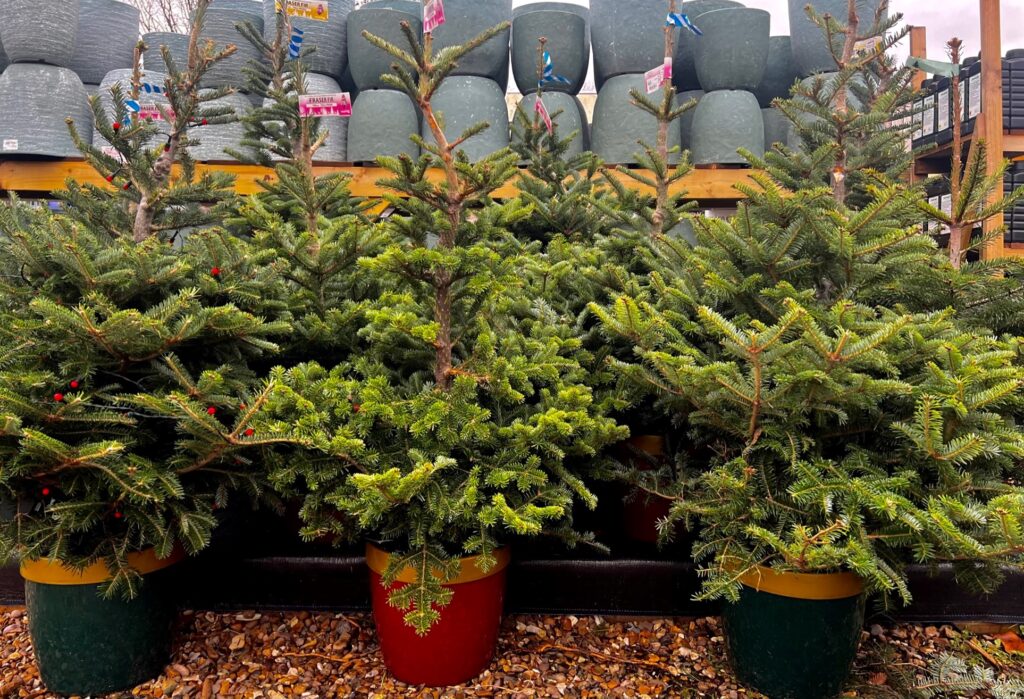
Cypress, Fraser fir, rosemary, bay and eucalyptus all have aromatic leaves. Indoors, the warmth helps the oils to evaporate, adding a subtle Christmassy scent to your room.
Flowers:
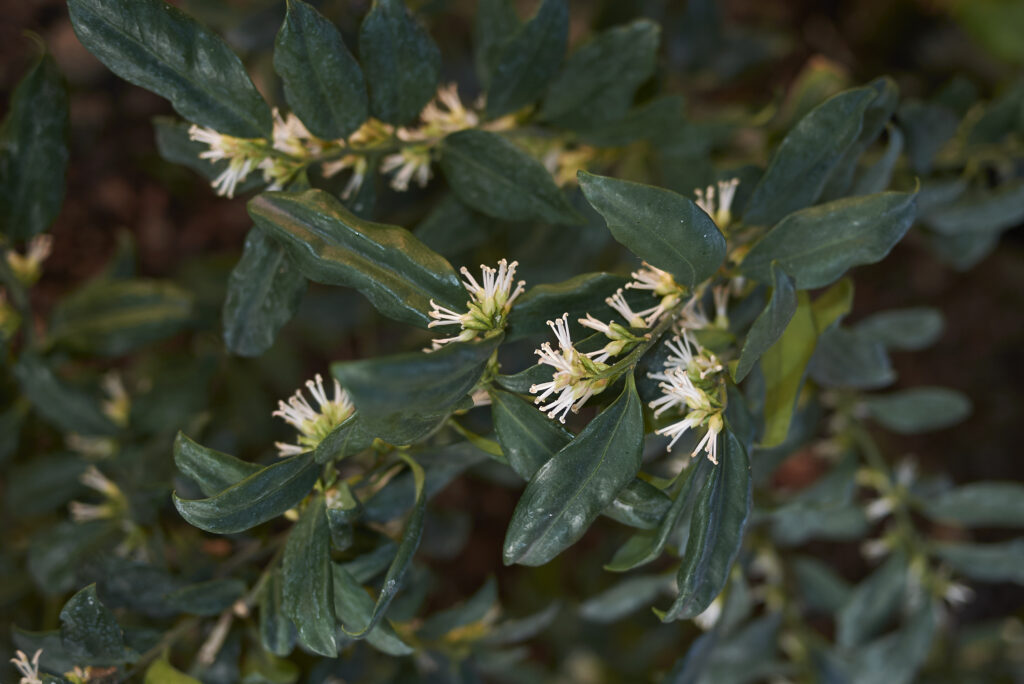
Viburnum tinus, mahonia (Mahonia japonica is best for fragrance) and spicily-scented sarcococca (Christmas box) are all in bloom now. Sprigs of budding Skimmia japonica will add interest too.
Berries:
There are so many to choose from at this time of year. Red or orange pyracantha, purple Callicarpa bodnieri, white snowberry or scarlet rowan and hawthorn are just a few. And let’s not forget glorious rosehips.
Seedheads…
… come in all shapes and sizes. Grass seedheads like pennisetum or miscanthus, fluffy and slightly wild-looking clematis, dried hydrangea heads, spiky eryngium, poppies, alliums, fennel and nigella all draw the eye, as do traditional fir and pine cones. You can leave them in their natural state or spray lightly with gold or silver paint.
These are just some suggestions. Have a look in your garden and collect whatever you think will work. For some subtle finishing touches or a bit of pzazz you could add mistletoe, dried chillies, pine cones and dried slices of orange. All of these, as well as other exciting bits and bobs, should be available at your local Capital Garden Centre.
Festive wreaths
You’ll need:
- A wreath frame made of wire or something natural like woven willow. You could also make your own out of birch or beech; the immature twigs are very flexible.
- Thin wire (florist’s wire is perfect).
- Evergreen foliage.
- Decorative bits and bobs like pine cones, dried orange slices, cinnamon sticks, baubles or ribbon.
- Wire cutters and secateurs.
First take your pre-made wreath frame, or create your own by twisting or weaving willow, beech or birch into a circle and tying the ends together.
Next add your base of evergreen foliage. Wrap long strands of ivy around the frame and/or attach sprigs of woodier material such as fir or holly using short lengths of wire. Add short sprigs of other, contrasting foliage and berries if you want them.
Lastly add your decorative Christmassy touches by, for example, wiring on pine cones, slotting in poppy seed heads or attaching baubles with ribbon.
For a more minimalist, contemporary look, you could abandon the evergreen foliage altogether and allow the buds on your birch or beech frame to take its place. Then simply tie on your fluffy seedheads, pine cones or whatever else takes your fancy.
There’s a step-by-step video guide here:
https://www.youtube.com/watch?v=wxeghj2tu7k
Alternatively you could tie bunches of mixed foliage and berries together first and then attach them to the frame.
https://www.bethchatto.co.uk/discover/our-blog/guides/how-to-make-a-christmas-wreath.htm
Wreath tips
- Make sure your knots of wire are at the back.
- Dried orange slices can be added by carefully threading wire through the edge of the slice where the flesh meets the rind and then attaching to the wreath.
- Bundles of cinnamon sticks should be tied together with wire first. Then poke the wire through the wreath and tie on.
For some eclectic styles and ideas have a look here:
https://www.gardenersworld.com/how-to/diy/how-to-make-a-christmas-wreath/
Festive decorations
Wreaths, admittedly, do require a bit of concentrated input. The rest of your decorations, though, can be assembled in minutes.
Table posies:
These are really quick and easy to put together. Just make up a small bunch of foliage, for example cypress, rosemary and rosehips, and then tie it together with ribbon or brightly-coloured string. Add to each place setting. Using three or five different plants is most effective.
Table runners:
Again, foliage is your friend. Create a base down the centre of the table with branches of cypress, fir and eucalyptus, fronds of ivy or anything you like. You can keep it simple or use a combination of different foliage shapes and textures. Dot throughout with pine cones, berries, seedheads, satsumas and anything else that takes your fancy. As before, working in threes and fives is good. Add some fairy lights or candles and it’s done. (I would use candles in candlesticks though, rather than tea lights, to keep the flames away from the flammable plant material.)
We’ll give you some ideas for living table centrepieces later this month.
How long will they last?
This depends on the material and the temperature inside. Ivy may last 2-3 days once cut and inside. Non-drop fir should last longer. Berries on sticks usually last 3-4 days before they start to shrivel. And pine cones last for ever.
Tips
- The scent of aromatic foliage or flowers won’t last long once they’re cut, so bear this in mind when planning your festive interior decorating timetable.
- It’s wise to avoid using highly scented plants in your table runners as their strong aromas can be offputting for some when it comes to eating.
- Don’t compost anything that’s been painted.
A note on responsible foraging
If you decide to gather plant material from outside your own property it’s really important to do so legally and sustainably.
- Take a limited amount and only what you’re actually going to use.
- Collect from areas where there’s a plentiful supply.
- Bear in mind that you need permission to gather on certain areas of land and collecting in conservation areas isn’t allowed at all, for obvious reasons.
There’s a list of guidelines here: https://www.woodlandtrust.org.uk/visiting-woods/things-to-do/foraging/foraging-guidelines/
Making Christmas wreaths and decorations from foliage and berries is a lovely way to bring greenery and good cheer into your home and endow it with plenty of festive spirit. And if your sprouts are slightly overcooked or your roast potatoes a tad singed around the edges, it won’t matter at all. Hold the tinsel! Your garden will provide.