Blog
Festive foliage and bountiful berries: Christmas window boxes and containers


Christmas is coming and the goose – or turkey – is getting fat and the decorations are up in high streets everywhere. My local neighbourhood is alive with singing Santas, prancing reindeer and cascades of merrily twinkling lights. It’s all very festive but only comes alive in the evenings and is but a temporary source of joy. Window boxes stuffed with plants, on the other hand, will last well beyond the twelve days, brightening up the dark times leading to spring. Larger containers add to the seasonal cheer too when invitingly placed by front doors. And once the plants are in place, Christmassy flourishes can be added to complete the Yuletide look.
Evergreens
Although not necessarily the main event, evergreen structure is important in window boxes whatever the season, allowing the more flamboyant plants to really shine and, in some cases, lasting for years. Think of these ‘fillers’ as proud parents looking on while their children perform the Christmas panto.
Small conifers:
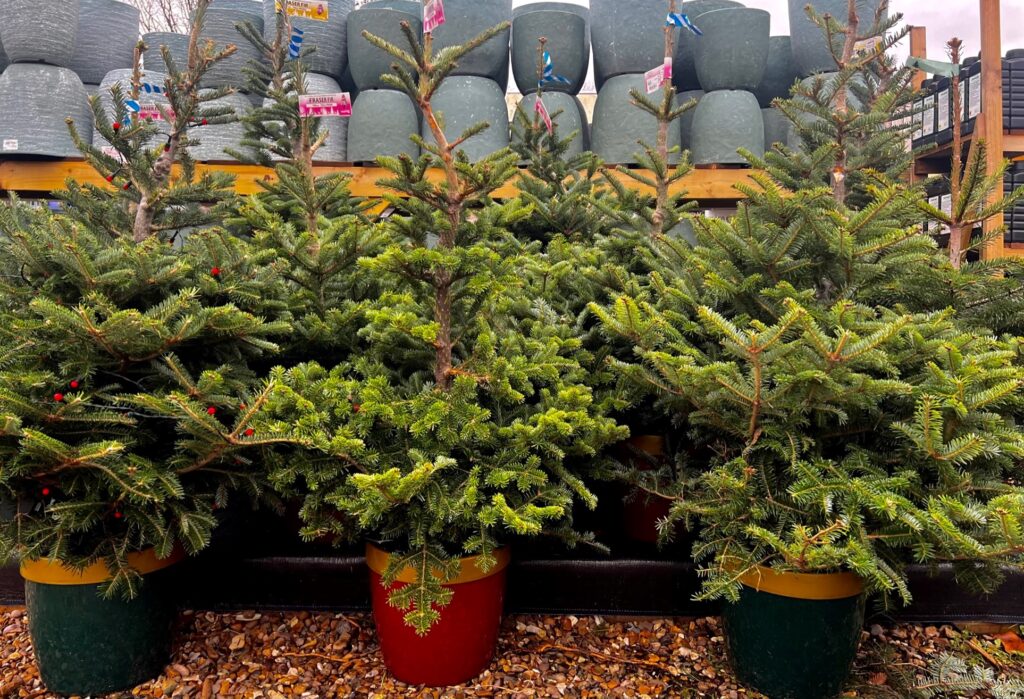
Taking on the role of mini-Christmas trees, small conifers can form the centrepiece of seasonal containers. Dwarf spruce Picea glauca var. albertiana ‘Conica’ fits the bill perfectly. Although it eventually grows to around 4m high, very small specimens are sometimes available. Citrus-scented golden cypress is a good alternative with a more modest final size of 1.8m. Or you may even find tiny Juniperus chinensis ‘Pyramidalis’ which has a mature height of just 1m. All are conical in shape and slow-growing, so should last for a few years in a container before needing to be transplanted. I have a dwarf spruce that has been in place for three years and it’s still just about window box sized. Rosemary is a good substitute for mini-conifers – it’s needle-like leaves impart a Christmassy feel as well as it being a useful kitchen ingredient.
Other evergreens:
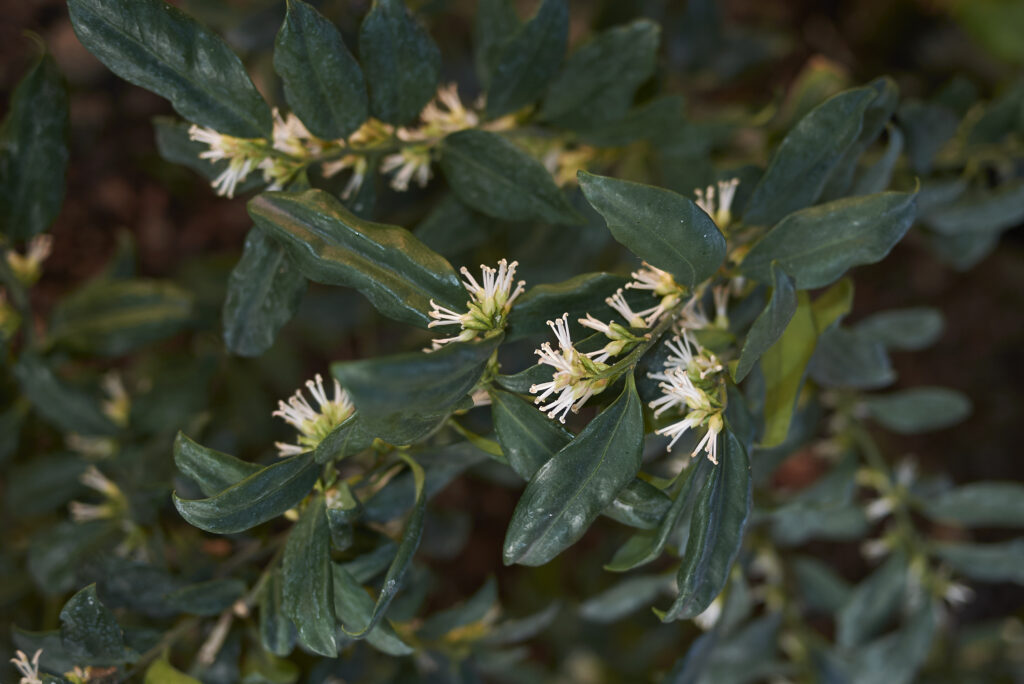
Try dwarf, variegated Euonymus fortunei ‘Harlequin’, its leaves splashed with icy white, or E. japonicus ‘Green Spire’, larger, but slow growing. Black grass Ophiophogon planiscapus adds a gothic touch and has the bonus of small, lilac flowers in summer. Contrast it with the cheerful, bright green of Carex oshimensis ‘Everillo’, the snowy stripes of C. oshimensis ‘Everest’ or the coppery gold of Carex testacea ‘Prairie Fire’. For silvery tones opt for Helichrysum italicum, the curry plant. Or you may find young, downy-leaved brachyglottis. The latter will reach between a metre and two metres in height but add considerable interest to containers when small. While both are frost hardy, they’re Mediterranean plants which like dryish conditions, so be careful not to over water.
Blooms and berries
Skimmias:
With their festive scarlet fruit these hardy evergreens are an obvious candidate for
Christmas displays. While many need a partner plant nearby to produce berries, some
are self-fertile. Skimmia japonica ‘Temptation’, S. japonica ‘Obsession’ and S. japonica
subsp. reevesiana all fall into this category. Skimmias also produce small
flower buds in winter, held in clusters and giving the appearance of tiny berries even if
no actual berries are to be seen. S. japonica ‘Rubella’ is best for deep red buds while
those of Skimmia x confusa ‘Kew Green’ are lime.
Winter heathers:
Erica carnea and Erica x darleyensis, unlike their summer-flowering relatives, don’t require an acid growing medium, so will thrive alongside other, non-ericaceous winter wonders. Their tiny, bell-like pink, lilac or white blooms are a life-saver for late and early flying hungry bees on the hunt for nectar.
Gaultheria procumbens:
This diminutive shrub has small, oval evergreen leaves with deep bronzy tints in winter amid a profusion of crimson berries. Small white or pink flowers appear in summer. It only grows to about 15cm tall but does spread so will soften the edges of window boxes and other containers. Its only drawback is that it needs ericaceous compost to thrive. However, it should survive for two or three months over winter in multi-purpose compost. It can then be transferred to another pot or window box containing its preferred growing medium. Although best in part-shade, the level of sunlight over the winter months is low enough not to upset it. Larger G. mucronata bears red, white or deep pink berries.
Did you know?
G. procumbens contains methyl salicylate or wintergreen oil which has medicinal uses. It’s also said that the leaves can be dried and used to make a minty (if slightly medicinal-tasting) tea. Always be sure of a plant’s identity before you try it though!
Violas and pansies:
Who doesn’t love a winter pansy? Their cheerful, multi-coloured flowers add oodles of character to Christmas containers. Deadheading regularly helps to keep the flowers coming. So pinch or snip off at the base of the flower stem and with enough sun they’ll go on and on.
Cyclamen:
Sweet ruby, rose pink, mauve and white bedding cyclamen pep up a dull winter’s day. Although not fully frost hardy, in window boxes they should be sheltered by the warmth of building walls. Deadhead by carefully pulling the spent flowers out at the base of the stem and remove dead or soggy leaves.
Hellebores:
More suited to larger window boxes and containers, Helleborus niger is the traditional Christmas rose. The blooms of this somewhat inaccurately named plants aren’t dark but fresh white, sometimes pink-tinged, with lime green centres cupping the yellow stamens. Nor does it always flower in time for Christmas. However, unpredictable weather patterns and the expertise of growers mean there’s always a chance that newly-bought plants will do so. Strong, palmate evergreen leaves add texture and form to plantings and the flowers are a good source of food for bees too.
Trailers
No Christmas window box would be complete without cascades of heart-shaped leaves spilling down like gardlands. In containers ivies won’t take over and many have variegated gold or silvery foliage. If they aren’t available, a similar effect can be achieved using evergreen foliage taken as cuttings from trees and shrubs.
We may not have all the plants listed in our stores but our staff will be happy to suggest alternatives.
The Christmas finishing touches
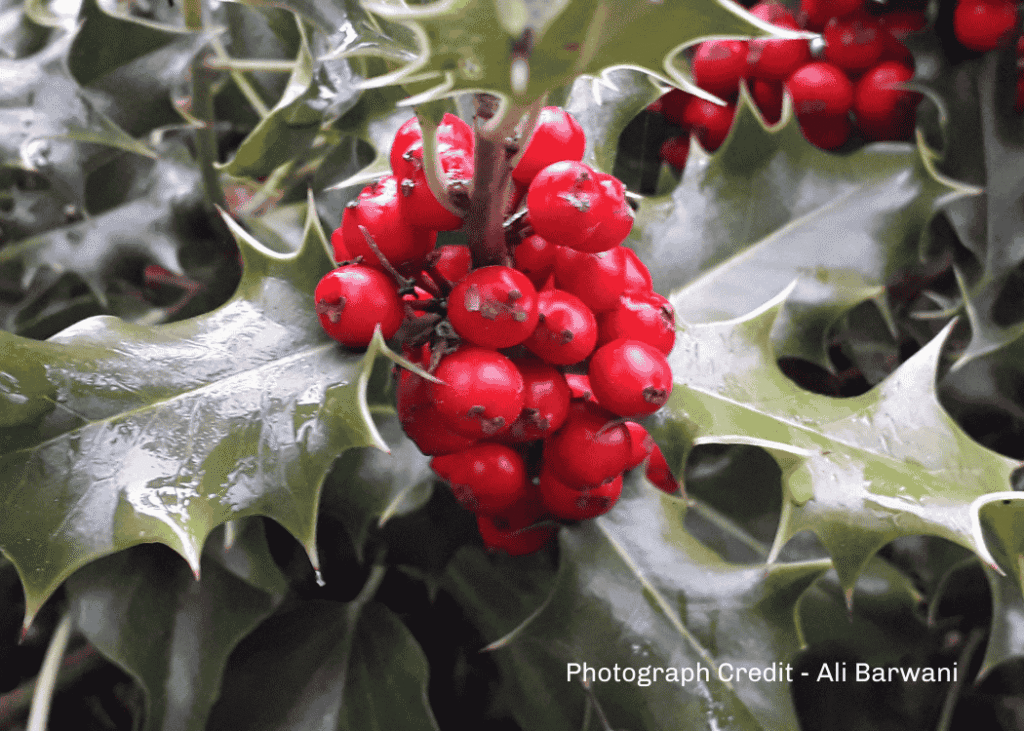
Boost your plantings with foliage foraged or cut from the garden. Making the cuts at a 45 degree angle increases the surface area for take up of moisture once cuttings are in the containers. It’s a good idea to take longer lengths than you estimate are needed; they can always be shortened. Fiery cornus, large-leaved stems of laurel, fronds of pine, spruce and cypress and sprigs of holly all look lush and add texture but approach with caution. If there’s already a good mixture of form in your planting, keep additional leaf shapes to perhaps one or two to avoid a jumbled dog’s dinner instead of the desired cat’s whiskers. Large pine cones and winter fruits have their place too. Anything with berries works! Use stems of crab apple, pyracantha or purple-berried Callicarpa bodinieri, cotoneaster, nandina and hipped wild rose.
Insert the cuttings into the compost. The deeper they go, the more secure they’ll be. Slimmer and more rigid plant material works well on the upright while soft, flexible material trails downwards. A good technique is to insert the longer cuttings first, then place pine cones, if using, in the gaps. Next add shorter, heavier, stiffer cuttings like holly to help keep everything in place. Pine cones, seed heads and birch twigs also add interest and can be sprayed in gold or silver or with a light dusting of spray snow. (Remember, though, that sprayed organic matter can’t go in the compost.)
Add baubles if the weather permits and wind outdoor fairy lights around the larger evergreens or trail them artfully across the whole window box. Et voila!
You’ll find more tips and ideas here:
https://www.thespruce.com/winter-window-box-ideas-6743837
https://www.fromhousetohome.com/garden/winter-window-boxes/