Blog
How To Get Rid of Aphids – Don’t Let Them Damage Your Plants


What Are Aphids?
If you have ever looked under the leaf of a rose bush and found a cluster of minute pear-shaped insects, you have encountered aphids.
Aphids (also known as plant lice) are tiny sap-sucking bugs. Aphids have protruding needle-like mouth parts called stylets that allow them to pierce plant tissue to drink sap.
Aphids cause harm to plants, but because of their small size (typically 2-4 mm as adults), they often multiply unseen.
Here we will take a closer look at these fast-breeding pests and investigate different ways of dealing with them.
Why Discuss Aphids Now?
Aphids love warm weather. Throughout July and August, aphid colonies become large and very noticeable, and gardeners will wonder about whether to spray with insecticides or to use organic methods to control them. So now is the perfect time for us to explore these pests.
Aphid Types
Most gardeners are familiar with greenfly and blackfly, but there are many more species around.
Amazing Fact: Did you know that there are over 500 aphid species in the UK? To identify different aphid species, visit:
https://influentialpoints.com/Gallery/Identify_the_most_commonly_seen_British_aphids.htm
Some aphid species feed on only one or two plant types, but others can live on a range of different plants. For example, the rose aphid (Macrosiphum rosae) has the rose as its primary host but can alternate with teasels and valerians as secondary hosts.
Woolly aphids are a common pest on edible and ornamental apple trees. Woolly aphids are protected by a white waxy secretion.
Root aphids are pale coloured insects closely related to true aphids. They feed by taking sap from roots. Root aphids are widespread, but usually go unnoticed because they live under the soil surface. Wilted or stunted plants with yellowing and dropping leaves should be investigated for root aphids.
How To Spot Aphids
Often the first time people realise they have aphids is when they spot sticky leaves on their plants. This stickiness is frequently associated with sooty mould patches. If you have ever parked under a lime or sycamore tree in summer, you will know all about aphid ‘honeydew’. The culprits producing this sugary rain are hordes of aphids feeding under the leaves.
A second tell-tale sign of aphid infestation is distorted growing tips and young leaves on plants such as roses and beans. If you spot twisted shoots on your plants, then it is worth looking on the shoots and under the leaves for aphid colonies.
Finally, you may notice the empty, white, cast skins of aphids on the surface of leaves and stuck in the honeydew. This is because aphids grow by breaking out of their old skin when they have outgrown it and emerging from within in a soft new skin – a process is known as moulting. After four moults the juvenile greenfly reaches its adult form, and no further moulting occurs. People often mistake the white cast skins of aphids for another insect pest, whitefly.
Top Tip: Aphids can infect houseplants too. Aphids can come in on your hair or clothes, blow in with the air, or hitch a ride on fruit and vegetables, pot plants or cut flowers. The signs of a houseplant infestation are the same as for garden plants.
Enemy Of Plants?
Aphids can damage your plants in several ways.
1) Firstly, by tapping the plant’s sap they can reduce its vigour and weaken the plant. If aphid populations become high, they can cause plants to wither and die.
2) The salivary secretions of some aphids can be harmful to plants and cause stunting, leaf deformation, and even gall formation. Aphid galls often appear as raised growths on the top of leaves, the aphids live under these growths.
3) Once aphids are plumbed into sap vessels, they continuously excrete a sugary poop called ‘honeydew’. This excretion can become a breeding ground for black mould. These dark patches look ugly and prevent the leaves from photosynthesising, further weakening the plant.
4) Finally, aphids can transmit plant viruses. A single aphid can transmit dozens of plant viruses from a diseased plant to a healthy one as it moves around.
The Aphid Lifecycle
As Sun Tzu observed in ‘The Art of War’, ‘know your enemy’. Understanding the aphid lifecycle helps us know how to manage them.
The lifecycle of aphids is complex and varied. Here we look at a simplified lifecycle of the common greenfly, which is less complicated compared to other aphid species.
Greenfly survive the cold months as eggs hidden away on the stems of plants. All the young that hatch from winter eggs are female. Each female can live for almost a month, and during this time each can produce up to 80 daughters. These offspring are born live and without mating (a process known as parthenogenesis). All these daughters are capable of producing another 80 daughters. In other words, a handful of greenfly hatching at the start of the season can rapidly give rise to a major infestation.
Amazing Fact: New-born greenfly are already pregnant with daughters inside them!
When greenfly colonies become too dense, or if they are under attack by predators, then the females will start producing a generation of winged greenfly. Winged greenfly can fly up and be carried by the wind for long distances. Once they have settled on a new plant, they lose their wings and start producing wingless greenfly.
Male greenfly are produced later in the season. The males lack wings and mouthparts. After a female has mated with a male, she will produce eggs that will develop outside her body. The production of eggs that can survive through the winter completes the lifecycle.
Aphids breed quickly because they have an unlimited food supply and are virtually defenceless.
How To Deal With Aphids On Your Plants
The successful breeding of aphids on your roses is also the start of their undoing.
Aphid honeydew acts as chemical cue (known as a kairomone) to attract predators and parasites towards the colony.
So right now, as colonies of aphids smother your plants, the honeydew they excrete is attracting ladybirds, hoverflies, lacewings and parasitic wasps to lay eggs and produce larvae that will control the aphid population for the rest of the year.
Amazing Fact: ‘Artificial honeydew’ sugar sprays are sprayed on some crops to increase the numbers of aphid enemies.
How Can I Encourage Aphid Predators Into My Garden?’
The best way to attract beneficial insects into your garden is not to be too tidy. Allow areas of longer grass and the odd pile of leaves, because these are important habitats for insect lifecycles.
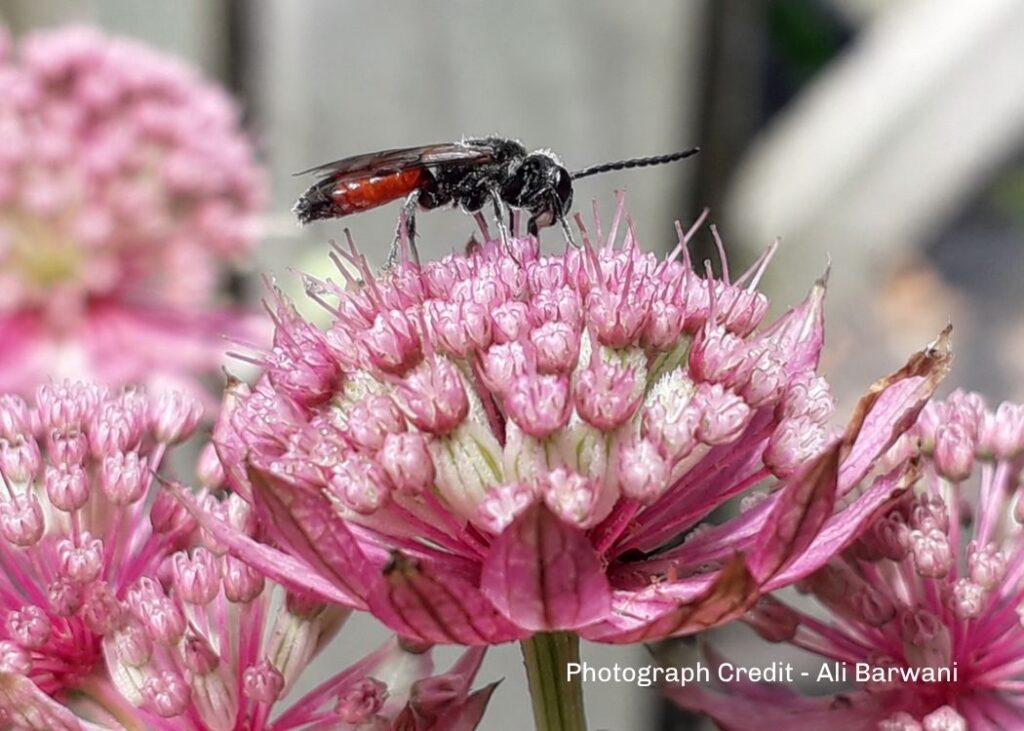
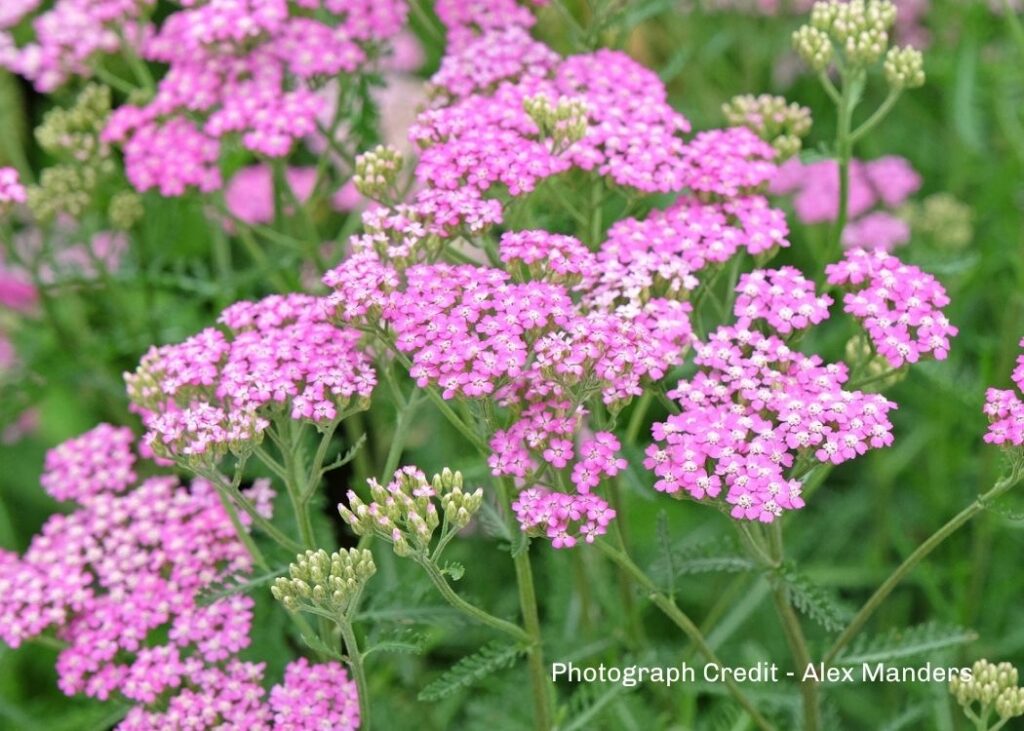
Plant insect friendly flowers like asters, the poached egg plant (Limnanthes douglasii) and umbellifers for the adult hoverflies and lacewings. Adult hoverflies and lacewings need nectar and pollen to reproduce. It is their larvae that are voracious hunters of aphids.
Ladybirds, earwigs, predatory beetles, predatory midge larvae and various species of parasitic wasp will also help keep down aphid numbers in your garden.
Some birds, especially blue tits, will feed on aphids. Some studies have shown that gardens that encourage bird life have lower aphid populations. Providing water for drinking and bathing is a good way to attract birds to visit your garden.
To learn more about attracting beneficial insects into your garden read our blog:
https://www.capitalgardens.co.uk/blog/attracting-beneficial-insects-to-your-garden/
Are Ants Eating My Aphids?
We recently received this email question from a customer:
Ellie S – “I find so many ants on my roses. Should I be worried, or should I encourage them as they seem to be eating the aphids?”
Hi Ellie! I am afraid the ants are not eating the aphids they are farming them! Aphids are sometimes called ant cows.
Once aphids are established on your roses, they will attract ants. Ants love honeydew and will take care of the aphids. Ants also eat the sooty mould that grows on the honeydew.
In fact, ants treat aphids like a herd of cows. Ants keep their aphid herds together and milk the aphids for their honeydew, just like a dairy farmer. They will carry around aphids to a new location if the aphid colony gets threatened or grows too large. Ants take the honeydew back to their nest and regurgitate it for the queen and other workers to feed on.
Different species of ant farm different species of aphids. Some ants even go as far as to build little ‘barns’ out of sand grains or moss and lichen to protect their herds.
And in return for their honeydew aphids get protection. Ants remove aphid predators such as ladybirds and hoverfly larvae from plants. Ants will also remove and dispose of dead or dying aphids to maintain a healthy herd.
Expert tip: Ants running up and down a plant stem is another tell-tale sign of aphid infestation.
To learn more about how ants farm aphids watch this video:
Eight Ways to Beat Aphids
Before you reach for the insecticide – and if you are not patient enough to wait for nature to catch up with the boom in aphids this year – here are some environmentally friendly treatments you can try.
1) This is important! Check your plants regularly. If you catch the infestations early you can remove them by hand. Prompt action is the best way of controlling numbers.
2) Squash any greenfly you find but avoid harming insect predators you encounter when you are doing this.
3) Wash aphids off your plants with a jet of water. You will also wash the ants off at the same time.
4) Use horticultural fleece as a barrier to protect vegetable crops from aphids.
5) Trim the lower leaves of plants so that they don’t touch the ground and allow ants to get on to your plants. Wrap the stems of your plants with tape and daub it with greasy Vaseline to stop the ants from climbing the stems.
6) Cut off and dispose of heavily infested shoots and leaves.
7) The best way to deal with root aphids is to pull up and destroy infected plants. If the infected plants are salad crops, then it is fine to eat the plants that you uproot. Avoid growing similar crops in the same area next year.
8) Investigate companion planting. For example, you can plant sacrificial plants such as Nasturtiums to lure aphids away from your runner beans, and they will also attract in beneficial insects that eat aphids.
To learn about companion planting read our blog:
Chemical treatments
1) Apply a fine spray of weak soft-soap or washing up liquid solution to shoots and the undersides of leaves.
2) Try an organic use certified neonicotinoid free pest killer for crop plants that are suffering from aphids.
3) For badly infested plants, or plants that are rare or have sentimental importance you might consider using an insecticide spray such as Provanto Ultimate bug killer or Bugclear Ultimate. This should be a last resort. Pesticides will kill both the pest and the beneficial insects that predate them. You may also suffer ‘aphid rebound’ – where you kill all the food source, so the predators leave, and when the aphids return there is no one around to eat them.
4) Prevent overwintering aphids on fruit trees and shrubs with Vitax Winter Tree wash – an organic plant oil treatment. This should be done when the buds are dormant (November – start of February). This is why knowing their lifecycle is useful in controlling their numbers.
5) How to deal with woolly aphids:
https://www.rhs.org.uk/advice/profile?pid=724
Watch how to treat aphid infestations:
In Conclusion:
They are tiny sap sucking bugs that can weaken plants and spread viruses.
Many aphid species exist. Some are specific to one or two plants, others will happily feed on a range of plants.
Aphids have complex lives and interactions with other insects and animals in our gardens. On the miniature scale our gardens are just as diverse and exciting as the rolling plains of the Serengeti.
Encouraging aphid predators into your garden is a good way of keeping the aphid population under control.
There are many environmentally friendly methods you can try to control their numbers before resorting to pesticides.