Blog
Five tips for a low maintenance garden


Five tips for a low maintenance garden
What is this life if, full of care,
We have no time to stand and stare.
No time to stand beneath the boughs
And stare as long as sheep or cows.
No time to see, when woods we pass,
Where squirrels hide their nuts in grass.
No time to see, in broad daylight,
Streams full of stars, like skies at night.
From ‘Leisure’ by W.H. Davies.
While weeding, watering, pruning and mowing are good for both body and soul, they’re time-consuming too. Hectic lifestyles can leave little time for gardening but busy people still want (and need) beautiful outdoor spaces. And if you’re getting a little creaky as you age or have mobility issues, you too may be looking for ways to reduce your gardening workload. Finding time to stand (or sit, or lie down) and stare, engaging in nature with all our senses, has been shown to help distract us from the more difficult aspects of life and significantly reduce stress. Sometimes it’s good to just lean back and relax. So below you’ll find some tips to help you create a low maintenance garden, or at least one in which you can spend less time ‘doing’ and more time at ease.
Grow more low maintenance plants
No plant is no-maintenance but some need less attention than others.
Consider plants that:
- Aren’t prone to disease or being eaten by slugs and snails.
- Are hardy so don’t need lifting or protecting over winter.
- Don’t require a great deal of deadheading. The flowers of fuchsias and salvias among others, once spent, generally drop off by themselves.
- Don’t need much, if any, pruning. These are often slow-growers so may take time to fill their allotted space but are rewarding in other ways. Choisyas and sarcococcas, for example, both have glossy evergreen leaves and deliciously-scented white flowers.
- Don’t need help to stand. Some herbaceous perennials have beautiful, tall, lush growth which flops unless staked or held up with plant supports. Climbers often have to be tied in to wires and trellises, although some, like Hydrangea anomala petiolaris, or climbing hydrangea, will cling to walls and fences by themselves. This hydrangea is slow to get going but shade-tolerant with white, lacecap flowers and well worth the wait.
- Are evergreen, avoiding the need to clear fallen leaves in autumn. Evergreens also add structure and winter interest. Variegated pittosporums and euonymus have attractive leaves. For flowers, try ceanothus, escallonia and hebes, or skimmias and mahonia, some of which have scented blooms. (A few species of ceanothus and euonymous are deciduous so check before buying.)
- Will cope with low water levels. Shrubs tend to wilt less quickly than many herbaceous plants. However, there are also plenty of herbaceous perennials that are drought-tolerant. These are often silver-leaved Mediterranean plants that need full sun and good drainage but there are others too. Many ornamental grasses will also cope with minimal watering. https://www.gardenersworld.com/plants/drought-tolerant-plants-to-grow/
Very few plants have all these characteristics but even those with just some of them will assist in the quest for a low maintenance garden.
https://www.gardenersworld.com/plants/top-low-maintenance-plants/
Be prepared to go wild
Neat and tidy gardens have their place but low maintenance gardening gets the plants to do most of the work. Among the many self-seeders with pretty flowers are oxe-eye daisies, Linaria purpurea (purple toadflax), Erigeron karvinskianus (Mexican daisy), borage and poppies. All are sun lovers and, allowed to find their own way, add naturalistic dots and patches of colour, creating a delicate, painterly effect. And heroic, shade-loving but drought-tolerant orange and yellow Welsh poppies will grow in the most difficult of places. Self-seeders can sometimes spread more than is desirable, but none of those suggested above has invasive, spreading roots so should be easy to weed out if need be. You’ll find more ideas here: https://www.gardenersworld.com/plants/eight-plants-that-self-seed/
These plants aren’t evergreen so some light cutting back may be needed once they’ve died down.
Embracing the wild includes the lawn. Cut down on the endless mowing by allowing some areas to stay long between March and September, perhaps simply mowing one or two softly curving paths through it. Long grass stays greener through very dry weather and also supports all sorts of wildlife. If this level of wildness isn’t for you, consider cutting less often and with the blades set higher. And don’t mess with the moss! Marvellous moss, while needing moisture to establish, is also drought-tolerant, so a mossy lawn is likely to stay greener for longer. (Some species are so robust that they can dry out completely and revive once rehydrated.) It’s beautiful too, tiny and intricate in structure, like a forest in miniature.
For more low maintenance lawn tips: https://www.rhs.org.uk/garden-design/low-maintenance-gardening
Developing a tolerance for plant pests, while it sounds counterproductive, can be part of low maintenance gardening too. Slugs, snails and aphids all take their toll but although they can be a nuisance, it’s worth holding back on pest control. Some damage will occur but nature’s own pest controllers will, in time, take over. Birds love juicy caterpillars and aphids, starlings, hedgehogs and foxes will eat slugs and snails. And gardeners can while away the time contentedly watching sparrows and tits perform gymnastics on their roses as they swoop in and turn themselves upside down to get at their prey.
Mulch
Mulching (adding a layer of material to the surface of soil or pots) helps to keep weeds down, prevent soil erosion and insulate plant roots from extreme heat and cold. It reduces water loss too. Biodegradeable mulches like bark chippings have the added advantage of gradually breaking down and adding nutrients to soil while also improving its structure. (This does mean, of course, that they need to be topped up periodically.) A layer of organic mulch needs to be at least 5cm deep to be effective.
Gravel, slate or even glass chips make good decorative layers for pots.
Plant low-growing ground cover plants
Plants that spread or trail and are evergreen are most useful. As well as hiding ugly bare patches of earth, they do a similar job to mulches, helping to keep weeds at bay and reducing soil erosion. Try evergreen Pachysandra terminalis or blue-flowering, semi-evergreen Ajuga reptans in shady areas. In sun, opt for long-flowering Persicaria bistorta, lilac pink creeping phlox and herbs like mat-forming Thymus serpyllum, oregano, chamomile and prostrate rosemary. Bees and other beneficial insects will love their flowers too. Also consider deliciously aromatic, spreading evergreen junipers, as well as forms of hardy geranium which, while not evergreen, flower profusely and grow in an admirably diverse range of situations and conditions.
Be water-wise
There’s a strong possibility of water shortages in some areas of the country if the current dry weather continues. Finding ways of minimizing the need for watering not only reduces workload, it’s also more sustainable (and better for our pockets if water meters are involved).
- Water late in the evening once the heat has died down so that less water is lost through evaporation and transpiration.
- Water directly onto the soil, around the base of the plants, so the moisture permeates straight down to the roots, where it’s needed most.
- Water less often but more generously when you do. This encourages roots to grow more deeply into the ground where there should be more natural moisture available.
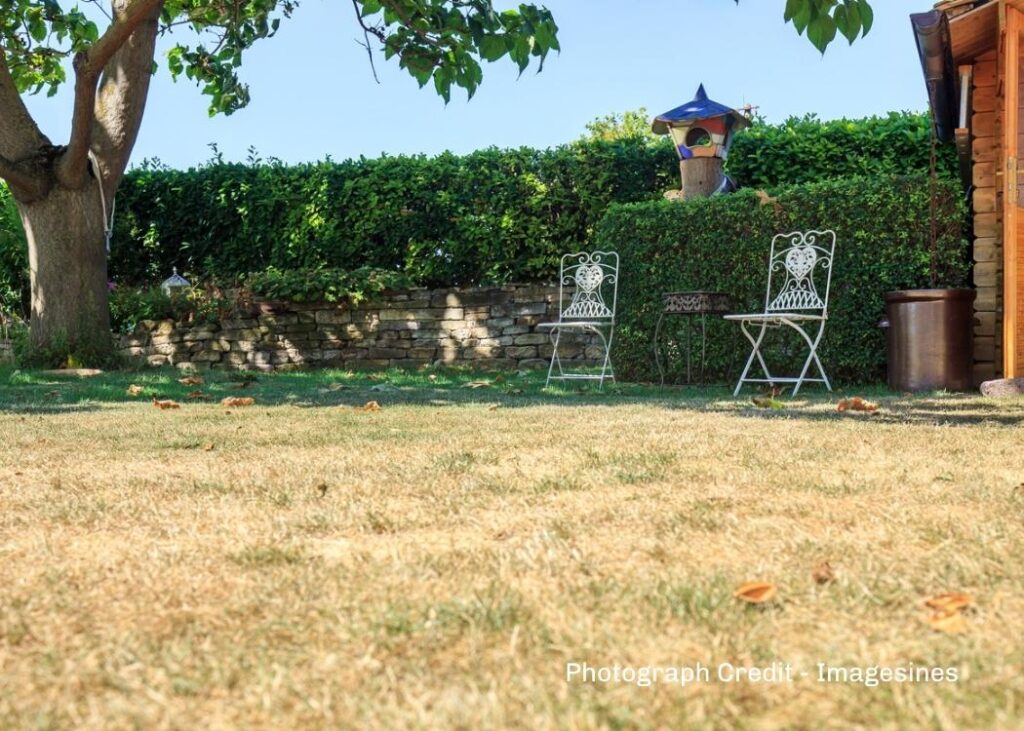
- Lawns don’t need watering in a drought. Although they may turn an alarming shade of beige they’ll recover once the rain returns.
- Non-porous containers, for example those that are glazed or made of plastic, reduce evaporation from compost.
- Place saucers underneath pots in hot and dry weather to hold water which would otherwise drain away. (Remove them in winter or in prolonged wet conditions to avoid waterlogging.)
- Avoid having lots of small pots – bigger containers don’t dry out nearly as quickly.
- Consider installing an irrigation system. While it won’t necessarily reduce the amount of water used, it will reduce the amount of labour required.
Taking the conditions of your garden into account when choosing plants is also essential. Do they need sun or shade or a particular type of soil to thrive? Plants that are in the right environment will be healthier and need far less nurturing.
Our gardens offer us so many rewards and perhaps the best is the opportunity to pause and quietly absorb their sights, sounds and scents. Lower maintenance gardens give us more time to simply ‘be’, in whatever way we choose. And as the poem concludes:
A poor life this if, full of care,
We have no time to stand and stare.