Blog
Let it glow: Scarlet berries for Christmas


The holly and the ivy,
When they are both full grown,
Of all the trees that are in the wood,
The holly bears the crown.
Red and green bring cheerful and uplifting notes to the darkness of winter in both our homes and gardens, and we think of them as the colours of Christmas. Red is the colour worn by Santa Claus or Father Christmas and one of the most common colours of autumn and winter berries too. ‘The holly bears a berry as red as any blood’, the carol continues. This is indeed true of female hollies, although they need a male plant nearby (within about 100m) to do so. Luckily though there are plants which will reliably produce scarlet berries on their own. So we’ve chosen five which will bring you good cheer and, because Christmas is a time for giving, a couple of extras with fiery stems and flowers.
As well as lighting up the winter garden, bunches of crimson berries look stunning indoors. Simply cut the stems and place them in vases, lay them on tables and mantelpieces and twine them around banisters. They do, though, provide valuable winter fodder for birds too, so depending on the availability of other food and the dietary requirements and appetites of the wildlife visiting your garden, some may not last until Christmas. But even if they don’t, by growing red-berried plants you’ll know that you’ve helped the local birds get through winter.
Gaultheria procumbens
This small, spreading shrub is a useful ground cover plant for shady areas of the garden and a very obliging winter addition to window boxes and containers. White flowers in early summer are followed by prolific red berries in autumn and winter. Its evergreen, dark green foliage is often tinted with bronze. Growing to approximately 50 x 80cm, it’s tolerant of both sun and part or dappled shade. It prefers slightly acidic soil so backfill the planting hole with leafmould or bark and plant in ericaceous compost in containers. Although an outdoor plant it will survive indoors in its pot for a few days in a cool spot for extra Christmas oomph.
Skimmia japonica subsp. reevseiana
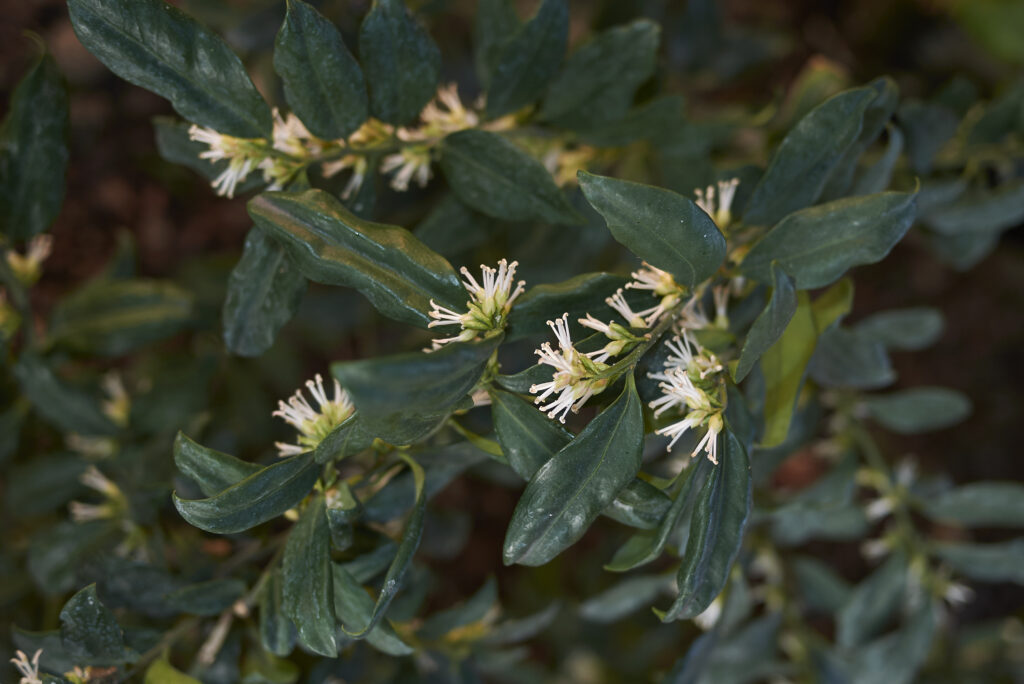
A smallish shrub with a rounded habit and glossy, evergreen leaves which grows to approximately 90 x 90cm. Does best in part or dappled shade but will tolerate darker corners too. In spring, faintly scented white flowers with creamy pink tints appear. These are followed by clusters of glowing scarlet berries. Packs a real punch in pots and containers.
Pyracantha
This starry all-rounder can be tied in and supported against a wall or fence as a wall shrub, or pruned to stand alone as a garden feature. Its spiny stems and dense growth when regularly pruned make it a useful hedging plant too. It’s a tough customer, thriving in sun or part shade and will even put up with full shade, although flowers and berries will be sparse in these conditions. Heads of tiny white flowers appear among the evergreen leaves in late spring and early summer and are very popular with pollinating insects. The red, orange or yellow berries are much enjoyed by blackbirds and visiting fieldfares in winter. Red-berried cultivars include Pyrancantha ‘Saphyr Rouge’, which reaches 3 x 3m and P. coccinea ‘Red Column’ at approximately 4 x 4m.
Sorbus aucuparia (Rowan/mountain ash)
Native to the UK, this deciduous tree grows to between 8 and 15m tall so is an excellent specimen plant. Small creamy blossoms in spring provide pollen for bees and other insects and eye-catching clusters of scarlet berries appear in autumn and winter. Migratory redwings and fieldfares as well as other thrushes will feast on them and the leaves provide food for caterpillars of the autumn carpet and larger Welsh wave moths. These remarkable trees are very hardy and are often found on blowy hillsides where not much else survives. Full sun or part shade.
https://www.woodlandtrust.org.uk/blog/2018/11/winter-berries/
Roses
The hips of the rose are often pruned away but leaving some at the end of the season will add considerably to the appearance of your garden or balcony and they are, like many so other berries, a winter treat for birds. Rose hip syrup, jelly and tea are delicious too and packed with Vitamin C and antioxidants. Our native dog rose (Rosa canina) has pale pink or white open flowers in early summer with pollen and nectar which are easily accessible to pollinators. Small, red, plum-shaped hips follow in autumn and winter. It has a subtle beauty when part of a native hedge as well as being a lovely climber in its own right. For big fat hips try blowsy and equally gorgeous magenta or white-flowered Rosa rugosa.
https://www.rhs.org.uk/plants/articles/graham-rice/shrubs-and-climbers/rosehips
And in case your berries are snaffled before the big day:
Cornus alba ‘Sibirica’
This dogwood bears white berries but the main event is its flaming red stems which glow fiercely in the low winter sun. Growing to about 3 x 3m, it also puts on a discreet display of small white flowers in spring and summer. It tolerates part shade but for the best display grow in full sun and prune back hard in March.
Hamamelis x intermedia ‘Carmine Red’ (witch hazel)
Witch hazels usually bloom in late winter but if you’re lucky some flowers may have appeared by Christmas. Borne on bare branches, the delicate spidery blossoms of this cultivar are a deep coppery red and slightly scented. It grows to a height and spread approximately of 6 x 6m. H. x intermedia ‘Diane’ is smaller at about 4 x 4m with similar crimson flowers which are also faintly perfumed. Both are happy in sun or dappled shade but will do better in sun. Lemon and tangerine-coloured leaves in autumn provide a foretaste of the flowers to come.
The association of holly with Christmas goes back further than you may realise. For some Christians it’s symbolic of the crown of thorns worn by Christ on the cross, with green representing everlasting life and red the blood of the crucifixion. But this is also the time of winter solstice, a pre-Christian celebration of the turning of the year when the days begin to lengthen again. It’s thought that during this season Celtic peoples would decorate their homes with holly to promote good fortune and bring prosperity. But even if you’re not the lucky owner of a female holly tree, there are plenty of other red-berried plants to bring festive cheer to your home and garden.
Fascinating festive facts
The colour of Santa’s costume didn’t, contrary to popular belief, take root in the popular imagination because of a Coca Cola ad in the 1930s, but began in the 1870s with cartoons in the American magazine Harper’s Bazaar. Santa had, until then, been depicted wearing a number of different colours, among them a rather unappealing and un-festive shade of brown. You can find out more about Santa and Father Christmas here: https://www.theguardian.com/commentisfree/2017/dec/20/why-is-santa-red-google
And if you’d like to know the links between fly agaric (that iconic red autumn toadstool), healing rituals dating back 10,000 years, and Santa Claus, listen to this intriguing episode of the BBC’s Natural Histories programme: https://www.bbc.co.uk/programmes/b082hg39
Interested to hear more about our plant selection here at Capital Gardens? Please visit our Plant Finder