Blog
Mycorrhizal fungi – the treasure trove beneath your garden

Mycorrhizal fungi – the treasure trove beneath your garden
Imagine an intricate underground network of delicate strands of fungi, often extending for miles, transporting food and water and even communicating warnings of attack from plant to plant. It’s a sort of botanical road network and internet combined. With knobs on.
Mycorrhizal fungi are beneficial fungi growing in association with plant roots. Mycorrhiza means ‘fungus-root’ and refers to the relationship between the two.
Why are they a good thing?
In short, they act as root extensions, expanding the area available for taking up water and nutrients as well as transporting them. In this way they not only boost growth, but also help protect plants from drought and diseases. They can also break down some substances that the plants wouldn’t be able to ‘digest’ on their own and, incredibly, some are even able to absorb toxic metals in contaminated soil.
If you’ve read our blog on roots, you’ll know that plant roots had a special relationship with fungi from the get-go – they evolved together (www.capitalgardens.co.uk/blog/the-root-zone/). Mycorrhizal fungi can live attached to the outside of the roots (ectomycorrhiza) or penetrate the roots themselves (endomycorrhiza). But the important thing is that there’s contact between the cells of both organisms. This allows the transfer of nutrients to take place.
Fun(gi) facts:
- There are thousands of species of mycorrhizal fungi. Some are specialists and associate with only one type of plant, while others are generalists and team up with many.
- Trees may have up to 15 different types attached to their root systems and there can be 8000 different species in an area of woodland.
- Different fungi may specialise in different things. For example some are better at taking up water while some are better at breaking down nutrients.
- The fungal filaments can be so fine that they branch between soil particles.
What’s in it for the fungi?
Fungi can’t photosynthesise so don’t produce their own energy from the sun. The mycorrhizal relationship allows sugars to be transferred from plants to the fungi, providing a vital food source.
How do they help your garden?
It’s estimated that 80-85% of garden plants will benefit from the use of mycorrhizal fungi. And luckily for us gardeners, you can buy this botanical treasure in a packet! Brassicas – cabbages, kale etc – are an exception. The fungi won’t harm them but simply won’t be used. Ericaceous plants such as heathers, camellias and rhododendrons have no mycorrhizal relationship in their natural environment either. However, specialist fungi are available for these acid-loving plants.
It’s thought that using the fungi can increase roots’ absorptive area by up to 700 times. Not by increasing the root area itself but by extending its reach. This results in stronger plants which settle in more quickly. And studies have shown that they increase vegetable yield.
What’s the best way to add them?
Mycorrhizal fungi are best applied when planting – the instructions on the pack will tell you how much you need. One treatment is all that’s required. Once applied, the network will grow and continue to support the plant throughout its life.
Bare root plants:
They’re particularly useful for bare rooted trees, shrubs, roses and raspberries planted during dormancy.
Sprinkle over the roots, holding the plant over the planting hole so that the excess drops off into it. It must be in contact with the soil too, so it’s important to firm your plants in well.
Monty Don shows you how here:
www.bbc.co.uk/programmes/p00q4m18
Container-grown plants:
Sprinkle into the planting hole, dribbling a little over the base of the compost surrounding the plant too, then plant as normal, making sure that the roots are in direct contact with the fungi.
Seeds and bulbs:
Sprinkle along the seed drill or add a pinch under each bulb. Cover lightly with soil and plant or sow as normal.
After planting:
Wondering about those roses you planted earlier in the year? There are a couple of ways to make sure they get a mycorrhizal treat.
You can either:
Buy a few new plants, treat them as above and plant them next to or around the existing plant. The fungal network will grow, and over time, will attach to its roots.
Or:
You can also apply them to established plants in the form of plant food with fungi added by the manufacturer.
Providing the right environment
Mycorrhizal fungi occur naturally in healthy soil. They can be inhibited from growing by the use of artificial fertilisers and fungicides.
They’re also damaged by soil compaction and disturbance, so a no dig approach is best where mycorrhizal fungi are concerned! Just mulch regularly with compost or leaf mould to enrich your soil. And that’s it. Simply leave the organic matter on the surface of the soil and allow nature to do its work. Invertebrates and the weather will work it in and break it down.
www.rhs.org.uk/biodiversity/mycorrhizal-fungi
Almost human
Studies in the boreal forests of the Pacific Northwest of America and other plant communities have revealed some extraordinary data. It seems that trees and other plants don’t just absorb nutrients via the mycorrhizal network, but also share resources with each other. There’s evidence of ‘mother’ trees passing carbon to seedlings, of plants with an abundance of a particular resource donating it to others that lack it, and – extraordinarily – of dying trees passing on nutrients to their neighbours. Some trees even seem to demonstrate a form of nepotism, bestowing extra bounty on plants they’re closely related to.
As if this isn’t astonishing enough, they also send warning signals to neighbouring trees when under attack from pests such as aphids or caterpillars. This alerts the neighbours and stimulates them to release chemicals which deter the attackers.
https://www.sciencefocus.com/nature/mycorrhizal-networks-wood-wide-web/
So it seems that plants, like us, exist in communities, supporting and looking out for each other. As in any community, however, relationships are complex and sometimes fraught. There’s competition as well as co-operation. And there’s also a theory that the fungi aren’t merely passive players but are in fact exercising some sort of control in the relationship. Future research will doubtless reveal more about this intriguing possibility.
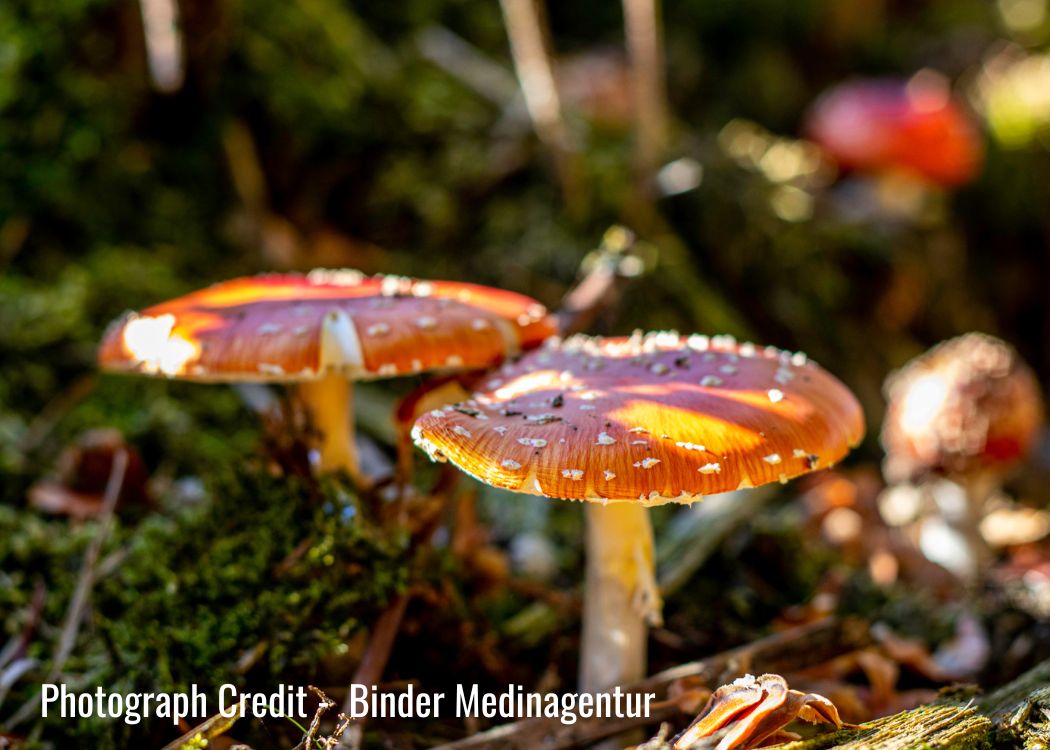
A little like icebergs, what you see above ground is a tiny proportion of the whole. Toadstools and mushrooms are merely the fruiting body of fungi. The bulk of the mycorrhizal network exists below the surface of the soil, for the most part invisible to us humans, but quietly getting on with things and providing a crucial service. Mycorrhizae are used by between 80 and 90% of land plants, from the icy tundra to the sweltering tropics, and many couldn’t survive without them. By adding them to your soil you’re not only giving your plants a helping hand but also enriching the ecosystem in your garden.