

Blog
Hedge fund: the value of green screens and how to plant them

Hedge fund: the value of green screens and how to plant them
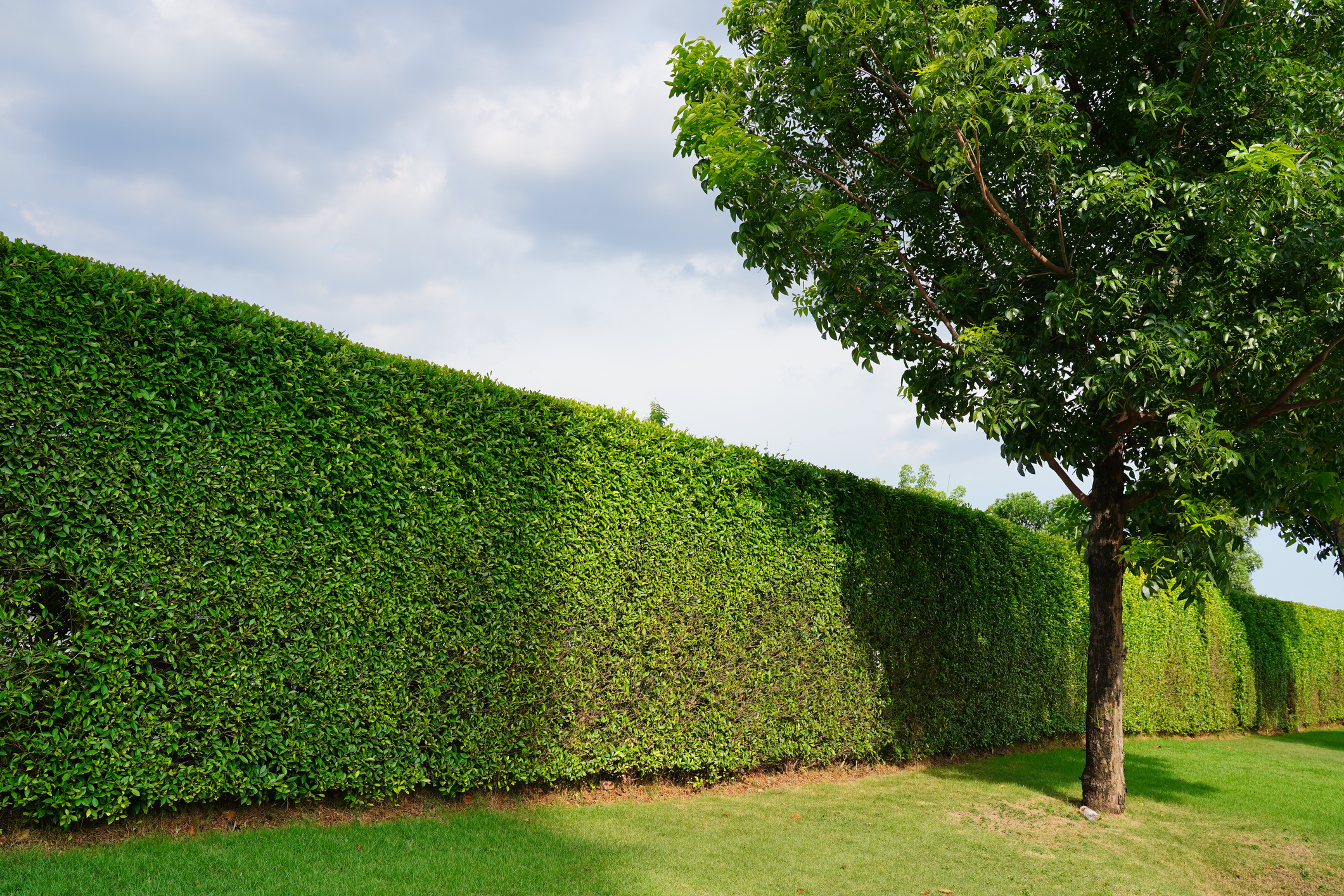
Let us, for a moment, extol the virtues of hedges. Not merely useful and ornamental garden features, they offer shelter in the form of hidey-holes and nesting spots for all sorts of wildlife from invertebrates and birds to hedgehogs and other small mammals, as well as food for caterpillars, insects and birds. They’re particularly important in urban areas as they allow wildlife to move around between gardens. And if you’ve ever walked past a hedge occupied by a flock (or ‘quarrel’) of chattering, squabbling sparrows, you’ll have been witness to just how important its shelter is.
For us humans, hedges provide screening and security. They form a natural barrier to pollution in urban areas and help to block out noise as well as screening houses and front gardens. They make more effective windbreaks than fences and walls, allowing the wind to filter through rather than forcing it over the top and then down onto your precious plants. They’re usually more economical to install and they last longer. They look lovely too.
We’ve moved on since the days of the simple suburban privet hedge, although it still has its place. There were valid reasons for its popularity and I personally find something rather safe and comforting in its ordinariness. Actually you can use almost any shrub or small tree as long as its character won’t be spoiled by regular cutting and it will grow to the right height and in the right sort of shape to serve your purposes.
You may want something that’s fully evergreen or be happy with at least some deciduous plants. After all, bare, twisty twigs and branches have their own stark beauty on a winter’s day, particularly in damp places where lichens and mosses take hold. Blossoms and berries will add to a hedge’s impact too, as well as providing food for wildlife.
Many of the hedgerows in our rural environment date back to the Bronze Age. Some may be even older, with their origins in Neolithic times.
Hedgerow facts:
- They support approximately 80% of our woodland birds, 50% of mammals and 30% of butterflies
- In areas lacking woodland, many species of birds depend on hedgerows
- Altogether, healthy hedgerows support over 2,000 species of wildlife, including vulnerable and endangered creatures like hedgehogs, dormice and bats.
They are, however, in trouble. Since the Second World War we’ve lost 50% of this ancient network.
Planting your own hedge can help to alleviate this rather alarming situation. Clearly, garden hedges are different to wild hedgerows but you can go some way to providing a similar environment, particularly if you plant a mixed hedge.
Formal or informal?
Garden hedges can be wild and informal or neat and contained or something in between. A beech hedge, for example, is slightly loose and wild looking but can be trimmed to have neat edges and clean lines.
Informal and flowering ornamental hedges
Laurel is tough and evergreen. It also flowers, although not flamboyantly. Alternatively, you could try Elaeagnus x ebbingei, another tough evergreen. Its flowers, too, are insignificant, however they compensate more than adequately with aoH glorious spicy scent which will permeate your garden in autumn.
Deciduous hawthorn and evergreen holly, pyracantha and mahonia all have prickles or spines so provide good security screening. Hawthorn, pyracantha, mahonia and female hollies all have flowers and berries too.
If you want to splash out you could plant a hedge of shrubs which are usually grown as a single feature and have lots of flowers.
Evergreen:
Pink-blossomed escallonia
Osmanthus x burkwoodii – white, gorgeously fragrant flowers
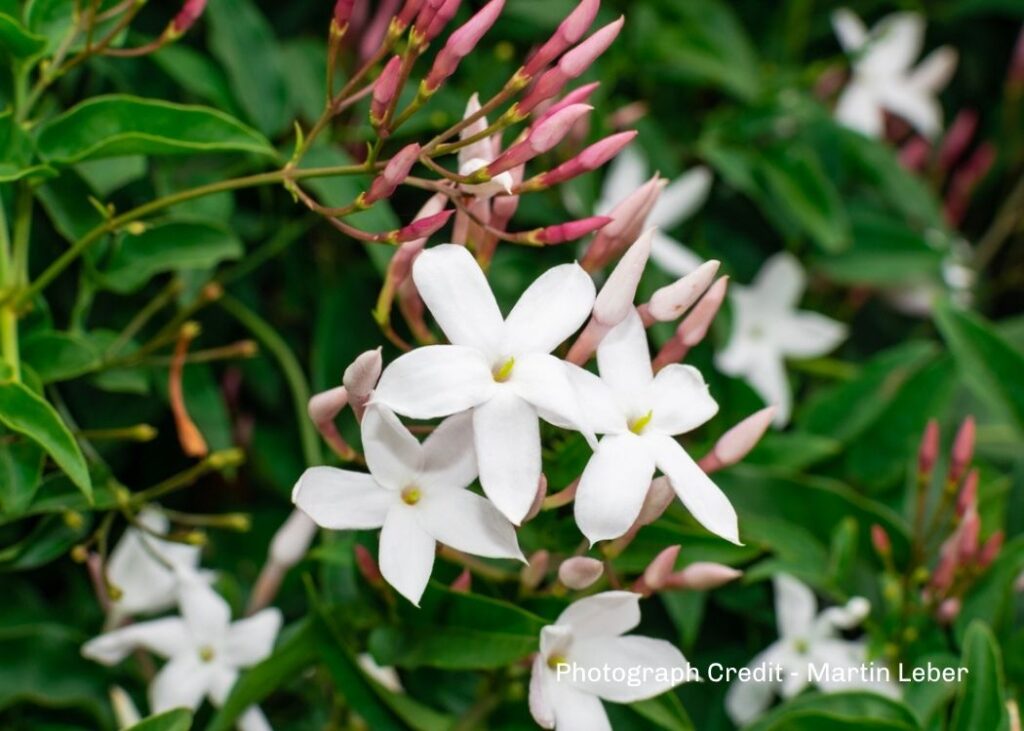
Choisya ternata with its white, star-like delicately-scented blooms in May. (You’ll often get a second flush round September too.)
Spicily-scented winter-flowering Christmas box (sarcococca)
Winter-flowering Viburnum tinus
Semi-evergreen:
Golden-flowered St John’s Wort (hypericum)
Deciduous:
Pink or white-blossomed wiegela, which also has variegated forms.
Choisya, wiegela and escallonia can all start to become leggy at the bottom when mature but regular feeding and trimming should help to prevent this.
Tip:
Flowering hedges need to be pruned as you’d prune them if you were growing them as shrubs, ie once a year at the right time to encourage flowering, rather than removing the growth that will bear flowers. Some may only need a light trim. So just be careful not to mix plants that have different pruning regimes. Our friendly and knowledgeable staff will be happy to help and for more information on hedge pruning, follow the link under ‘Maintenance’.
Mixed native hedges
Why not go the whole hog and mimic nature? Hawthorn and hazel, holly and beech, crab apple and cornus are all native hedging plants. Creating a thicket of, say, wild dog roses and Viburnum opulus will give you a mass of roses in summer and luscious scarlet hips and berries in winter. And leaving the area at the bottom of your hedge unkempt, allowing grass to grow, wild flowers to spring up and leaf litter to gather provides additional food, shelter and nesting material, adding to your wildlife-friendly mini ecosystem.
(Did you know? Although beech trees are deciduous, when grown as hedging they usually hold onto most of their leaves in winter. This is known as marcescence. It’s not known exactly why they do this, but beech saplings also retain their leaves, probably to afford some winter protection to the vulnerable young plant. Perhaps clipped beech hedges, never reaching anywhere near their full size, are employing the same mechanism.)
There’s a good guide to planting a native hedge here: (The pruning guide applies to native hedging and not flowering ornamental shrubs.)
Formal hedges
These usually comprise dense, evergreen, small-leaved plants which respond well to regular cutting. Large-leaved plants like laurel don’t work quite as well for this type of hedge because cutting with a hedge trimmer tends to chop through the leaves making them raggedy and untidy.
For tall hedges yew or cypress are the norm as both are relatively fast-growing but have tiny, neat leaves.
For medium formal hedges try Lonicera nitida – ‘poor man’s box’ – which grows up to 3m (6ft) tall and is quite fast-growing. A member of the honeysuckle family, it has small, dark green, glossy leaves and fragrant creamy whitish flowers in spring. These are sometimes followed by purple/blue berries. ‘Baggeson’s Gold’ has golden leaves. Griselinia littoralis is another tough evergreen with oval leaves of bright, limey green. And of course there’s privet which always works well.
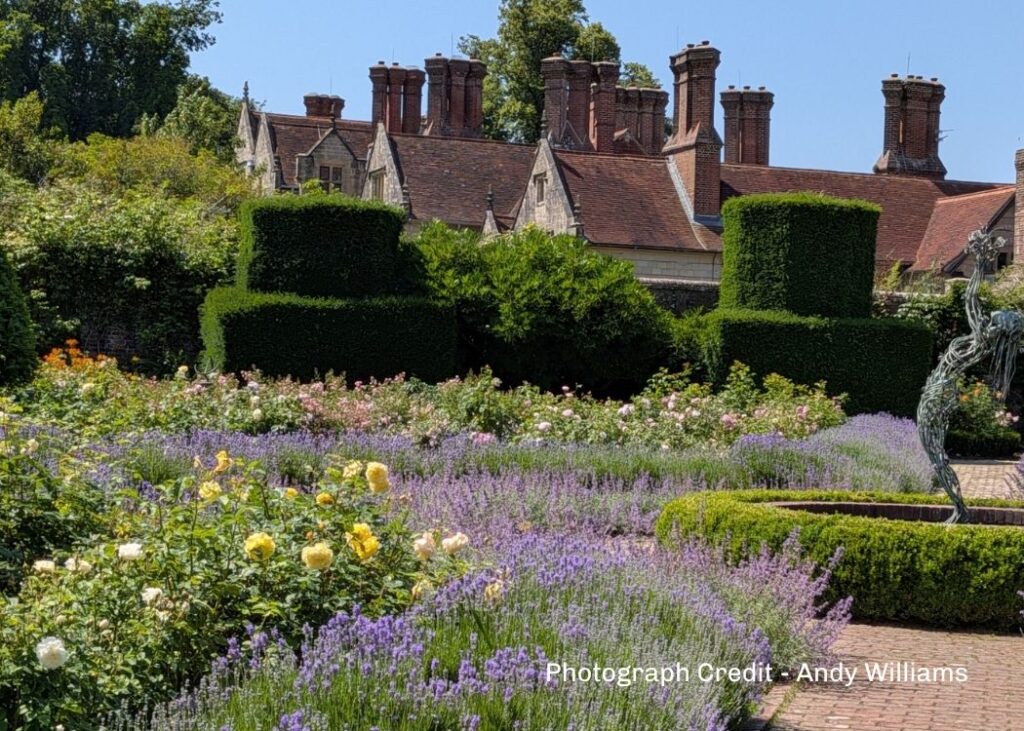
Low, closely clipped hedges are an essential feature of parterres or knot gardens, which make ingenious use of a small space. Box has traditionally been used but these poor shrubs are now prone to the double whammy of box blight and the voracious box tree caterpillar, both of which take a serious toll and can be killers. If you just don’t want to have to deal with this, Ilex crenata would win a box looky-likey competition hands down and is an excellent alternative. Yew is good too.
You might want to use small euonymus such as E. fortunei ‘Emerald Gaiety’ and E. japonicus ‘Jean Hughes’, or Lonicera pileata, which is lower growing than its cousin. Smaller-leaved, lower-growing hebes are a relatively expensive option but pollinators (and you) will love their flowers.
Silvery cotton lavender (Santolina chamaecyparissus) is evergreen, compact and low-growing but has a mounded shape. So whilst it may not be for traditionalists who like their hedging to have straight lines, a row of them makes an unusual and rather pleasing wavy hedge. It also has aromatic foliage and yellow flowers, although some of the latter may be removed by regular clipping.
Evergreen Pittosporum tenuifolium is a versatile hedging plant too. Take your pick from its many cultivars which range in size from about 0.5m to 8m tall. There are also several variegated forms. www.rhs.org.uk/plants/pittosporum/hedging
Planting
Spacing varies depending on the plant’s final size. The information you need for specific plants can be found online.
Once you’ve worked this out, you can either:
- Dig a hole for each plant that’s twice as wide and deep as the pot/root ball.
Or dig a trench, calculating the size according to the spacing and the width and depth of each plant as above.
- Fork over the bottom of the holes or trench to loosen the soil.
If your soil contains a lot of clay, add some organic matter into the hole.
- Add a handful of mycorrhizal fungi for each plant.
- Place each of the plants and backfill with soil and/or compost.
- Water in well, using about half to one can of water for each plant.
- Mulch the surface to keep weeds down, trying to ensure the compost doesn’t actually touch the main stem of each plant to avoid the chance of rotting.
https://www.rhs.org.uk/plants/types/hedges/planting
Maintenance
Feed and water as you would the other shrubs in your garden. Pruning requirements differ with the type of hedge you have. You’ll find a useful guide here:
https://www.rhs.org.uk/plants/types/hedges/pruning-guide
It’s calculated that the UK needs to plant 200,000 km of new hedgerows for us to meet our 2050 net zero target. So by planting even a very small hedge, you’ll not only be adding to the charm of your garden, but also helping in the battle against climate change. Let’s not rest on our laurels or hedge our bets, every little helps!






Great article on green screens and planting them! I learned a lot and appreciate the helpful information. Thank you for sharing!