Blog
Hardy Geraniums: Perennial Garden Heroes


‘When in doubt, plant a geranium,’ advised influential plantswoman and garden writer Margery Fish. To save any potential confusion, what we’re talking about here are cranesbills or hardy perennial geraniums, which die back in winter and reappear in spring. The jaunty bedding plants that are usually referred to as geraniums are in fact tender pelargoniums.
The name cranesbill originates from the Greek ‘geranos’ meaning crane, as the seed capsule of some species, such as UK native Geranium sanguineum, is long and pointed and said to resemble a crane’s beak.
Among our other hardy natives is Geranium pratense (meadow cranesbill) from which several garden cultivars have been bred. We’re also lucky to have delicate candy pink herb Robert which springs up uninvited in flower pots and cracks in paving. In former times it was said to bring good luck and fertility. And if you look carefully while out on a countryside stroll you may spot tiny mauve-flowered cut-leaved cranesbill.
Geraniums in cultivation
Cranesbills are tolerant of most conditions. There’s a huge variety available and one for most garden situations including dry shade. They’re also low-maintenance and less prone to disease than many other plants.
Nor are they particularly attractive to pests. Slug and snail-resistant, even to the Terminator-type slitherers so often found in London gardens, they’re also said to be among the few plants that deer and rabbits don’t find tasty.
Many flower prolifically and some, like blue Geranium ‘Rozanne’ or G. sanguineum var. striatum, will bloom for months, filling your chosen spots with shades of pink, purple, blue and white. Some of those with a shorter flowering period will bloom again if you cut them back after their initial flush. Get the combination right and you’ll have geraniums blooming from early summer right through until autumn. And the flowers are not their only virtue. With lush and beautifully-shaped foliage, some even provide autumn colour and others, like Geranium ‘Mavis Simpson’, are semi-evergreen, retaining most of their leaves in winter.
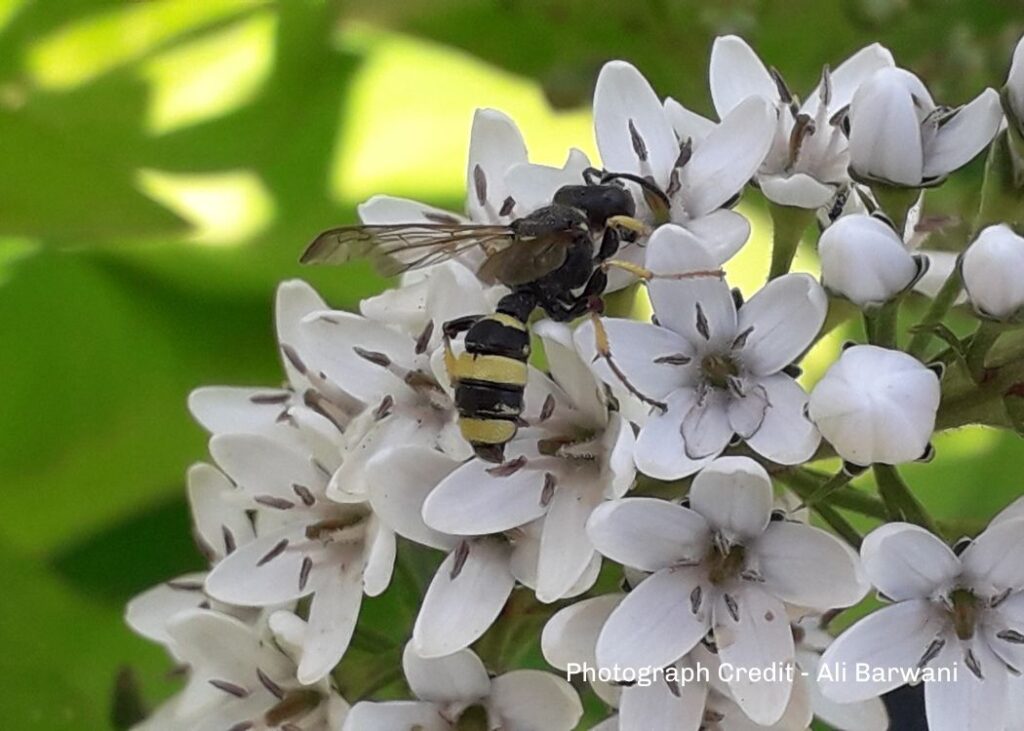
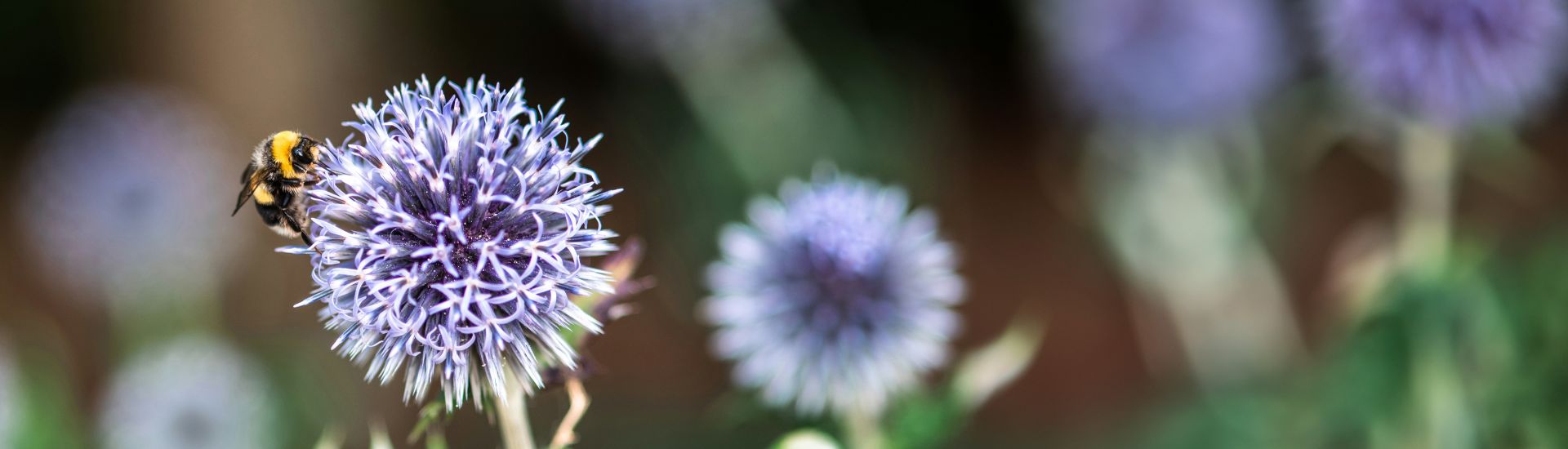
As if this weren’t enough they’re also a food source for pollinating insects – honeybees, bumblebees and mason bees home in on them.
Using them in the garden
Plant hardy geraniums in beds and borders and on banks where they’ll seem to cascade downwards. Some, such as compact alpine Geranium cinereum, are even suitable for rockeries. Others are spreading and make good ground cover, some sprawl and weave themselves amongst other plants, still others are more bushy in form.
Most are tolerant of full sun to light shade but there are plenty that will thrive in part or dappled shade too.
For sun: Geranium x oxonianum flowers from summer through to autumn. G. pratense is generally tall with violet, lavender or white blooms. Small G. cinereum likes good, fairly gritty drainage.
For part-shade: Tallish and early-blooming Geranium maculatum should produce a second flush of flowers if cut back. Smaller but large-flowered G. sanguineum comes in shades of pink, often with pretty, delicate, deeper pink fine lines on the petals. G. sylvaticum ‘Album’ is white with a lime green centre. (As the name suggests, its natural habitat is woodland.)
For dry shade: Pink or white-flowered Geranium macrorrhizum is semi-evergreen. Glossy-leaved G. nodosum blooms in lilac, purple and white. Tall and striking G. phaeum produces smallish flowers on long stems in colours from white through to burgundy.
For summer foliage colour: Geranium ‘Orkney Cherry’ has bold magenta flowers and deep bronze foliage, while quiet little G. ‘Dusky Crug’ has light pink flowers and pale bronze leaves.
https://www.rhs.org.uk/plants/articles/graham-rice/perennials-and-bulbs/10-hardy-geraniums
Plant combinations
Standard garden design advice is to pick plants with contrasting and complementary leaf and flower shapes to add texture and variety to your planting. Think about colour too. The deep violet of Geranium phaeum ‘Lily Lovell’ next to lime green or white, for example, is a glory to behold.
Plant geraniums with:
- Erysimum ‘Bowles’s Mauve’ and Persicaria bistorta for a subtle palette of pale pink, lavender and violet.
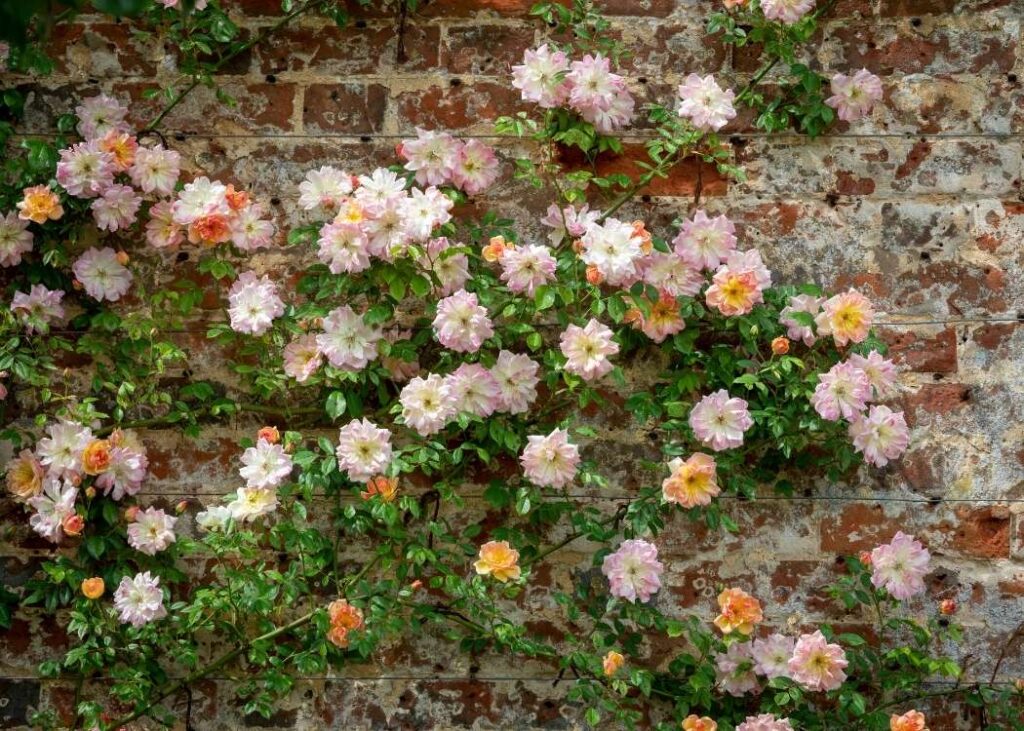
- Purple and white salvias, lavenders and nepeta against a backdrop of climbing roses for a tastefully colour-co-ordinated cottage garden look.
- If you’re feeling daring – orange, yellow, white and coral pink California poppies, strap-leaved red, orange or yellow crocosmia or marigolds. Add the lime green of Euphorbia x martini in flower and other-worldly annual Molleleuca laevis (Bells of Ireland) with its spires of cup-shaped, bright-green bracts for a veritable kaleidoscope of colour.
- Grasses such as soft-textured hakonechloa, evergreen carex or Luzula nivea in shady areas.
- The grey-green foliage of felty Stachys byzantina, magenta or white-flowered Lychnis coronaria, mounds of Santolina chamaecyparissus (cotton lavender) or feathery Artemisia ‘Powys Castle’.
And to avoid bare patches in winter, combine taller geraniums with low-growing evergreen shrubs such as Euonymus fortunei ‘Emerald Gaiety’. Blue, purple, pink or white-flowered hebes also work well and allow for more versatility as small front-of-border hebes can be placed next to smaller geraniums.
The roots and leaves of wild cranesbills have been used in Native American traditional medicine to treat an astonishing variety of ills, including stomach upsets, gynaecological problems and as an eyewash. Both contain tannins, are said to have anti-inflammatory properties and are also used as a compress on wounds and swollen feet. In the UK, herb Robert was used as an antiseptic and to stop nosebleeds. However, we advise you don’t try any of this at home of course!
According to the Hardy Plant Society there are about 110 species and 600 cultivars of hardy geranium alive and kicking in British gardens, so clearly many of us are channelling Margery Fish, and with good reason. These admirable plants are tough and adaptable and will add something really special to your garden.
Geranium Day is in held in June each year and is organised by the Hardy Plant Society. It’s a celebration of this horticultural wonder with talks and garden tours and is a treat for cranesbill enthusiasts. And East Lambrook Manor, the glorious garden Ms. Fish created in Somerset, is open to the public. You’ll find details here: http://www.eastlambrook.com/pages/
https://www.hardy-plant.org.uk/meet-us-at/specialist-groups/hardygeranium
If you are looking for a particular plant, why not use our plant finder?