Blog
For the love of lepidoptera: making a moth-friendly garden


For the love of lepidoptera: making a moth-friendly garden
Moths are often relegated to the chorus line while their more glamorous cousins the butterflies hog the limelight. But many are just as beautiful, with colourful and sometimes intricate patterns traced on their wings, like those of the grey dagger moth, its wings dove grey with markings like black hieroglyphs. Contrast its quiet beauty with that of the blotched emerald, bright green with lacy buff and cream markings. Even the duller-looking species are to be admired, their colouring and markings a clever camouflage evolved to protect them from predators. And like butterflies, they play a crucial role as garden pollinators. Indeed, a recent study showed that moths pollinate flowers at night more quickly than bees do during the day. It’s thought that their supercharged powers in this respect may have developed to get the most out of the limited hours of short summer nights.
Perhaps we’re less aware of moths because so many are active while we’re tucked up in bed. But they don’t just fly at night. In fact, according to the charity Butterfly Conservation, there are more day-flying species of moth than there are species of butterfly in the UK. Some are so small, however, that they may slip past you unnoticed. And adult moths earn their place in the ecosystem not just as pollinators but as food for birds like swifts, swallows and nightjars, as well as bats, frogs and toads, several of which are endangered. Caterpillars too are an important food source for adult warblers and cuckoos but they’re most crucial in feeding chicks of many bird species, especially those of blue and great tits. Indeed, some birds time their breeding season to coincide with that of peak caterpillar numbers. Hedgehogs are also very fond of a juicy caterpillar or two. So supporting moths helps to support other wildlife in need too, as well as encouraging it to visit gardens.
There are an astonishing 2,500 species in UK and while some, like the dreaded box-tree and mullein moths, can be destructive, most are not. Sadly though, they’ve declined by about one third over last 50 years. In fact, since 1900, 51 species have become extinct, three of them since 2000. But the news isn’t all bad. And there are several ways in which we, as gardeners, can help them.
Moths in mind
Moth-friendly gardening needs to take account of their whole life cycle – adults, eggs, caterpillars and pupae. Food is important all year as different species have found their niche in different seasons. In winter most enter dormancy as a means of coping (a strategy many of us can relate to). The majority of non-migratory species overwinter as caterpillars or pupae, with others surviving as eggs or adults. Adults may hide in crevices in trees, caves or even sheds and garages. Caterpillars, eggs and pupae rest on grasses and plant stems, with some caterpillars also burrowing into leaf litter or loose soil. Some will wake and feed on milder days while a few admirably hardy adults – the December, winter and spring usher moths – are active over the colder months. So it’s important to consider all of this when gardening with moths in mind.
Provide food
Adult moths feed on nectar while caterpillars require solid food in the form of plant material.
Plants for nectar:
Adult moths may drink tree sap and the juice of rotting fruit as well as flower nectar. Night-scented plants are a good way to encourage them. Star and common jasmines (Trachelospermum jasminoides and Jasminum officinale) as well as native honeysuckle (Lonicera periclymenum) will all waft scents to tantalise both moths and humans. At ground level try yellow evening primrose and white or lilac sweet rocket and night-scented stocks (Matthiola bicornis). Multi-coloured, single-flowered pinks are famous for their strong, clove-like scent. Closely related, carnations and pinks look very similar but the former often lack scent so sniff before you buy. Tobacco plant Nicotiana alata is also popular with moths. Choose this species over N. sylvestris whose flowers have tubes that are too long for moths to access the precious nectar within.
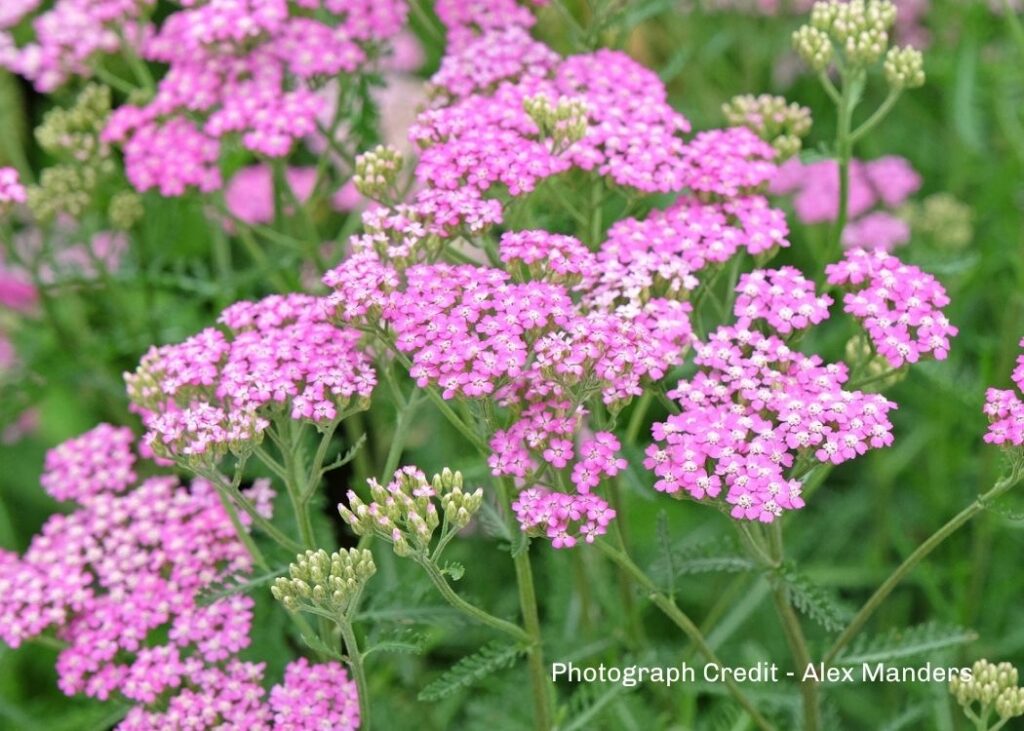
Day-flyers are generally attracted to the same plants as butterflies. As with bees and butterflies, opt for plants with simpler flowers. Pollinators find it hard to access the nectar in double blooms and some may not have nectar at all. Providing a supply from early spring to autumn ensures that food will be available for a wide range of moths.
(Did you know? Some adult moths don’t feed at all. Their lives are short, lasting long enough only for them to breed.)
Plants for caterpillars:
Caterpillars eat lichens and fungi as well as plant material. They tend to be specialists, feeding on one plant or group of plants.
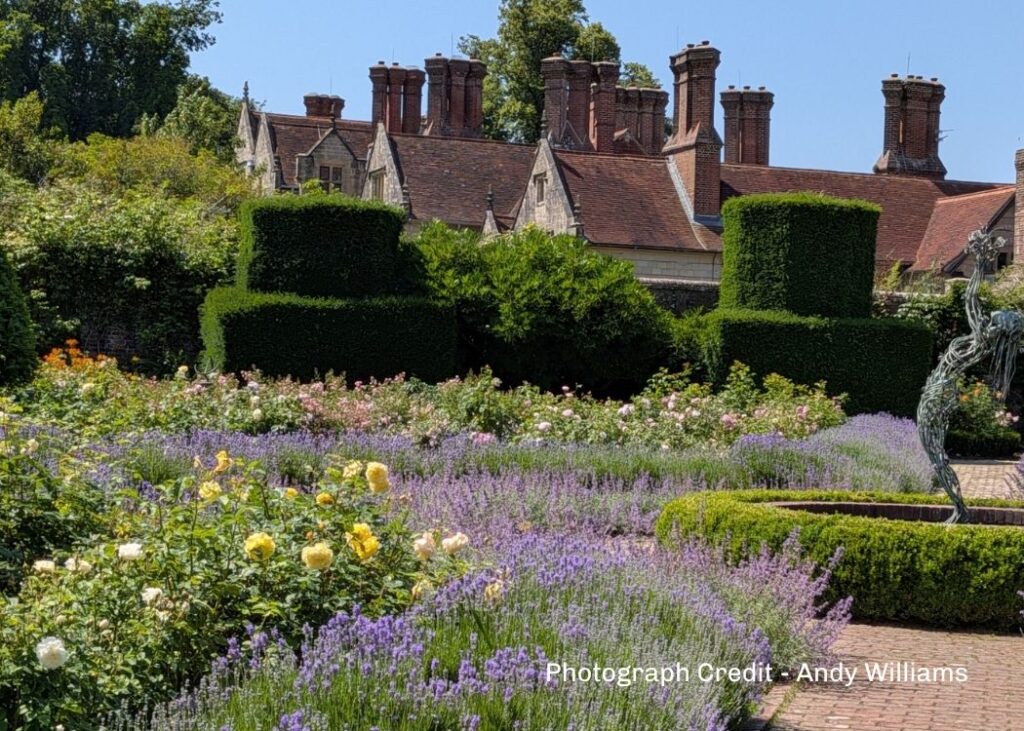
Trees play a big role in moth-friendly gardening. Willow, birch, hazel, oak and hawthorn support a huge range of moths between them including the extraordinary buff tip, which, at rest, looks exactly like a small twig. Hawthorns as well as certain willow cultivars are small enough to be suitable for small gardens and hawthorn is a generous plant, with blossom in spring and red berries in autumn. Planting a native hedge is a good way to incorporate several caterpillar food plants into a smallish space. Include dog rose and blackthorn (also the bearer of spring blossom and autumn sloes) and you may attract shoulder stripe and Chinese character moths. A native hedge makes a welcome nesting and breeding site for small mammals and birds too.
Other caterpillar food plants include:
· Rosebay willow herb – for the elephant hawk moth.
· Comfrey – for the scarlet tiger.
· Foxgloves – for the angle shades and cetaceous Hebrew character.
· Apples and crab apples – for the rather startling eyed hawk-moth, with pale taupe and brown forewings and blue ‘eyes’ set into pinkish orange hindwings.
· Nettles – for burnished brass and garden and Jersey tiger moths as well as several species of butterfly.
· Marjoram and mint – for the pretty burgundy and gold mint moth. Caterpillar Food Plants & Nectar Plants
Take a relaxed approach to tidiness
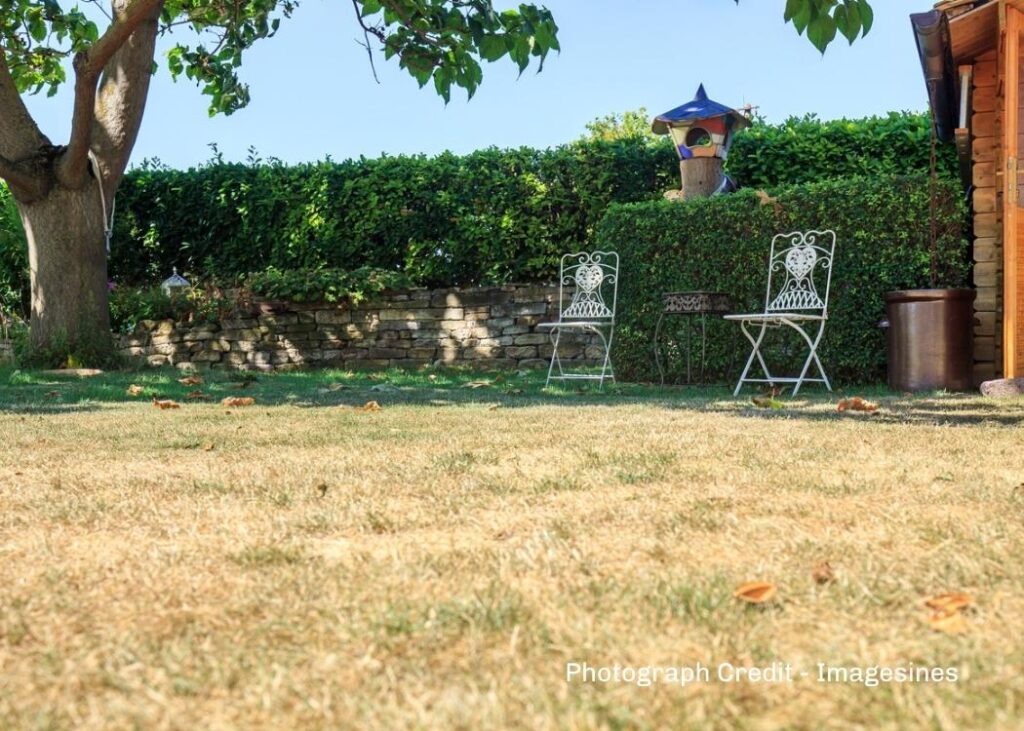
Caterpillars need food during active periods and, along with pupae and eggs, places to overwinter. So leave areas of long grass and leaf litter for food and overwintering, especially underneath trees as caterpillars often drop down to pupate or go into winter dormancy. Resist chopping plant stems back in autumn, leaving some as resting places for eggs, caterpillars and pupae. And if you have space, a wilderness area for nettles, wild flowers and grasses is perfect. Leave some rotting fruit on the ground if you can bear to for late summer and autumn flying moths.
Try alternatives to pesticides
These don’t just kill the insects that damage plants, they take out the beneficial ones too and this includes moths. Leaving insects that only do minimal damage encourages predators such as birds, who will in turn keep insect pest numbers down. There are often other ways of controlling hard core pests too, for example through the use of biological controls. You’ll find some guidance on alternative ways of dealing with them here
Embrace the dark
Moths navigate partly by moonlight and other natural light sources. Bright security lights in particular adversely affect many creatures, disrupting their sleep and feeding patterns. Security lights may make us feel safe and fairy lights are pretty but try and find a balance between your needs and those of local wildlife.
For more fascinating moth facts, Click here
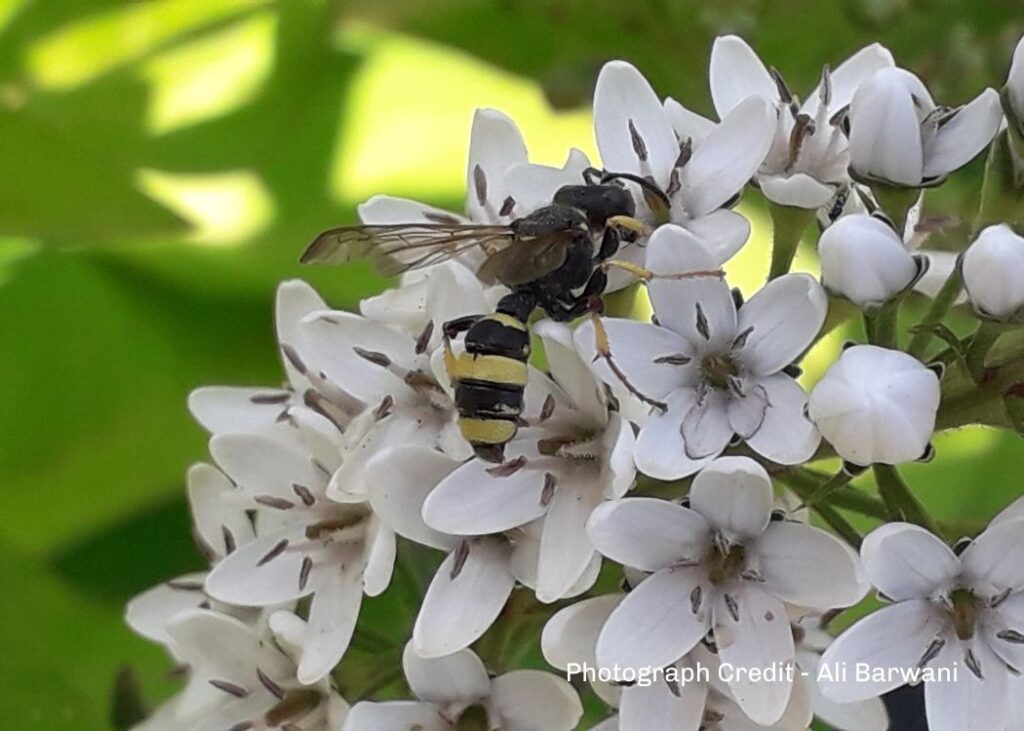
Some moths have intriguing characteristics. The day-flying hummingbird hawk-moth gets its name from the way it hovers, wings a-blur, over flowers during the day, unrolling its long tongue to suck out the nectar from small, tubular flowers. Watching one feeding on Verbena bonariensis on a hot summer’s day is a treat. The caterpillars of Cossus cossus may stay dormant for several years before they emerge as adults. These reclusive caterpillars are said to smell of goat, hence their common name, goat moth. And the hornet moth looks almost exactly like a hornet. Expert pollinators, fast food for birds and much more than just fleeting creatures of the night, moths have a vital role to play in our gardens.
Read more about butterfly and moth conservation here