Blog
Autumn Lawn Care


Autumn Lawn Care
The job of caring for a lawn varies with the seasons. This article explores autumn lawn care. That is to say, looking at what you need to do to maintain your lawn during the months of September, October and November.
Lawns come in different shapes and sizes, and varying levels of neatness. If your heart is set on a striped bowling green, then that level of perfection will require a lot of regular maintenance. For most people an informal lawn is more practical as it needs little more than regular mowing and edging, together with the appropriate seasonal treatments to keep it looking green and healthy.
Save Our Lawns!
The number of British gardens with gravel, paving or artificial grass instead of a living lawn is rising. This trend, largely encouraged by TV garden makeovers, is not without its environmental costs. These surfaces block entry to the soil for burrowing insects, and access to the surface for burrowers. Artificial grass is only green in colour. Fake grass provides no food for wildlife and provides no space for native plants. The production of plastics uses fossil fuels and emits CO₂. Paving and other non-permeable surfaces increase the risk of flash flooding, because instead of allowing the soil to soak up moisture the rain runs straight off the land and overwhelms drains. The soil under artificial surfaces is lost to nature and it can only dream of sunshine and grass.
Why Do Lawns Matter?
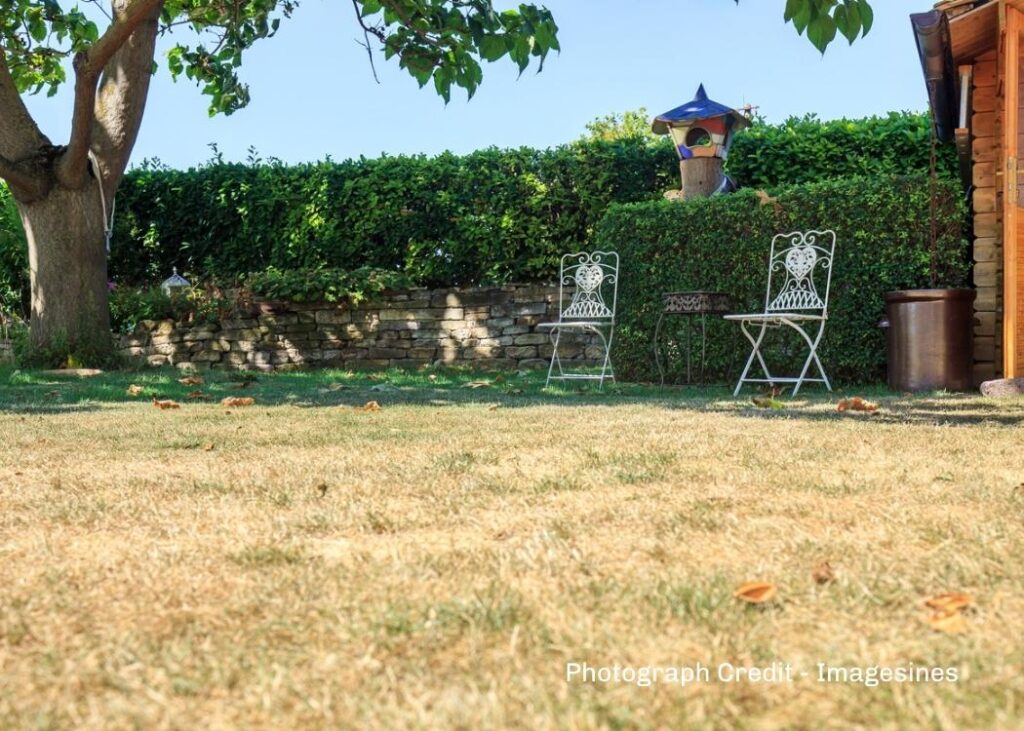
Lawns are a refuge for nature. Lawns provide a home for beetles, bugs and worms. They attract birds into the garden, such as blackbirds, thrushes and starlings that hunt for the invertebrates that live in the soil. Lawns are great for natural drainage, allowing heavy rainfall to safely soak away. Lawns are living and breathing ecosystems that enhance our health and souls. The sweet, sharp smell of freshly cut grass is the scent of summer afternoons and weekends. Cheerful spring bulbs can be naturalised in an informal lawn:
https://www.capitalgardens.co.uk/blog/how-to-naturalise-bulbs/
Lawns are a luxury for city dwellers. Nothing is nicer than a picnic on a lawn. After Gryffindor win the Quidditch Cup in ‘Harry Potter and The Prisoner of Azkaban’ all anybody felt like doing ‘was strolling into the grounds and flopping down on the grass with several pints of iced pumpkin juice’.
Maintaining a lawn
So now we know the benefits of having a lawn we need to look at the business of keeping it healthy. Lawns need regular maintenance, mowing, watering, and feeding. The advice given here is for an established lawn, not for one that has recently been sown or laid.
Lawn maintenance is most effective when you follow a regular programme of care, rather than having an occasional burst of intense activity.
Autumn Lawn Care
Autumn is an important time for lawn maintenance. The cooler and moist climate of Autumn creates conditions perfect for repairing and reseeding lawn areas that have been damaged during summer. Autumn is also a good time to ‘weed and feed’ the lawn.
Top 8 Autumn Lawn Jobs
1) Remove fallen leaves from the lawn. Do not let fallen leaves build up on the lawn as they will cause the grass underneath them to die. The raked leaves can be added to the compost heap.
2) Continue to mow your grass in autumn. Now is the time to start raising the height of the cut of your mower. This is because very short grass can suffer frost damage later in the year.
Expert Tip: Never walk on a lawn when it is frozen, grass is easily damaged in this state.
3) Tidy up the edges, especially where overhanging plants spill onto the lawn. Tidying the edges of the lawn gives it a professional finish. Lawn edges should be re-cut with a half-moon edging tool. The edges can then be trimmed after subsequent mowings with edging shears.
4) Scarify the lawn. Scarification is the removal of the ‘thatch’ from the lawn. Thatch is term for all the old lawn clippings, dead moss and other organic matter that builds up in lawns between the grass blades and the roots. A thick thatch layer can block water (and any lawn treatments you apply) from reaching the roots. Thatch also gives the lawn a dead look.
The easiest way to remove thatch is to give it a good rake with a spring tine rake such as the ‘Spear and Jackson Flexo Lawn Rake’ (starting at £21.99). If you have a larger than average lawn, then you might need to hire or invest in a powered scarifier.
5) Moss Control. To control moss properly you first need to apply a proprietary moss killer, and then scarify the lawn after two weeks. As with all garden chemicals, it is very important to read the instructions on the back of the bottle or packet.
For organic gardeners we stock ‘Neudorff Biodegradable Organic Moss Control For Lawns’ (£12.99 for 1lt). This product is quick and easy to apply with a watering can.
Other moss killing products include ‘Maxicrop Mosskiller and Lawn Tonic’, with a natural organic seaweed base (from £6.99), and ‘Miracle-gro® Mosskill® Liquid’ (from £9.99).
6) Aerate the lawn. The roots of grass need air as well as water to survive. Air-pockets in the soil are particularly important to prevent waterlogging. The paths that we walk over, and the areas where we sit are particularly prone to compaction. To counteract this, we need to break up the compacted soil.
This job can be done with a garden fork. Push the tines of the fork into a depth of about 8cm, the rows of holes should be made about 10cm apart. This should be done every two years or so.
If the lawn is heavily compacted, of if it suffers from severe waterlogging, then it is worth investing in a hollow-tine lawn aerator. These aerators remove small plugs of soil permitting air and water to penetrate deeper.
7) Apply an all-in-one autumn lawn treatment. If you have an established lawn (one that has been in place for more than one year), then you can apply a product that kills moss and feeds the grass.
Westland Aftercut All In One Autumn Lawn Feed and Moss Killer (3.2kg for £10.99) is applied after you have cut the lawn. It can be applied from September to mid-November. This granular product should be applied when rain is imminent and while the grass is actively growing. As Henry David Thoreau noted, ‘A single gentle rain makes the grass many shades greener’.
Top tip: when you use any granular lawn product brush off any granules that have fallen on to hard surfaces, decking, clothing and footwear to prevent possible staining.
Expert Tip: If you have a large lawn then it is worth buying a wheeled spreader that can be calibrated to different spread rates.
If you prefer a liquid ‘weed & feed’ product, that is one containing a selective weedkiller plus fertilizer, then we have various brands starting from £8.99 in our lawn care aisles.
7) Seed bare areas. Areas of lawn that have been badly worn and are now looking shabby can be reseeded in September.
To watch grass-seed germinate and grow:
https://www.youtube.com/watch?v=gNtF_KYRtSc
‘Miracle-gro® Patch Magic’ is an all-in-one product for repairing bare patches. It comes complete in an easy-to-use hand-held applicator pack (packs start at £21.99 for a 1.5kg packet). All you need to do is prepare the area to be repaired digging this over with a fork, then follow the instructions on the back of the box.
Alternatively, you can buy a box of grass seed and reseed the area after lightly raking it. After you have seeded the area, you should then apply a top dressing.
8) Top dressing the lawn. Top dressing is not just used for covering bare patches that have been reseeded. Top dressing can be used to balance out any unevenness that has developed in the lawn. Top dressing also helps encourage thickening of the turf.
To make your own lawn top dressing simply mix (by volume) three parts topsoil with six parts of horticultural sharp sand and one part of compost.
In Conclusion:
Lawn care may seem a bit of a chore, but I think it is well worth making the effort to prepare your lawn for autumn. Firstly, tidy lawns provide a perfect foil to your flower borders. Secondly, lawns make great garden paths. Thirdly, lawns are wonderful spaces for entertaining. Finally, lawns provide the ideal place to rest after all that mowing and autumn lawn care!
Further information: To learn about lawn care in spring, and for more general tips on lawn care:
https://www.capitalgardens.co.uk/blog/get-your-lawn-ready-at-easter/