Blog
World Bee Day 2025: Celebrating the Importance of Pollinators

World Bee Day 2025: Celebrating the Importance of Pollinators
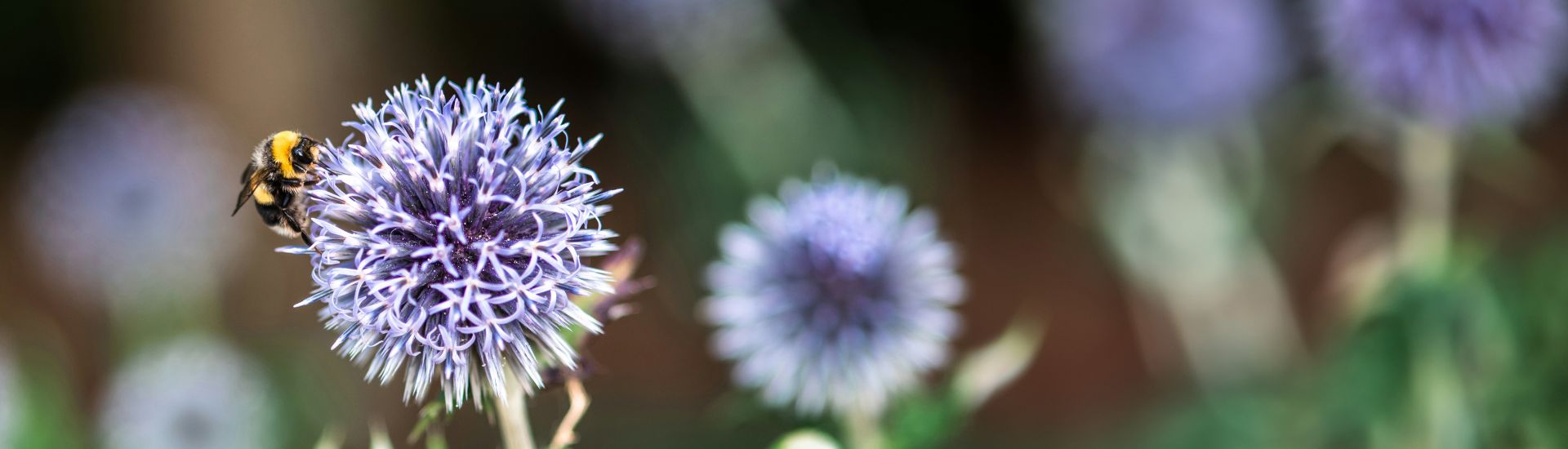
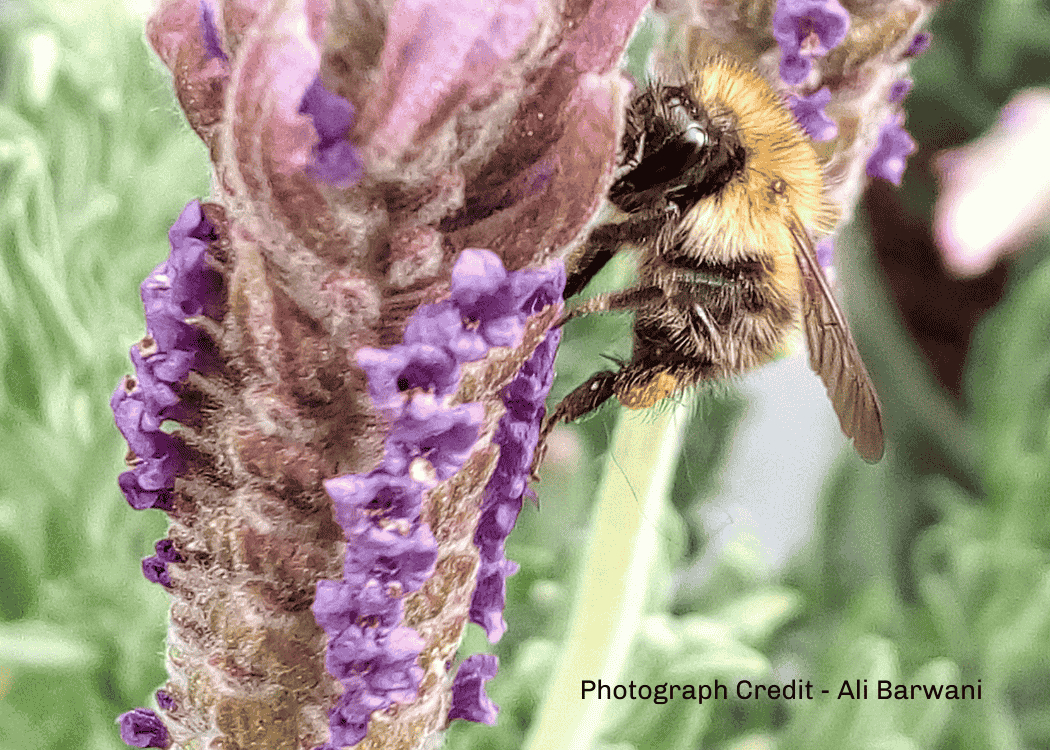
“Enough paperwork…” growls Dan, the deputy manager. “Get watering!” Sitting quietly, checking barcodes from today’s houseplant delivery, I am also trying to come up with a topic for my blog article. Lacking inspiration, I obediently vacate the airless mezzanine office cradling under a roasting steel roof. It is cooler outside, standing hose-in-hand saturating serried rows of French lavender. Their purple bracts, wafted by passing sultry breezes, resemble flutters of butterflies. Observing the flowers, I see that bees are everywhere. Hardworking honeybees are familiar with their hairy bodies and golden banded abdomens. They will be visiting from the hives located on the adjacent allotments. I can also spot a few foraging white-tailed bumblebees as I bee-watch (and water). Then I spot some bees I don’t recognise. Resembling bumblebees, but smaller and zippy. If you recognise the hairy, rusty-brown bee in the photograph then let me know! An idea begins to form. Why not write about bees?
What luck! A quick google search on my phone reveals that the UN General Assembly declared May 20th as World Bee Day to raise awareness of the crucial role that bees and other pollinators play in farming and ecosystems. The aim of this special day is to highlight the challenges that bees are facing in today’s world and the impact these challenges have on both our environment and food production. Since its inception in 2018, World Bee Day has been observed to honour the birthday of Anton Janša, a pioneer of modern beekeeping, born on May 20th, 1734, in Slovenia.
Why is World Bee Day important? It draws attention to the vital role that bees and other pollinators play in the commercial production of food and non-food agricultural products by farming and in maintaining the health of ecosystems. The slogan for this year, “bee inspired by nature to nourish us all“, underscores the importance of bees in ensuring food security and maintaining biodiversity. Bees face numerous threats, including habitat loss, unsustainable agricultural practices, climate change, and pollution. The decline of bees poses a serious risk to food production, which results in increased costs and reduced food security, particularly affecting rural communities.
Bees and other pollinators are essential for agriculture, as they are responsible for pollinating more than 75% of the world’s crops, including many fruits, vegetables, nuts, and seeds. Pollinators not only increase crop yields but also improve food quality and diversity. There are over 200,000 species of animals that act as pollinators, with more than 20,000 species of bees playing a critical role in this process. Did you know that there are around 270 species of bee in Britain, that just under 250 of which are solitary bees, with 24 species of bumblebee but only a single species of honeybee?
To protect and safeguard bees, the Food and Agriculture Organization of the United Nations says it is crucial to adopt nature-friendly agricultural practices such as intercropping and agroforestry (a land-use system that integrates trees into farmland to enhance productivity and protect the environment), as well as integrated pest management. Emphasis is being focused on conservation of biodiversity, including the preservation of soil fertility and careful water management, to help ensure the well-being of pollinators.
Is there anything we can do as individuals? Yes, there are many actions that we can take to support pollinators. For example, plant bee-friendly flowers in your garden or window boxes, build bee houses for solitary bees and leave nesting sites for ground nesting bees. You can also buy locally produced honey and other bee products and avoid using harmful chemicals and pesticides. By taking small steps such as these, we can make a big impact on the health and sustainability of bee populations and help ensure a more sustainable future for our planet. So, let’s join in the buzz for World Bee Day 2025 and make a difference for these essential creatures that nourish us all!
And finally, you ask… am I cross with the deputy manager telling me to get out and do some watering? I will leave the last word to William Shakespeare, who wrote, ‘for so work the honey-bees, creatures that by a rule in nature teach the act of order to a peopled kingdom.’
Further Information:
Visit Our Bee Event – on Saturday 10th May at Studley Green Garden Centre and Café. This includes the opportunity to learn about bees with an observation beehive from Sands Honey, and to purchase a selection of honey products.
https://www.capitalgardens.co.uk/store-locations/studley-green-garden-centre/
UN World Bee Day – 20th May:
https://www.fao.org/world-bee-day/en
North London Beekeepers:
https://www.beekeeping.org.uk/
Best Plants for Bees:
https://www.gardenersworld.com/plants/plants-for-bees/