Blog
Thinking outside the box: alternative plants for hedging and topiary

Thinking outside the box: alternative plants for hedging and topiary
With its small, glossy leaves and tolerance for being regularly and closely clipped, box has for centuries been used to create low, neat hedges and is an important feature of formal gardens, particularly as the framework for parterres and knot gardens. It also makes fine topiary, fitting easily to the simple shapes of box balls and cones or more elaborate spirals, cloud pruning and fantastic birds and beasts. Its habit of growing slowly means it’s happy planted in containers too. Unfortunately though, this versatile plant has, in recent years, been ravaged by both fungal disease and a persistent and voracious invertebrate invader. So if you’re considering box as a feature in your garden, or already have plants that have been attacked, it’s wise to consider alternatives.
Box blight
The symptoms of this fungal disease are dark patches and browning of the foliage which then drops, leaving bare areas. You may also see blackening of young stems and white fungal spores on the undersides of leaves. Treatment is difficult and includes cutting out affected areas or digging up badly hit plants and binning (not composting) them. Fallen leaves and the surface of surrounding topsoil or compost should also be removed and thrown away. Plants can be sprayed with a fungicide specific to the disease, but this usually needs to be repeated and even then isn’t always completely effective even when carried out by experienced professional gardeners.
Another fungal disease, Volutella blight, also affects box but isn’t as serious. The symptoms are similar but the spores are pink.
Box tree caterpillar
These striking-looking creatures are lime green with black and white markings. They become duplicitously beautiful white and buff-coloured moths but it’s the caterpillars that do the damage. They can strip a plant of its leaves in an astonishingly short space of time, leaving your carefully trimmed and nurtured hedge looking as though a plague of locusts has passed through. The pests themselves often hide deep within the plant (at least while there’s foliage left in which to do so) but you’ll see a network of webbing that they weave around their feeding areas. They can be sprayed with insecticide but it’s not particularly effective and also kills all other insects in its path, including the pollinators that we welcome into our gardens.
These twin scourges of box have become such a problem that the RHS has been trialling alternatives in its garden at Wisley in Surrey. It also asked professional gardeners, advisors and RHS members about their experience of alternatives they themselves had been growing. Among other characteristics they looked for ‘clipability’ – smallish leaves on plants that can be trimmed closely and regularly without damage.
Spoilt for choice
Box has dense, evergreen foliage with dark to mid green leaves, is slow-growing, tolerant of and suitable for most soils. It will grow in full sun through to full shade and is frost hardy to between -15 and -20 degrees C (RHS hardiness rating H6). When considering alternatives think about the use you have in mind and your particular garden situation. Do you want a hedge or topiary? If a hedge, how tall would you like it to be? Is your chosen spot sunny or shady? Are you looking for something that’s a dead ringer (or as near as can be) for box, or is this an opportunity for a change in the garden – for example a looser, more informal look, a chance to add a different foliage colour or a few flowers and scent?
The RHS trial has shown that a wide range of options is available, particularly if you’re prepared to be flexible in your thinking. For helpful guidance on choosing, follow the link below:
https://www.rhs.org.uk/plants/types/shrubs/box-alternatives-how-to-choose
Five box substitutes
All our suggestions are evergreen.
Ilex crenata
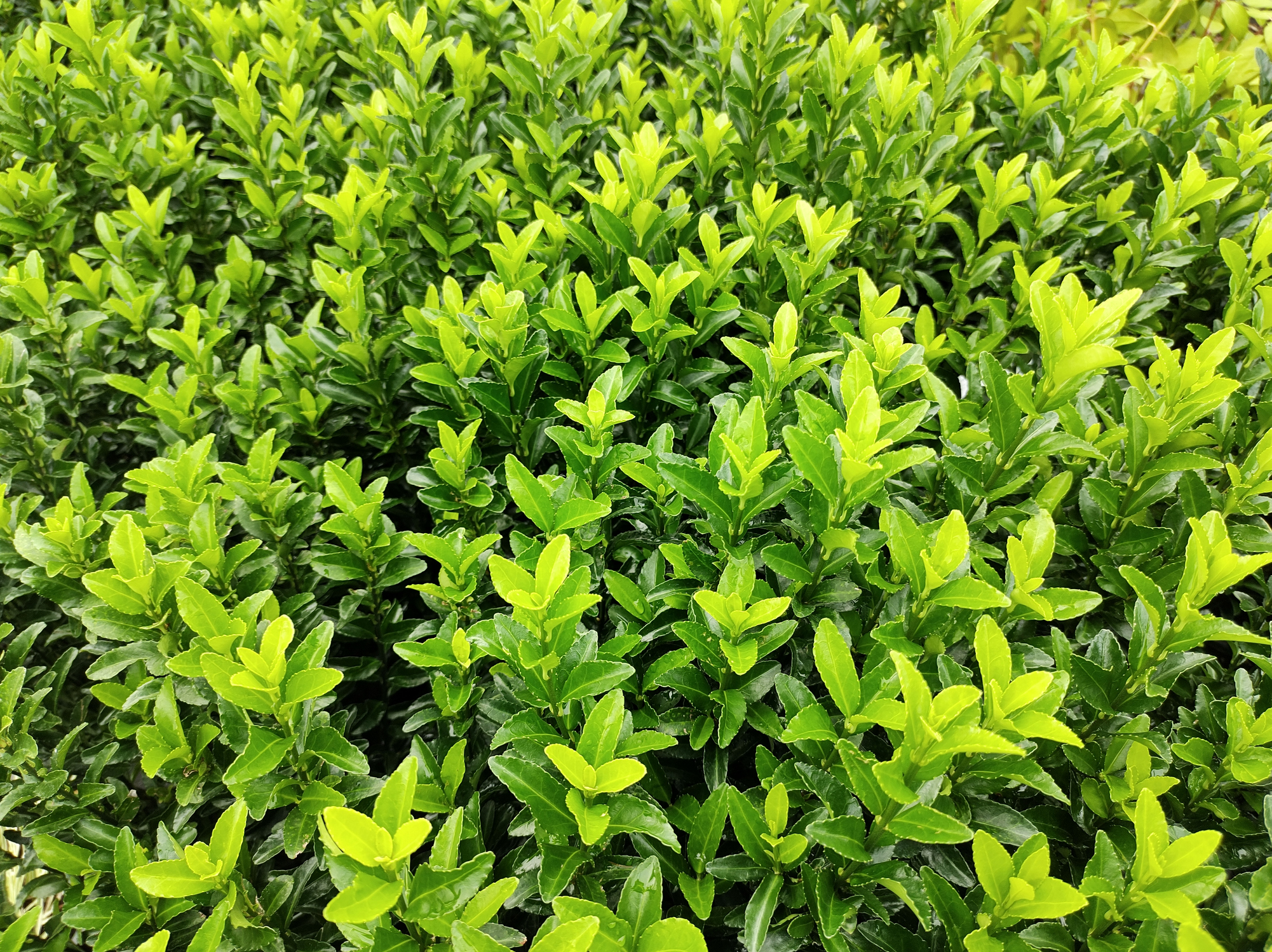
With a leaf shape, colour and growth habit almost indistinguishable from box, this was for years considered to be the go-to alternative. Slow-growing, more frost tolerant than box itself and tolerant of sun or shade, it also has a high clipability rating. An excellent hedging plant, it also works well as topiary. The RHS trial, however, has thrown up a few issues; it’s the most widely planted alternative but can suffer in winter wet and hot, dry summers. But it does do well in cool, damp summers and winters that aren’t too soggy and prefers neutral to acidic soil with good drainage. Our climate is increasingly unpredictable but if you live in a more northerly part of the country it may well be very happy. Hardy to between -15 and -20 degrees C (RHS hardiness rating H6).
Lonicera nitida (syn. Lonicera ligustrina var. yunnanensis)
Related to flowering honeysuckle, this shrub has only small and insignificant flowers itself. Pest and disease-resistant and happy with close and regular clipping, it’s often found planted in car parks but don’t let that put you off! It’s tough and has small, glossy, attractive leaves and makes an excellent hedging and topiary plant too as it responds so well to regular cutting. Although fairly fast-growing, it’s happy to be kept to about a metre high and 60cm wide. It also looks very similar to box, is happy in sun and part-shade and tolerant of most soil types. Hardy to between -15 and -20 degrees C (RHS hardiness rating H6). ‘Baggesen’s Gold’ has gold-coloured leaves. In the RHS trial though, some new growth was damaged by frost, so bear in mind that this cultivar is slightly less hardy.
Euonymous japonicus
This is a large group of plants and the cultivars ‘Green Spire’, ‘Microphyllus’ and ‘Jean Hugues’ are again very similar looking to box, all growing up to about 1m tall. They’re compact, tough and slow growing and said to be salt and wind tolerant so good for coastal gardens and roof terraces. An upright growth habit makes them perfect for hedging. Full sun to part shade. Hardy to between -15 and -20 degrees C (RHS hardiness rating H6).
Lavandula angustifolia
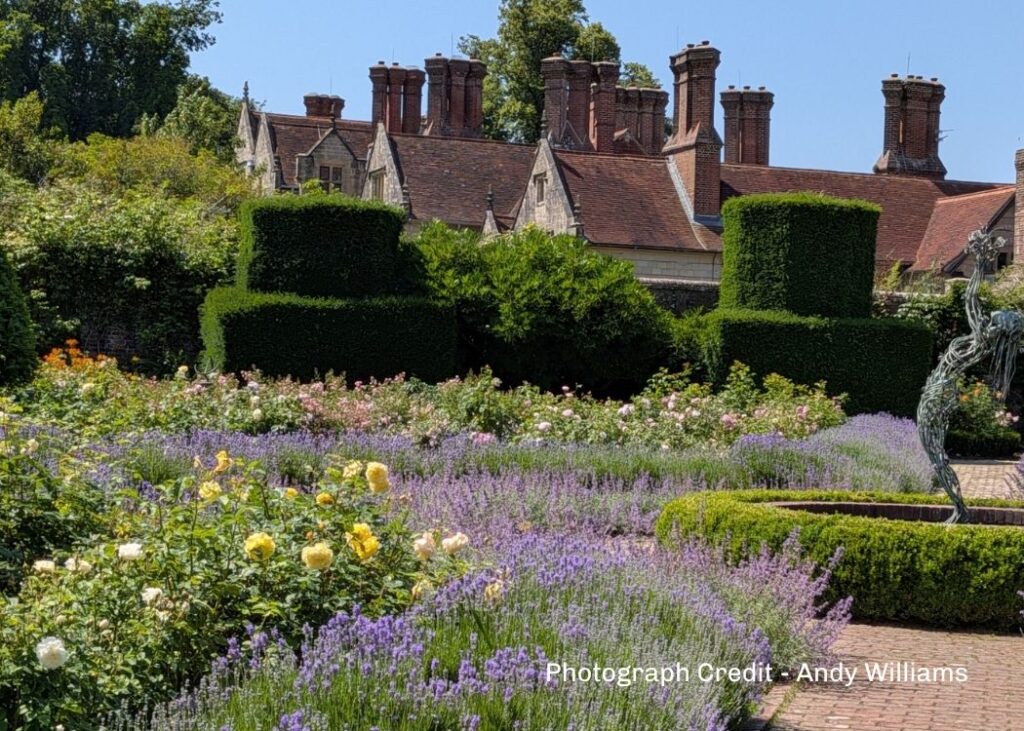
With its aromatic grey/green leaves and highly-scented purple flowers, star of the summer garden English lavender bears no resemblance to box but is a good alternative in the right conditions. It’s often seen as edging along paths and borders in cottage gardens that bridge the divide between the formal and informal as well as in traditional knot gardens and parterres. Not suitable for topiary as doesn’t respond well to close clipping, it’s nonetheless a good hedge alternative with the added benefit of flowers, scent and its attractiveness to bees. The cultivars ‘Munstead’ and ‘Hidcote’ are particularly recommended. It’s drought-tolerant but needs good drainage so isn’t the best option if you garden on heavy clay. Adding grit to the planting hole will help to prevent it getting wet feet if your soil is anything other than sandy. Full sun. Hardy to between -10 and -15 degrees C (RHS hardiness rating 5).
Teucrium x lucidrys
Often used in knot gardens, germander works well as low hedge and edging for borders. With lovely small, darkish green leaves that have slightly crinkled edges and pink flowers in summer, it grows up to about 30cm tall. It’s hardy to between -10 and -5 degrees C (RHS hardiness rating H4) so less resistant to cold than other alternatives suggested here, but very tolerant of long dry spells and used in Beth Chatto’s Gravel Garden. Well worth a try in a sheltered place. Full sun.
https://www.bethchatto.co.uk/garden-nursery/gallery/gravel-garden.htm
You’ll find more ideas and inspiration from the RHS and Gardeners’ World here:
https://www.rhs.org.uk/plants/types/shrubs/box-alternatives
https://www.gardenersworld.com/plants/alternatives-to-box/
Instead of worrying about having to deal with the difficulties associated with having a potentially problematic plant in your garden, you may want to look at alternatives. Thinking outside the box can be a really rewarding experience; why not give it a go?