

Blog
February in the garden

February in the garden.
Wind and rain are lashing the garden. I look up and see a flock of small birds forming shifting shapes as they fly by, their progress deflected when the wind gusts. I suspect they are sparrows, but they move too fast for me to confidently identify. These passers-by remind me that I must clean and replenish the bird feeders with high energy food to help them get through the cold winter nights.
On days like this I should be warm in bed savouring a cup of coffee and completing yesterday’s cryptic crossword in the Metro. But just the other day I received a text message from my local council informing me it was time to renew my garden waste bin collection subscription. And being truthful, I resent paying the additional charge for the fortnightly service, especially as it has risen so steeply this year. Therefore, I am in the garden doing some winter pruning and clearing up to ensure that my green wheelie bin is full to the brim come collection day.
From one of the deep pockets of my canvas tool belt, hanging heavily on my waist, I take out a pair of bypass secateurs to cut off last year’s old and blackened leaves surrounding the hellebores, so that the emergent flowers look at their best. The other pocket holds the folding pruning saw I will use for tidying up the Fiesta apple tree. Nearby, on the ground lie the long-handled loppers that allow me to safely reach the higher branches without using a ladder.
Have you done your winter pruning? If not, then now is the time to get started. Winter pruning is important for apple and pear trees. It should be done while the trees remain dormant before bud burst. Winter pruning promotes vigour so that fruit trees are healthy and productive. It also allows you to control and reshape trees and bushes so that they don’t grow too large. Other plants that benefit from winter pruning include roses, autumn fruiting raspberries, grapevines, wisteria, and late-flowering clematis.
Not all plants can be winter pruned, so it’s best to check first before hacking away:
https://www.gardenersworld.com/plants/what-to-prune-in-winter/
Winter pruning finished; I slip coffee from an insulated mug. I need this break as my knees are hurting me. I stand admiring the dense clouds of white blossom engulfing my neighbour’s prunus tree. Each tiny white flower has a green centre bearing a boss of nectar rich stamens. This reminds me, I must mention in the February blog that plum and cherry trees should not be winter pruned, this is because it increases their risk of infection by silver leaf disease.
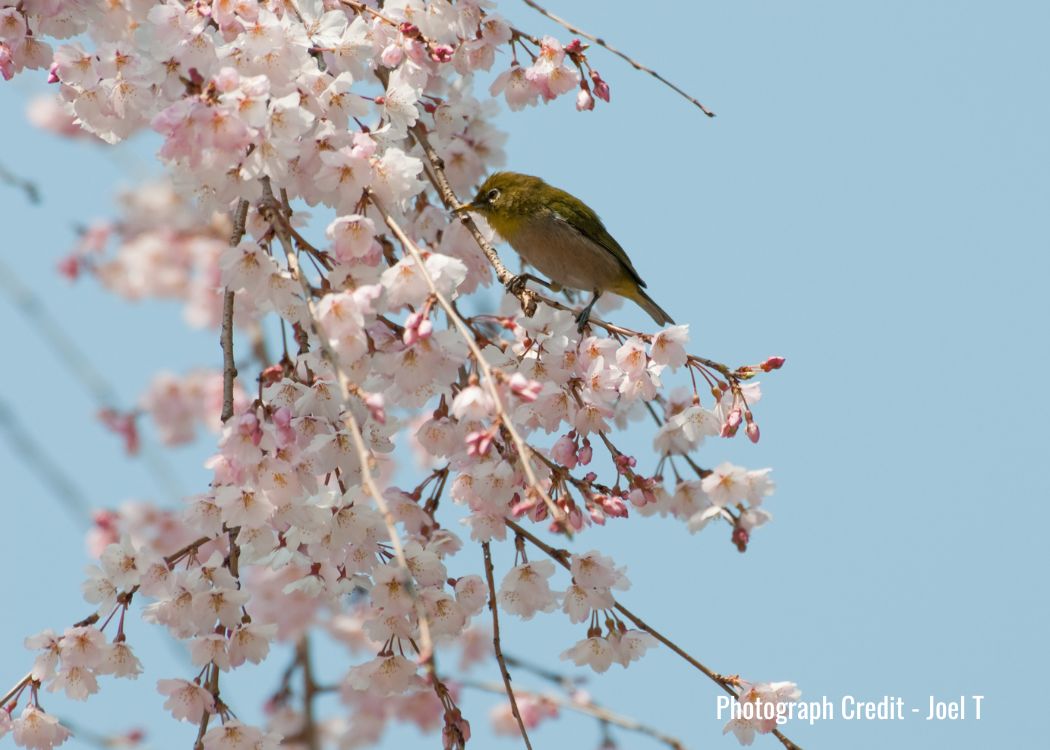
Looking at the plum blossom, I sense movement. Masses of bees are spinning around the flowers. They have emerged early this year. Then I notice the small birds resting in its twisted branches. They look like they are posing for a Japanese woodblock print. Now, I can now see that the flock is composed of a mixture of species. I recognise blue tits, long-tailed tits, and great tits in the group that has been flitting from garden to garden in search of food.
Amid the debris of last year’s fallen leaves, I find an upturned clay pot filled with a rout of snails that have cemented themselves to the wall and to each other for overwintering protection. It is always worth looking inside old pots!
Clearing away a tangle of ivy and old sticks piled up along the base of the fence I spy the flapping wings of a brimstone butterfly that must have been hibernating in this jungle. Like me, the butterfly would rather have remained in bed.
Trying to think differently about weeds and chaos, I decide to let this rough area sleep a little longer. It doesn’t matter if I don’t completely fill the wheelie bin. I will let the overwintering pollinators shelter amid the old plant stems and leaves. I can wait a short while to finish the job. Instead, I finish up for today by cleaning the tools I used. After a good wiping down, I give the blades a buffing with the sharpening stone, followed by some oiling to inhibit corrosion. This will keep my garden cutters in good working order for the year ahead.
Further reading
How to winter prune apple and pear trees:
https://www.rhs.org.uk/fruit/apples/winter-pruning
More gardening jobs in February:
https://www.capitalgardens.co.uk/blog/february-in-the-garden/
Learn about overwintering butterflies and moths:








Ali writes so lyrically, his column is always a pleasure.