Blog
Foxgloves


Foxgloves
Cottage garden favourites, foxgloves bring oodles of charm to late spring and summer gardens with pretty, homely spires of sweetly speckled tubular flowers in lilac, raspberry, creamy white, peach, burnt orange and lemon. Most prefer dappled shade, although some are also at home in full sun and a few will tolerate full shade. This versatility, along with the considerable variation in height of different species and cultivars, means they can be used almost anywhere as long as the soil is damp, fertile and drains well, throughout borders, in woodland plantings and even in large containers.
Many are efficient self-seeders, an absolute gift to fans of organically developing, colourful, naturalistic gardens. Delightful European native Digitalis purpurea is particularly good at scattering itself around. Generally blooming from late spring to summer, most are biennial, flowering in their second year before dying. There are several perennial forms too, although they tend to be fairly short-lived. But choose one of the many non-sterile forms, and foxgloves’ ability to propagate themselves should ensure that you won’t be short of replacements.
Foxgloves are pretty resilient and not usually prone to disease, although in a long, hot dry summer some powdery mildew may appear on the leaves. Usually it isn’t too bad, however, and the risk of this fungal affliction can be reduced by spacing plants so that air can circulate, watering at the base rather than on the leaves, and ensuring plants are in generally good health. (Weak or unwell plants, like animals, are more likely to succumb to illness.) Nor are they prone to attack by pests, partly due to the toxin they contain and, in the case of slugs and snails, the slightly rough, felty texture of the foliage, although young seedlings, like those of many plants, may suffer some damage. (The toxin, digitalis, is poisonous to humans.)
Most biennials are hardy enough to cope with our winters and several will withstand temperatures down to -20 degrees C. Some perennials are more tender.
A winner for wildlife
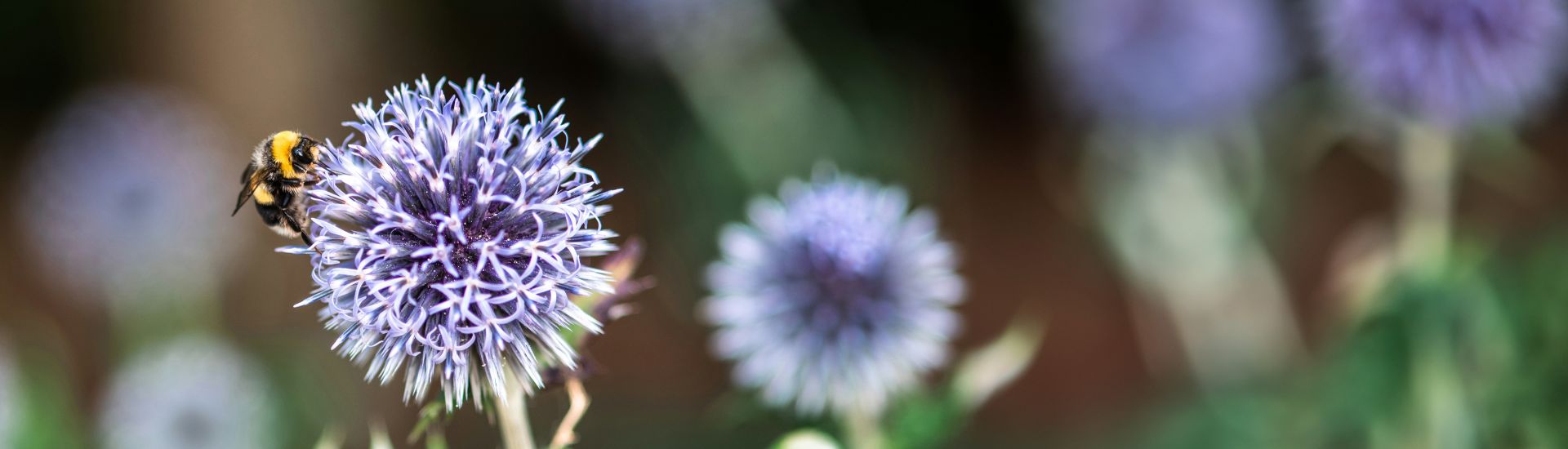
Splendid for bees, especially long-tongued bumble bees like the common carder, foxgloves seem to have evolved to be particularly inviting in several ways, making for a mutually beneficial relationship. The lower lip of the flower provides a helpful landing pad and as the bee makes its way towards the food source in the centre, it drops pollen from other foxgloves, helping the plant to reproduce. It’s also thought that the speckles on the flowers may act as a guide towards the nectar.
They’re a food source for the caterpillars of several moth species too, including the lesser yellow underwing, angle shades and aptly-named and rather beautiful foxglove pug.
Foxgloves in folklore
Stories abound regarding how foxgloves acquired their name. The simplest is that each flower looks like the finger of a glove (and it is very tempting to try them for size. Check for bees first and wash your hands afterwards if you do though.) Others are that foxes wore them on their feet to allow them to prowl in silence and that the fairies taught foxes to ring the bells to warn each other of hunters nearby. Fairies, as well as foxes, are prominent in the myths. Foxglove could also be ‘folk’s glove’ – ‘folk’ meaning fairy – or a derivation of ‘foxes-glew’ meaning fairy music – a reference to the shape of the flower. The poem ‘Foxgloves’ by Mary Webb explores this, beginning:
The foxglove bells, with lolling tongue,
Will not reveal what peals were rung
In Faery, in Faery,
A thousand ages gone.
Planting and maintenance
Place in groups of three or more if possible and plant or sow biennials two years in a row for continuity of flowering. Because of their variety of colour and height (from a diminutive 30cm up to a much grander 2m) and tolerance of differing light levels, foxgloves make excellent companions for a huge range of other plants. There are some really lovely ideas here: https://www.gardenersworld.com/plants/six-plants-to-grow-with-foxgloves/
Cut back perennials in mid-autumn. They will sprout again in spring. Biennials should be dug up in the autumn of their second year after they’ve set and dispersed seed, or once they’ve finished flowering if you don’t want them to spread.
Some foxglove suggestions
With so many available it’s difficult to choose! Here are just a few.
Biennials
Lighting up early summer woodlands, heathlands and hedgerows, Digitalis purpurea is happiest in the dappled light that abounds in much of its natural habitat. It will also perform well in a sunny spot and put up with full shade, although it produces fewer flowers in this environment. Growing up to 1.5m tall, this species form has lilac pink flowers. A little like the poppies in the battlefields of France, these foxgloves can, in the wild, spring up and miraculously cover a newly-cleared area of woodland, as though the seeds have been waiting patiently for a chance to shine. It and its cultivars are generally fully hardy.
D. purpurea f. albiflora is snowy white, and was frequently used by pioneering horticulturalist and garden designer Gertrude Jekyll in her ‘white’ planting schemes. Height up to 1.5m.
D. purpurea ‘Sutton’s Apricot’ has tightly packed peachy pink flowers, while ‘Pam’s Choice’ is white with striking, darkest purple speckles and blotches. Both grow up to 1.5m.
Towering and stately at about 2m high, the D. purpurea Excelsior Group flower in soft purples and pinks as well as cream and white.
Small but exuberant, the D. purpurea Dalmation Series tend to flower in their first year. Blooms of cream, purple, white spotted with purple, deep rose pink spotted with white, or pale peach with burgundy markings appear a little later than most, from mid to late summer. At around 50cm high they make good container plants.
Perennials
Digitalis x valinii has several cultivars, the Illumination Series being a cross between D. purpurea and D. canariensis. The triangular-lobed flowers are sterile so don’t have seed pods, instead flowering for several months from summer to autumn in tropically fruity colours. They do produce nectar though so there’s still food for the bees. Hardy to between -5 and -10 degrees C, they grow up to 90cm tall in full sun to part-shade.
The large, pale sherbet yellow flowers of D. grandiflora are speckled with burgundy spots. At up to 80cm tall, it’s hardy to between -15 and -20 degrees C and flourishes in full sun, tolerating full shade too.
D. parviflora has closely packed, smallish copper flowers. It does best in part-shade and grows to about 60cm tall. Hardy to between – 10 and -15 degrees C with a semi-evergreen rosette of leaves at the base.
Tall D. ferruginea reaches about 1.8m and has gorgeous burnt orange flowers with gold markings and a prominent lower lip. Hardy to between -15 and -20 degrees C with a semi-evergreen rosette of leaves at the base, it’s a good choice for those with grittier, drier soil.
D. x mertonensis has large rosy pink flowers with deep pink interiors. Hardy to -10 to -15 degrees C and approximately 75cm tall. Part-shade to full sun.
https://www.gardensillustrated.com/plants/foxgloves-for-colour-and-structure
https://www.rhs.org.uk/plants/foxglove/growing-guide
You may not find all the plants listed above in our stores but our staff will be happy to suggest alternatives.
If you thought the world of foxgloves was entirely pink and purple, think again! Perhaps not as glamorous as iris or lilies, but with flowers in an equally delicious range of colours, these woodland belles can, given free rein, form a mini-forest of their own while being easy to keep in check if so desired. Happy in sun or shade and offering a warm welcome to bees, they’re a mainstay of cottage gardens but work marvellously as part of more formal plantings too.