


Blog
Cottage Garden Design Tips and Key Plants


What is a cottage garden?
The cottage garden is the quintessential English garden. A cottage garden has a
simple design and is generously filled with bulbs, annuals, hardy perennials
vegetables, fruits, climbers, and flowering shrubs.
What makes cottage gardens special? When people dream of their ideal garden
the vision is likely to be one of an enchanting, sunny, flower-filled cottage garden.
Cottage gardens are perfectly suited to small plots; therefore, they are relevant
to city living and modern homes. Cottage gardens are informal and relaxing.
Cottage gardens are wildlife friendly and promote biodiversity.
Firstly, we are going explore the origins of the cottage garden. Then we will look
at some simple design tips. Finally, we will look at the key plants essential for
achieving the cottage garden style.
1) Origins of the cottage garden
The roots of the cottage garden are said to date back to Tudor days when a cottage
was a small, humble dwelling for the poor. The cottage had a plot of land around it
that had to be productive. The plants grown were mainly fruit and vegetables.
In other words, cottage gardens helped poor families survive. The plants chosen
often had multiple uses. For example, gooseberry bushes served as a prickly hedge,
a source of vitamin rich berries, and were said to be the best bush for laying
washingover to dry.
But among all this productivity there were also flowers. Why? To bring in the
pollinators for the crops! The first decorative plants to make it into the cottage
gardens were the native flowers of the countryside such as dog roses, honeysuckle,
wild clematis, field poppies, red campion and ox-eye daisies. And these beautiful,
hardy plants became the ancestors of today’s ‘Cottage Garden Plants’.
Cottage gardens remained in the background while the various grand garden
styles arose and then passed out of fashion in the estates and mansions of the elite.
Cottage gardening emerged out of the shadows and into fashion during the Victorian
and Edwardian periods. Ordinary people of the working classes and the newly
expanded middle-classes began to have the time and money to start gardening as a
leisure activity. Cottage gardens were loved because they conjured up a romanticised
vision of a pre-industrial Britain. The Cottage Garden paintings of popular artists
such as Helen Allingham (1848-1926) captured this bucolic idyll.
https://www.helenallingham.com/
Influential garden writer William Robinson (1838-1935)
Inspired a love of traditional cottage garden plants through his books and articles.
And the famous garden designer Gertrude Jekyll (1834-1932), creator of the
herbaceous border (grouping plants by colour, height and flowering times) found
much inspiration from her visits to cottage gardens in her beloved West Surrey.
This thread continued down through the gardens and writings of Vita Sackville-West:
https://www.nationaltrust.org.uk/sissinghurst-castle-garden
and Christopher Lloyd:
https://www.greatdixter.co.uk/
The enduring popularity of cottage gardens was demonstrated by the success of the
‘Welcome to Yorkshire Garden’ that won a Gold Medal, Best Construction, and
People’s Choice Award for its cottage garden at the 2018 RHS Chelsea Show.
https://www.yorkshire.com/inspiration/chelsea/the-welcome-to-yorkshire-garden-2018
2) Design tips
Now we know about the history of cottage gardens how can you create this style to
your garden?
The trick is to keep your structures and building materials simple. That is to say, the
construction materials should be local and plentiful. For example, the ‘Welcome to
Yorkshire Garden’ was constructed from Yorkshire stone. For instance, when creating
a London cottage garden, you could use reclaimed London bricks and roofing tiles to
create walls and paths that would be sympathetic to the buildings in the area. Wooden
picket fences help create that ‘country vibe’ and are useful for supporting taller cottage
garden plants.
Cottage garden layouts were always practical. For example, the front path went straight
from the door to the road. There might be a seating area in a sunny corner because this
would be a good place to sit in the sunshine to do fine work such as sewing.
Steppingstone paths are a great way to add rural charm to your lawn, and to link up
flower beds. Rustic archways, pergolas and arbours can be used to add height and
seclusion to your cottage garden and provide support for climbing plants. Choose
appropriate rustic looking garden furniture to complete the look.
Don’t forget about adding window boxes and hanging baskets to provide valuable extra
growing space. Quirky rustic planters can be made from old metal watering cans and
buckets.
3) The Key Plant
Fruit and vegetables
- Apple tree. Gives height, beautiful spring blossom, and cheery apples in autumn.
The quince tree (Cydonia oblongata) makes a highly ornamental alternative. - Gooseberry. Grow it as a hedge and harvest those delicious gooseberries for pies
and jams. - Rhubarb. This perennial will provide you with many crumbles and pies over the
years. ‘Fulton’s Strawberry Surprise’ is a particularly decorative cultivar that
provides red stalks for pulling late into the season. Many garden designers use
terracotta rhubarb forcing pots as an architectural accent set amongst flowers to
get the cottage garden look. - Strawberry. Strawberries are ideal cottage garden plants. The wild strawberry
is a great edging and ground cover plant. The fruits are much smaller than shop
bought strawberries, but wildlife and young children find them a real treat. - Runner beans. Grown up rustic bean pole wigwams this is the classic Cottage
garden vegetable, giving height and colourful red flowers. - Swiss chard. This leafy vegetable is productive and beautiful. Varieties with red or
yellow stems have ornamental as well as edible value. Chard is a ‘cut-and-come-
again’ crop, take a leaf or two from each plant and they will continue to provide
you with fresh leaves well into autumn. The above are my top 6 suggestions
because they are both beautiful and productive plants. But any fruits or vegetables
can be incorporated into a cottage garden. It is the mixing of the edible and the
ornamental that will make your garden a true cottage garden.
The Flowers
- Aquilegia, or granny’s bonnet. A useful plant to fill the gap between the end of the
spring bulbs and arrival of the roses. These self-seeders will quickly hybridize and
spread around your garden. They magically appear in pathways and gravel, giving
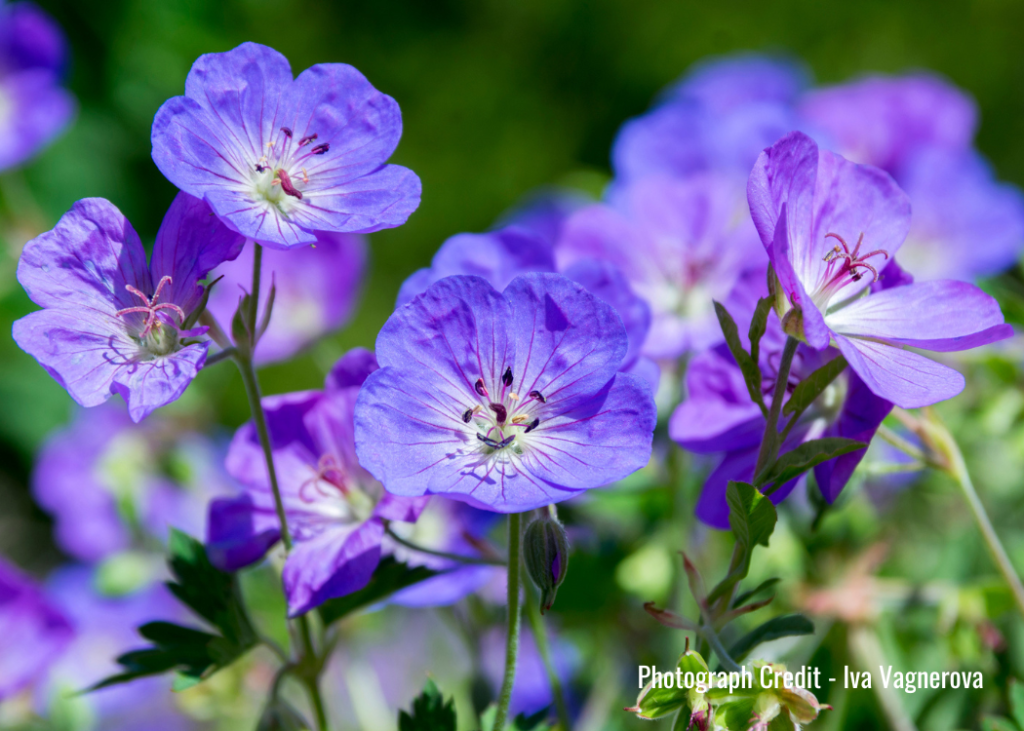
you that relaxed feel. - Hardy geraniums. Available in every shade of white, pink, and purple. Will grow
in sun or shade. Give them the ‘Chelsea chop’ for a later second flush of flowers:
https://www.rhs.org.uk/advice/profile?pid=594 - Delphiniums. Striking, tall stems of blue, white or pink. Need staking.
- Lupins. Generous spires of pretty pea-like blooms. Deadhead for a second flush
of smaller flower spikes. - Hollyhocks. The classic cottage garden plant. Available a wide range of colours,
and as single or double blooms. - Foxgloves. Prolific self-seeders. Bumblebees love the nectar filled flowers.
- Roses. I cannot imagine a cottage garden without its roses. Grow a climbing rose
up a trellis by the front door for that ‘chocolate box’ look. - English lavender. Perfect for a sunny spot. Lavender grown along a path as an
edging with give you a fragrant welcome every time you come home. - Campanulas. Loved by us for their bell-like blue flowers. Loved by bees too.
- Honeysuckle. A classic fragrant, romantic climber. Imagine its sweet scent
gently wafting in through the windows during a warm summer evening. - Phlox. Sweet fragrance.
- Pinks. An essential cottage garden flower. Pretty, with a delicious clove scent.
Other important flowers
Important flowers to quickly fill your cottage garden with colour include annuals such
as sunflowers, Calendula, sweet peas, and nasturtiums.
Hardy perennials offer an alphabet of opportunity, including Achillea, Ajuga (bugle),
Alchemilla, Anemone, Astilbe, Astrantia, Brunnera Centaurea, Crocosmia, Dicentra,
Eryngium, Filipendula, Geum, Heuchera, Iris, Lamium, lily-of -the valley, Linaria,
Penstemon, peony, Polygonatum, Potentilla, Primula, Pulmonaria, Rudbeckia, Salvia,
Sisyrinchium, Thalictrum, Veronica, violets, and Vinca.
In Conclusion
Cottage gardens offer a relaxed flower-filled space where the plants are encouraged to
seed and spread to fill every gap.
Cottage gardens are perfect for modern homes with limited outside space. Cottage
gardens work brilliantly as front gardens, where the building becomes an important part
of the garden design. For example, climbers such as roses, wisteria and clematis can be
trained up trellis to integrate the house into the garden.
Cottage garden plants are generally hardy and easy to care for, meaning less need for
pesticides and other chemicals. Cottage gardens are diverse and species rich, making
them an ideal habitat for wildlife. By mixing vegetables with flowering plants your crops
will be less prone to pests and diseases because you are growing them in smaller numbers
in a diverse habitat.
Above all, the joy of a cottage garden is that it is dynamic. Cottage garden plants are prolific
self-seeders or spreaders, which means you will find seedlings and runners popping up all
over the place. So now and again you will need to go out and keep you plants in order. You
will often find that nature’s hand will create plant associations in your garden that you
would never have thought of for yourself.
So why not bring a bit of the English countryside to your garden and plant up a border in
the cottage garden style?
By Ali Barwani, Capital Gardens.








Loved this clearly written and informative guide. I’m going to take a few of the suggestions and use them in my garden in Dorchester.
Thank you for a most imformative read..I am lucky enough to live in a beautiful cottage with a “cottage garden”…My Grand parents lived her and it is now my home..you mentioned vegetables and flowers living together..you have described my Grand Fathers garden….this yeat I intend to let the runner bean creep up a small flowering tree..carrots and lettuce to mingle with flowers with a opper ring to keep the slugs at bay…brussels sprouts will keep myraspberries company…all new experiences…..a patio will laid close to the cottage for breakfast….another seating area I have laid from very old bricks..not finished yet..have two oak benches to sand and re oil….lots to do..lots of fun…take care stay safe..loved reading your article..thank you..