

Blog
Agapanthus, bold and bright summer flowers


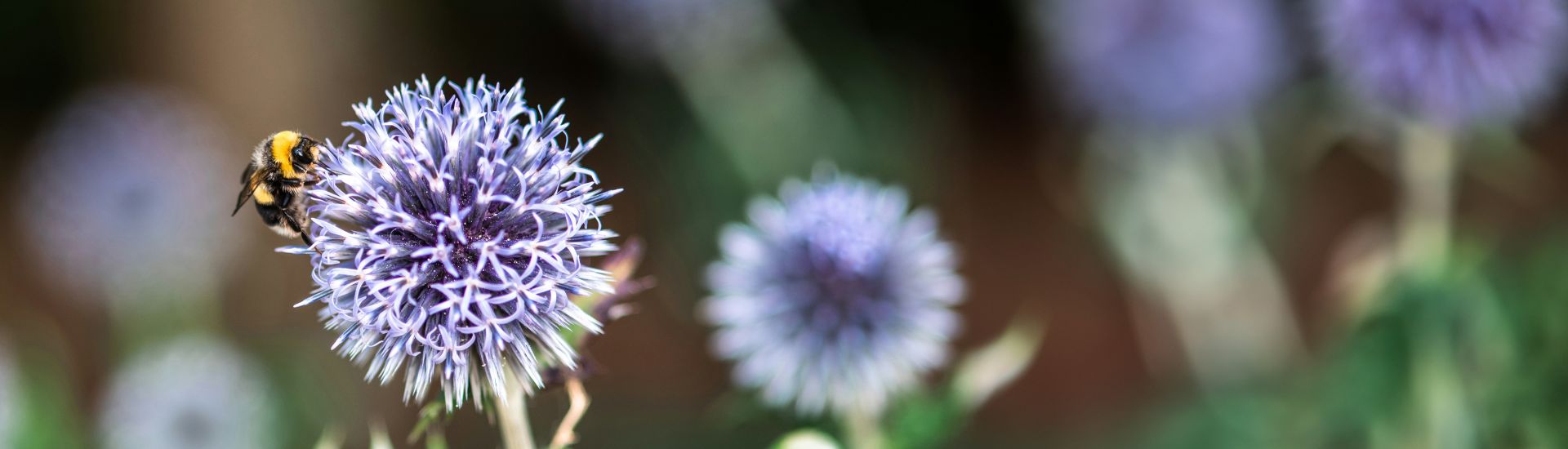
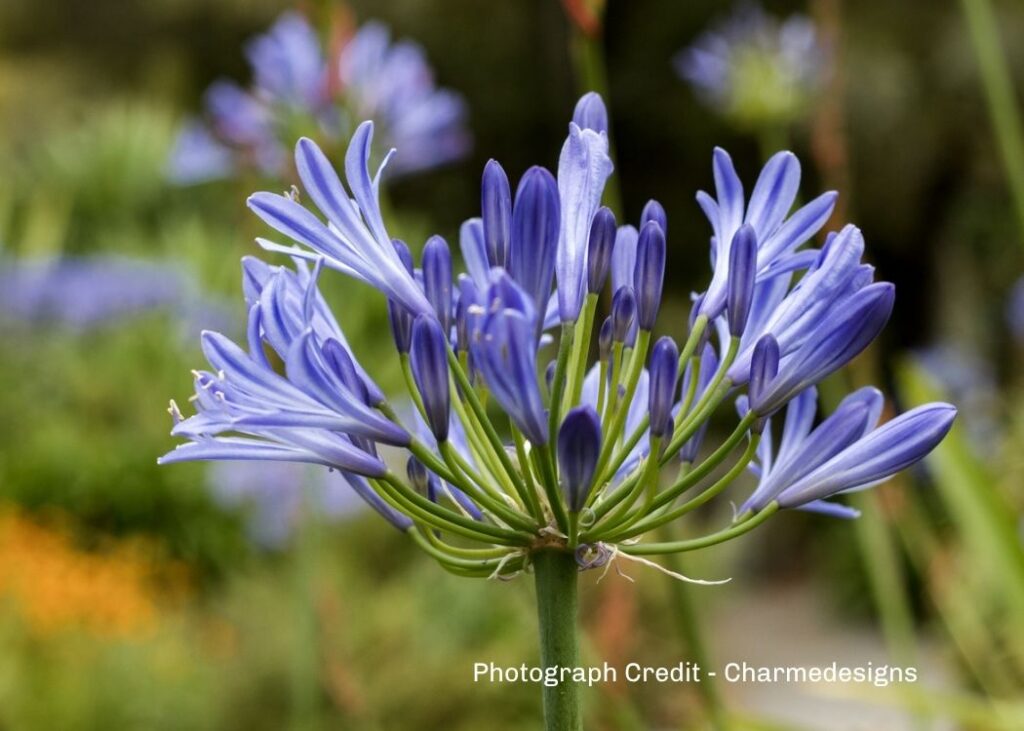
Ali Barwani is enjoying the drama of Agapanthus with their large, loose globes of blue or white flowers carried on tall, straight stems – a glorious summer spectacle.
Agapanthus, bold and bright summer flowers.
Agapanthus are looking great in the garden right now. Their exotic blue flowers are frequently associated with Mediterranean holidays, growing up cliffs in the south of France or in Greece, Spain, or Portugal. But they are easy to care for in the U.K. if you give them the right conditions.
Did you know? Claude Monet planted agapanthus along the banks of his pond in his garden at Giverny. They even feature in some of his paintings: https://www.moma.org/collection/works/79922
Agapanthus come in every shade of blue, from the palest powder to a dark inky-purple. There are pure white varieties, and bicolour forms in blue and white combinations. There is even a pink and white flowered form called ‘Strawberry ice’. New cultivars are still being introduced. The 2023 RHS Chelsea Flower Show ‘Plant of the Year’ winner was Agapanthus ‘Black Jack’, a deep purple flowering form.
Agapanthus come in a range of sizes. The largest varieties stand at over 1m tall, while the smallest forms reach only 20 to 50 cm.
My pot of Agapanthus africanus outside the back door is full of flower stalks again, each stem topped with a swelling bud preparing to burst into bloom. It is lucky they like being snug in their pot and baked by the sunshine because my care for them has been minimal. They thrived during the earlier heat with just weekly watering and a fortnightly application of liquid plant food.
How do they manage to thrive in hot weather?
A few years ago, I was lucky enough to see agapanthus growing wild in South Africa where these sun-loving herbaceous perennials flourish in rocky terrains. Their adaptation to living in harsh environments includes leaves which are curved and leathery – and the formation of an extensive underground stem system (rhizome) that acts as a storage organ. Their thick white fleshy roots grow out from this bulb-like rhizome.
Agapanthus is a genus of plants with a native range from Mozambique to South Africa. There are eight accepted species of Agapanthus and hundreds of varieties and cultivars.
The African origin of agapanthus has given rise to the common names ‘Lily of the Nile’ and ‘African lily’. However, they are not members of the lily family. Their family position has been much debated. But recent DNA sequencing studies now place Agapanthus as a sub-family in the amaryllis family – the same family as daffodils!
Agapanthus species can be divided in to two broad groups:
1) Evergreen forms that keep their leaves all year round. These species come from coastal areas, where rainfall is heavy during the winter, or where there is rain for much of the year.
2) Deciduous species. These types occur inland. They inhabit mountainous areas where the winters are dry, and the summers are rainy. Deciduous forms lose their leaves and die down during winter and reemerge into growth in spring.
How does this help us grow them?
Deciduous species (and deciduous garden hybrids) are hardier than the evergreen forms. If planted into the ground in a sunny location with good drainage, then they can survive winter temperatures as low as -5°C. Established clumps can withstand even lower temperatures, especially if protected by a covering of straw or mulch during winter.
The more tender evergreen forms are better grown in pots. Potted specimens can easily be moved to a sheltered, frost-free location during the winter months. Ideally evergreen agapanthus plants should be moved undercover in winter. If you take a chance and plant them in the ground, then they must be given a protective cover of straw or mulch during winter.
Where to plant agapanthus in the garden.
Choose a sunny location that receives the maximum sunshine during the day. Ideally this will be a protected position such as the base of a garden wall or against the house. The soil should be well drained. If your soil is heavy then dig in plenty of horticultural grit before planting them.
Pot cultivation of agapanthus.
If your garden is prone to waterlogging during the winter, for example if you have heavy clay soil, then grow them in containers. Even the hardier deciduous forms will struggle to survive in waterlogged soil over winter.
Agapanthus do best where their root development is restricted. This is because a restricted root-run encourages the production of flowers – another good reason to grow your agapanthus in pots. A loam based John Innes No3 compost mixed with horticultural grit makes an ideal mixture for filling your pots.
Again, don’t be tempted to put them into too large a pot as this will result in plenty of leaf growth at the expense of flower formation. Finally, regular watering and feeding during the growing season will ensure that your plants are healthy and strong.
Care after flowering.
Traditionally, the flowerheads were removed after flowering had finished to stop the plants from putting their energy into seed formation. However, field trials have shown that dead-heading of agapanthus isn’t necessary as seed-setting doesn’t appear to have a detrimental effect on next year’s flowering display. Indeed, influential garden designers, such as Piet Oudolf, require the seed heads to be left standing into autumn and winter to sparkle in the low-angled light with jewels of frost and dew as part of his ‘fifth season’.
It is important to keep feeding and watering your agapanthus plants during autumn. This is because the following year’s flower buds are initiated shortly after flowering has ended. In addition, I would recommend giving your plants an application of an all-purpose pelleted fertilizer in spring once the first new green leaf shoots appear.
Dividing your agapanthus plants.
Agapanthus clumps growing in the ground or in pots will eventually become congested. A good indication of this is when their flowering quality starts to decline. Late March to April is the best time to divide the clumps, just as the first new leaves start to appear.
Top tip: wear gloves when dividing your agapanthus because the roots and leaves contain a compound that can cause severe irritation. This is good practice when handling most garden plants.
Division and replanting is normally carried out every four to six years. This is a great way of revitalizing your plant and increasing your stock for free.
How to divide your agapanthus clumps:
https://horticulture.co.uk/agapanthus/dividing/
In conclusion.
These fleshy-rooted South African perennials are not difficult to grow if you understand where they come from and give them the right conditions.
Agapanthus thrive in pots. The restricted root-run prevents them producing luxurious leaves at the expense of flowers. In general, deciduous forms are hardier than evergreen ones. They are generally problem free, and even snails and slugs don’t appear to go for them.
So large or small, planted in the ground or kept in a pot, why not make space for a stunning agapanthus in your garden?






I found this article about Agapanthus very helpful. I have looked forward to seeing them flowering every year but sadly they haven’t done so this year. They are in a pot and extremely congested and although I gather they like these conditions I think they now need repotting and dividing as you describe. Thank you for the helpful advice.