Blog
The Royal Botanic Garden Edinburgh: A Visit To A City Treasure Trove

The Royal Botanic Garden Edinburgh: A Visit To A City Treasure Trove
The path up from the East Gate is full of promise, green and inviting and lined with shrubs and overarching trees. A climbing hydrangea sprawls over the wall of the entrance kiosk, basking lazily on the sun-warmed stone. Botanic gardens have many strings to their bows and Edinburgh is no exception. As well as showcasing plants and offering the perfect day out for plant lovers, it plays a vital role in research, education and conservation, identifying, naming and documenting plants. This vital work includes plants at imminent risk of extinction and those which are, or could be, sources of food and medicine. Its origins date to 1670 and the original Physic Garden, which expanded to its present site in 1820. Growing and developing over 200 years, it now comprises four gardens situated across Scotland.
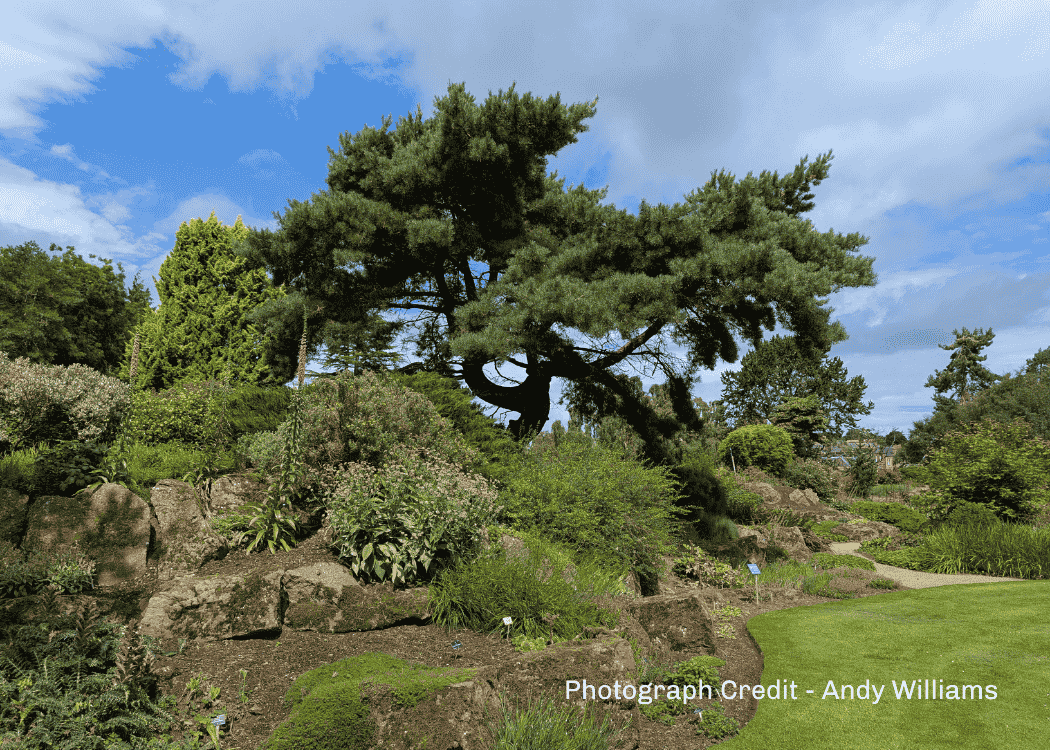
Our first port of call after a brief but necessary coffee stop was the Rock Garden, an eclectic mix of plants, not all of which might usually be expected in this environment. However, this is a deliberate design feature which makes for a smooth transition to the neighbouring Upper and Lower Woodland. From alpines, plum-coloured dierama and grasses to pines, hostas and Mediterranean plants, it includes beds devoted to specific regions as diverse as New Zealand, Siberia and Scotland. Some of the more unusual specimens include violet-flowered mini Hosta venusta, creeping Japanese Rubus illecebrocus, with raspberry-like fruit the colour of strawberries, and an extraordinarily spiny-looking shrub that I’ve been unable to identify. From the highest points there are impressive views across the city to the castle and Arthur’s Seat. Like other parts of the garden, it’s a soundscape too, with the wind rustling in the pines and a stream gushing in the background.
We emerged into the glade next to John Muir Grove (named after the Scottish-born founder of the U.S. National Parks network), an impressive circle of giant redwoods planted in the 1920s and now over twenty four metres tall. The glade with its smooth, perfectly-mown lawn, small, neatly planted conifers and borders of yellow inula, purple hostas and cherry pink persicaria has a wonderfully secluded, peaceful, harmonious feel. Look out too for the arisaema. Not a plant I was familiar with, it has large, umbrella-like, many fingered-leaves and pitcher-shaped flowers rather like those of arum lilies and some carnivorous plants. These are larger and more dramatic however. Take your shoes off and feel the soft, cool grass beneath your bare toes to complete the experience.
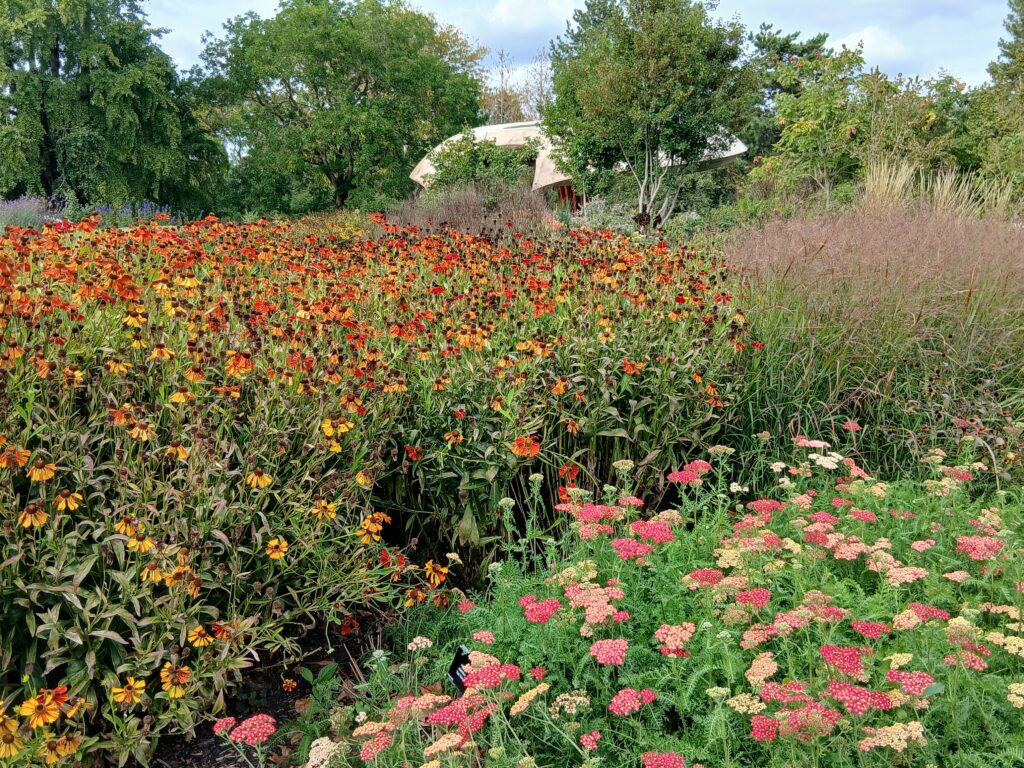
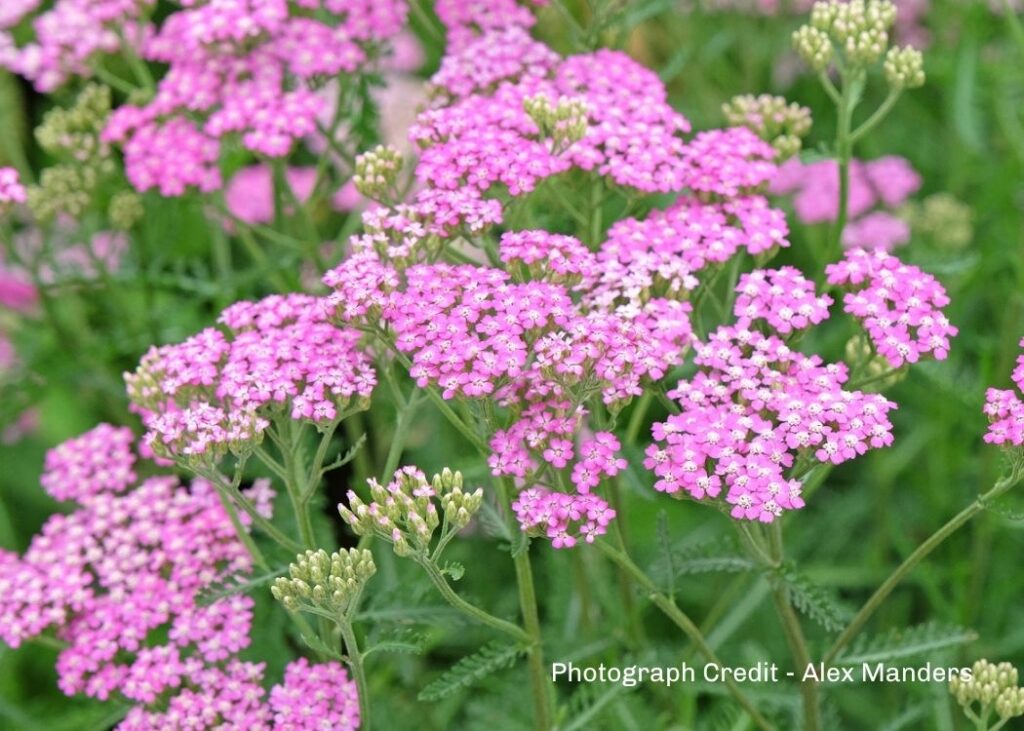
The Herbaceous Border is framed by a magnificent eight metre high beech hedge. Planted in 1906 and composed of 158 individual trees, it takes on its full summer greenery gradually, over the course of about a month. The border itself is cleverly designed to segue from pinks and purples to yellow, orange and red and back again. As well as classic herbaceous border plants like phlox, achillea and rudbeckia, it includes statuesque Aralia californica. The pale drumstick flowerheads were alive with bees.
At this time of year the Queen Mother’s Garden entices in pink, purple, blue and white. Drawing the eye were deliciously-scented Rosa ‘Olivia Rose Austen’, Delft blue agapanthus and strikingly architectural angelica and Melianthus major, the honey bush, so called not because of its aromatic leaves (which smell of peanuts) but because of the large amount of nectar it produces. Plants not often seen in British gardens but found here are pretty, low-growing South African Albuca shawii, its nodding flowers like lemon snowdrops, and shrubby Embothrium coccineum, the Chilean firebush, with crimson, spidery blossoms erupting like flames from the stems. Still just in flower, its peak blooming period is spring to early summer. The small stone pavilion walks a line between overly busy kitsch and fairytale charm, its inner walls studded from head to toe with shells collected by children from around Scotland and pine cones gathered from the four partner gardens.
The Alpine Courtyard feels somewhat sparse at first compared to the lushness of the rest of the garden. But the glory is in the detail where alpines are concerned. Of necessity mostly compact, these are admirable plants, surviving by clinging to mountainsides on nutrient-poor soils, often with very little water, and strong winds and extremes of temperature to contend with. Yet they can produce jewel-like flowers when they choose to and their forms and structure are exquisite when examined closely. Tufa, a soft, very porous form of limestone and the rock forming many mountain ranges around the world, is the perfect growing medium for many species of alpines. The wall in the Tufa House was recycled from a road building project in southern Germany. Holes were then drilled into it and filled with a compost of gravel and sand and here plants spread vertically across the surface, apparently defying gravity. https://www.rhs.org.uk/plants/types/alpines/growing-guide
There are trees everywhere, not just in the designated woodland areas but planted throughout the garden, exuding herbal, piney scents. Mature conifers, firs and oaks tower over paths and, clustered together, offer cool, shady retreats. Of particular note are two more giants – the silver birch near the East Gate, a Champion tree, its leafy branches cascading towards the earth like waterfalls, and not far away, an ancient sweet chestnut, its characteristic fissured, knobbly, gnarled bark mapping its longevity.
The perfect finale was a stop off at the Terrace Café for an all-important last cup of tea and slice of cake. Here you can sit outside overlooking the artificial lake with silver spheres that drift gently in the almost imperceptible breeze. And of course no visit is complete without a browse and perhaps a spot of impulse-purchasing in the shop. A mention here too for the staff in the shop, the entrance kiosk and the tiny café by the East Gate, all of whom were exceptionally friendly, informative and cheerful. The Garden is altogether an uplifting place, warm, welcoming and full of plants both familiar and exotic.
* The Garden also has a Palm House, but this is currently closed for restoration. Access to the Queen Mother’s Garden and Alpine Courtyard is restricted but both are open from Friday afternoons and through the weekends. https://www.rbge.org.uk/visit/royal-botanic-garden-edinburgh/