Blog
Plants for windy and exposed places


Plants for windy and exposed places
Are you baffled by your wind-buffeted roof terrace or balcony? Perplexed by your coastal or exposed hillside garden? Blowy spaces can feel tricky but nature almost always finds a niche. There are many plants whose natural habitat is windswept and they’ve adapted to live in these conditions quite happily. Think prairies, mountainsides and coastlines.
What makes plants wind-tolerant?
Wind can take its toll by breaking stems and branches and uprooting plants. It also increases the evaporation of water (transpiration) from leaves in particular, dehydrating plants, and has a similar drying effect on exposed surrounding soil or compost.
This means that plants that can cope with drought are often wind tolerant too. Some have developed characteristics that help reduce the desiccating effect of wind.
These include:
- Plants that have small or narrow leaves, such as conifers
- Plants with leathery or waxy leaves, for example mahonias
- Plants with hairy leaves like Stachys byzantina
- Plants with plump leaves which store moisture, for example, sedums
Tall plants with flexible stems that bend without breaking, such as fennel and grasses, also have good wind-resistance. Conversely, sturdy, low-growing plants such as Alchemilla mollis are able to withstand a bit of a battering too.
Go for a wander along a coastline and you’ll find tough but beautiful plants that cope well with exposure. On a pebble beach on the east coast recently I came across glow-in-the dark pink succulent delosperma, dramatic large-leaved Crambe maritima and architectural, blueish-flowered Eryngium maritimum.
How should I tackle wind-resistant planting?
The differing approaches depend on your situation, how much work you want to put into preparation and the look you want to achieve.
One option is to plant a shelter belt or screen to filter the wind and break its strength. This will mean that you have a wider choice of plants in your garden than just those which are tough and wind-tolerant.
Alternatively you could forget the windbreak and just go for an exposure-busting planting. There are actually more tough customers out there than you might think and many of them manage to combine beauty with robustness. For pictures and inspiration have a look here:
www.rhs.org.uk/garden-inspiration/garden-types/coastal-gardens
And if you’re an in-betweener, a compromise solution is to place trees and shrubs strategically around your garden. This can also be fairly effective at breaking up the wind.
- Create a shelterbelt or windbreak
The purpose of a windbreak is to filter rather than stop the wind. In this sense it’s actually much better than a wall or fence which just forces the wind to deviate round or over it and then funnel down, creating a gale in the middle of your garden.
A line of dense evergreen trees or a hedge of evergreen shrubs can act rather like a solid boundary, battling against the wind rather than working with it. So it’s better to combine evergreens and deciduous trees or shrubs, which allows the wind to permeate. And mixing your plants adds interest too. My neighbour’s very pleasing hedge, for example, is pyracantha and hawthorn. It’s partly evergreen (the pyracantha) and has late spring/early summer flowers followed by brightly-coloured berries (on both plants).
If you don’t want to plant a hedge, taller plants and grasses can provide a useful screen which softens the worst gusts without blocking your view or making your outdoor space feel sealed off from the outside world. This method of curbing wind isn’t just for large gardens. It can be scaled down and work very effectively on roof terraces, using shrubs, grasses and other perennials in pots.
Which plants you choose will depend on the size of your garden or outdoor space. It’s important to avoid planting large trees in smallish spaces where they’ll dominate, shade everything else out and annoy your neighbours! Bear in mind, too, that if you have a windbreak it will create shade in an area that may previously have been sunny. So consider this when choosing your plants.
For more information on windbreaks/shelterbelts and a useful plant list:
horticulture.co.uk/tolerant-plants-for-wind/
- Plant wind-tolerant plants
Planting wind-tolerant plants without shelterbelt doesn’t mean that you’re restricted to a particular style of garden.
You could, for example, opt for something along the lines of a prairie planting which mixes grasses and hardy perennials. Prairie planting is often on an expansive scale but has been used very successfully in small areas. You could even create one in a large window box or trough.
Alternatively, it’s perfectly possible to have a combination of shrubs and herbaceous perennials in the style of a conventional garden. You just need to choose your plants carefully.
Some plant ideas
Shrubs and small trees for hedging
All the plants listed below are tolerant of exposed conditions. They can of course also be used on their own as specimen plants or dotted around the garden to help divert the wind. Several of the suggested hedging plants have thorns or spiky leaves which you may feel adds to their benefit as a hedging plant in deterring unwanted visitors, animal or human!
Evergreen Elaeagnus x ebbingei isn’t the most alluring of plants for much of the year, but in late summer/early autumn it produces tiny, white, deliciously scented flowers. Holly and Griselinia littoralis (also evergreen), deciduous hawthorn and berberis are all fairly common hedging plants too. Berberis is particularly useful given the number of varieties available, such as purple-leaved Berberis thunbergii f. atropurpurea or B. thunbergii ‘Orange Rocket’.
(Did you know?
Elaeagnus is one of the plants that ‘throws’ its scent. This means you experience wafts of its delicious perfume before you can see the plant itself, leading you on a magical mystery tour to find the source. It’s thought to be a strategy to get ahead of the game and attract pollinators before they home in on other flowers.)
Flowering shrubs
These are more ornamental and look wonderful either featured in a hedge or planted on their own.
Evergreen: yellow-flowered natives gorse and broom, mahonia and silver-leaved brachyglottis, pyracanthas with their glorious red, orange or yellow berries and scarlet-berried cotoneaster are all valuable additions to a windy garden. And let’s not forget hebes, those marvellous garden stalwarts, with their pink, purple or white flowers which can continue well into autumn. Blue-flowered rosemary and miniature pine Pinus mugo will add variety too.
Deciduous: Spiny sea buckthorn (Hippophae rhamnoides) has incandescent orange berries.
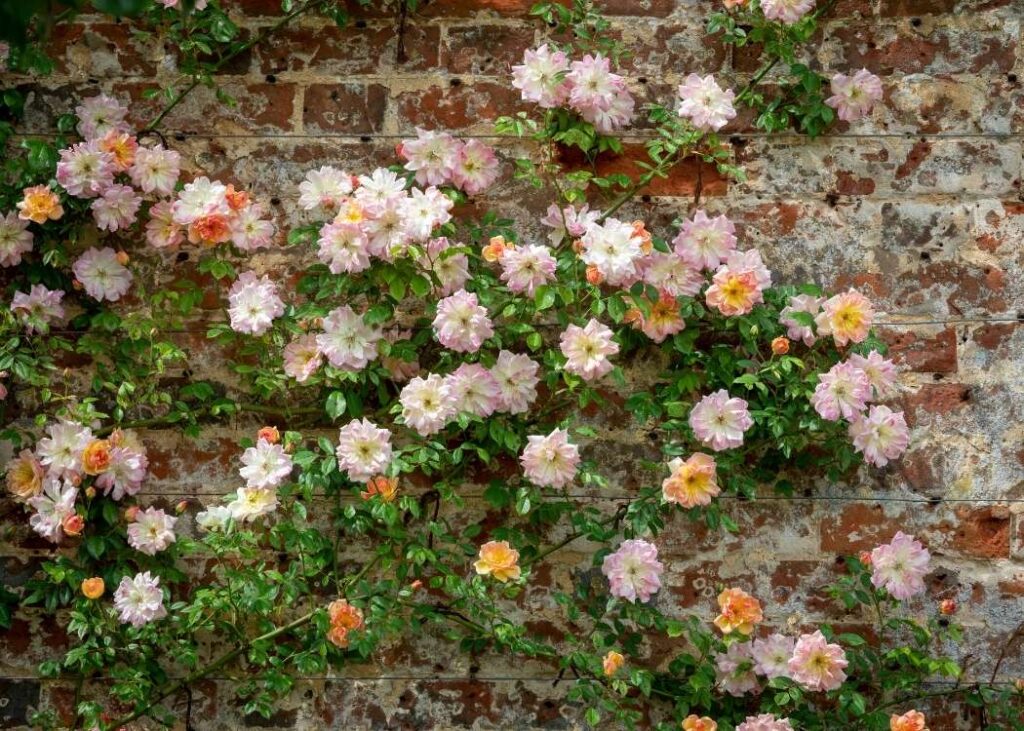
Rosa rugosa displays magenta flowers followed by bright red hips.
Flowering herbaceous perennials
There are more wind-hardy flowering plants than you might think. They include ever-useful, low-growing hardy geraniums, achillea and catmint. Pretty, long-flowering and self-seeding Erigeron karvinskianus, strange-but-beautiful Phlomis russeliana, late summer/autumn-flowering Japanese anemones and Hylotelephium ‘Herbstfreude’ will all do well. You could also add pink sea thrift (Armeria maritima), fiery crocosmia and early-flowering alliums. Despite its delicate appearance, gaura is said to survive and thrive by those in the know too.
Evergreens include Erigeron glaucus and Alchemilla mollis with its sprays of acid-yellow flowers.
And if you’re drawn to the idea of scattering some seeds on the ground, covering them with a fine layer of soil or gravel and seeing what happens, buy a packet of annual California poppies. They’ll spring up and flower prolifically in mid-summer.
Trailing and mat-forming plants
These can be used in window boxes, containers, tumbling over rockeries and walls and even planted in well-drained soil in gravelled areas of the garden.
Jewel-like Delosperma has blooms in purple, pink, red, orange, yellow or white, clothing your garden in a coat of many colours. It’s hardy, evergreen and can flower from April to the first frosts.
Royal purple aubretia flowers in spring and early summer. Cutting back after flowering encourages a second flush of blooms.
You’ll find some other helpful plant suggestions here:
www.rhs.org.uk/plants/for-places/coastal-areas
www.gardenersworld.com/plants/10-plants-for-windy-gardens/
Grasses
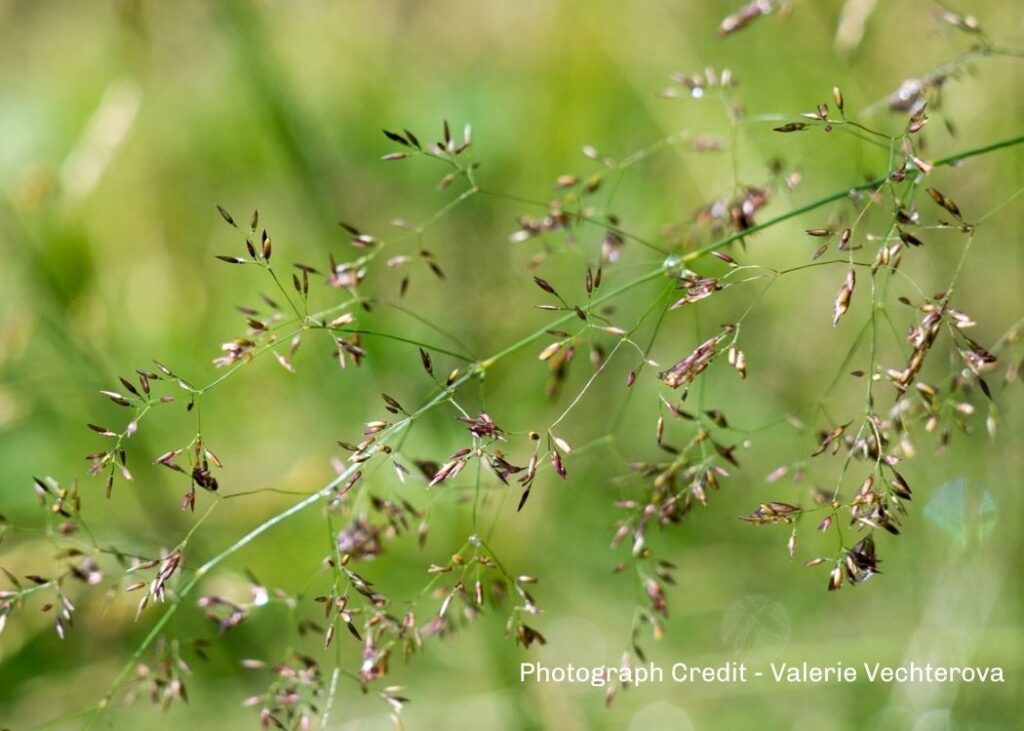
The sight of grasses waving and rippling in the wind is guaranteed to lift the spirits. They’re often underappreciated but can really add texture and variety to a planting and are well-suited to windy and exposed spaces. Many have their origins on prairies and other open grasslands. Carexes, Stipa tenuissima, Festuca glauca and Panicum virgatum, for example, should all flourish. However, avoid shade and damp-loving grasses such as Luzula nivea. Some grasses are evergreen and some are not, so it’s worth checking before you buy.
www.gardenersworld.com/how-to/grow-plants/20-of-the-best-ornamental-grasses/
Creating a beautiful garden in a windy and exposed space needn’t be a daunting prospect.
It’s just a question of keeping in mind that invaluable gardening mantra: ‘Right plant, right place.’