Blog
Early-flowering bulbs: a spring pick-me-up for the garden

Early-flowering bulbs: a spring pick-me-up for the garden
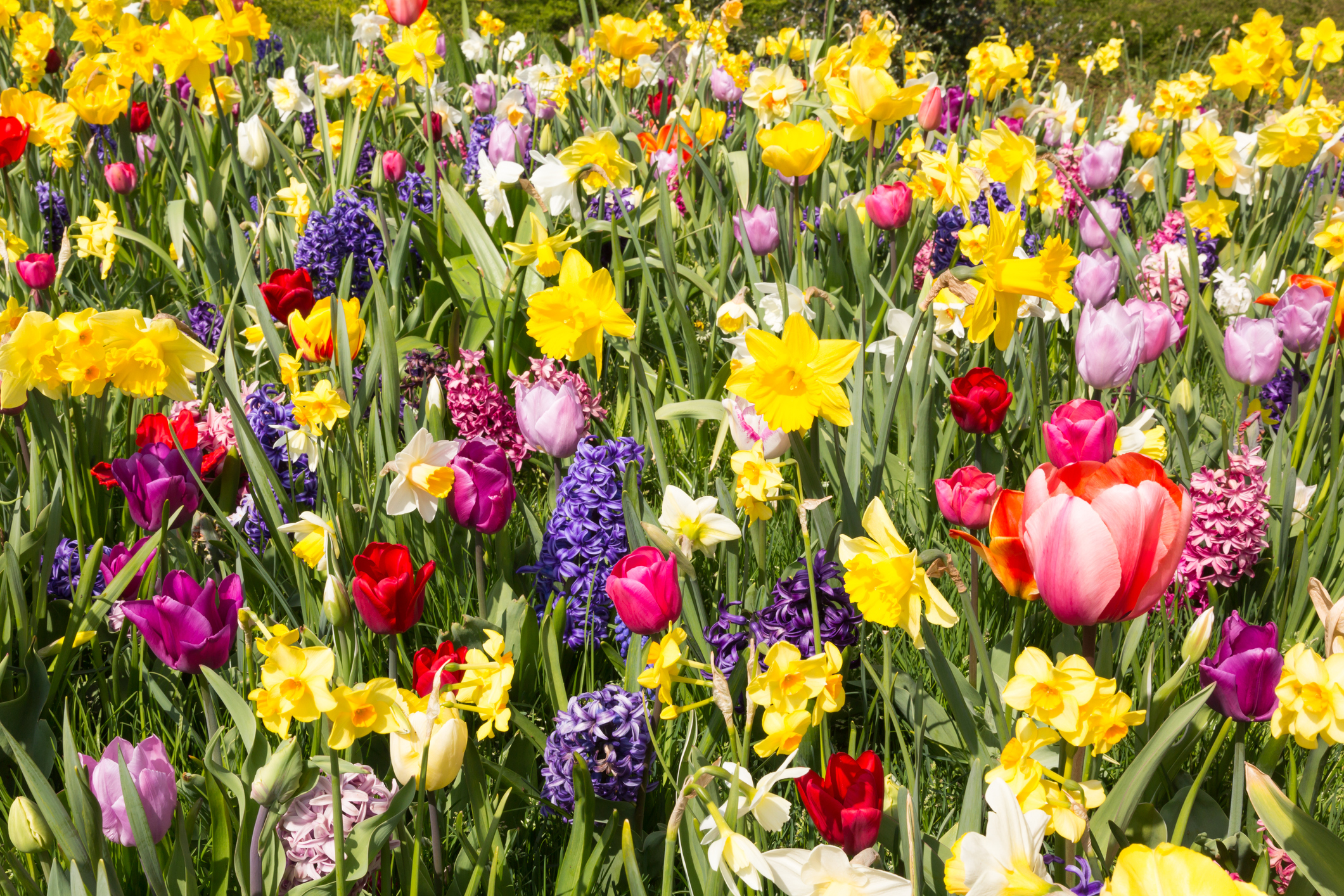
Perfect for high impact pots bursting with colour as well as in beds and borders, the jewel-like flowers of spring bulbs provide a welcome hit of bling after the subtle palette of winter. Most are equally at home naturalised in grassy areas or under deciduous trees where they look stunning planted in drifts or small groups. Snake’s head fritillaries, bluebells, grape hyacinths and chionodoxa will all spread to form colonies which lift the early-season garden and provide welcome food for bees.
A good time for planting is in September and October. The soil should still be warm, the growing season isn’t yet over and this means that the bulbs able to put out roots and establish themselves before the cold weather arrives and they become dormant.
The notable exception is tulips; waiting until November or even early December, when it’s cooler, will help to deter tulip fire, a fungal disease.
Planting
Bulbs are generally planted at around three times their depth, but there are exceptions. Iris reticulata, for example, should be planted 10-15cm below the soil surface and hyacinths at twice their depth, so check the pack for details. For drifts or groups, take a handful and toss them onto the grass, then plant where they fall. You can either do so with gay abandon or with a little less energy, depending on the size of the area you want to cover. This looks much more natural and pleasing to the eye than carefully spaced individual bulbs which just never look quite right in this situation, however hard you try! Our blog on naturalising bulbs will give you some helpful tips: https://www.capitalgardens.co.uk/blog/how-to-naturalise-bulbs/
In pots the look is more manicured, so you can space them more evenly and really pack them in, especially if you’re only planning to keep them there for one season. And you’ll get extra mileage if you plant in layers for successional flowering. Monty Don shows you how here: https://www.gardenersworld.com/how-to/grow-plants/how-to-plant-a-multi-layered-pot-of-bulbs/
Most spring bulbs like full sun but others, like bluebells and winter aconites, prefer part-sun or even part-shade as woodland glades are their natural home. The sun-lovers will rebel against having water around their roots; they can rot if they get too wet, so it’s a good idea to place a layer of horticultural grit at the base of the planting hole if they’re going in a bed or border, especially if your soil has a high clay content. In containers, use specialist bulb compost or three parts peat-free John Innes No. 2 or multi-purpose compost, mixed with one part grit or perlite. Adding a handful of grit to the bottom of the pot as an extra step should ensure that the bulbs have the drainage they need.
Ten of the best
Bluebells: flowering in April and May, these woodland wonders prefer dappled shade and moist soil. Spanish bluebells (Hyacinthoides hispanica) were introduced in the 17th century. However, they’re more vigorous and, like the domestic with the wild cat, have hybridised so successfully with the English species that it’s possible that the latter could die out. So be sure to plant English Hyacinthoides non-scripta. In my opinion they’re more beautiful, but you’ll also be doing our native wildflowers a favour. Bluebells are efficient colonisers so can spread quite quickly.
(Spot the difference! English bluebells are highly scented, smaller plants, with smaller, deeper blue flowers. Their blooms flowers hang down one side of the stem and are less open than those of Spanish bluebells.)
Snake’s head fritillaries (Fritillaria meleagris): another native wildflower which blooms in March and April. These intriguing fritillaries have nodding, bell-like, plum-coloured flowers with a delicate chequerboard pattern. Reaching about 30cm in height, their preferred position is in dappled shade but they’ll also tolerate full sun.
Leucojums: sometimes mistaken for snowdrops because of their similar appearance, the leucojum flowers later, in April, so is a way of getting a second helping of snowdrops if you have an insatiable appetite for them. Leucojums are also much taller, L. vernum growing up to 1m and L. aestivum to approximately 50 cm. Both like moist soil and sun or part shade.
Tulips: Robust showstopper tulips are a familiar sight. However, there are others that are smaller and more dainty and the shape of their flowers is often more open as if to welcome the spring sunlight. Bright yellow Tulipa sylvestris, for example, grows in light shade under deciduous trees as well as in grasslands. Others originate from mountainous areas with thin, poor soils and make excellent additions to rockeries or alpine plantings. There are many to choose from, such as pale pink Tulipa saxatilis with its glowing golden centre, or scarlet Tulipa ‘Tiny Timo’ which is scarlet with a contrasting white and purple eye.
Generally liking full sun and well-drained soil, most tulips flower from late April through to May. But you can get a head start by planting early varieties which bloom in March and April. There are some suggestions here: https://www.gardenersworld.com/plants/early-flowering-tulips-to-grow/
Some only flower reliably for one season, especially in pots, so you may want to replant each year. Rock tulips, though, should come back year after year.
Daffodils: No spring bulb list would be complete without these heralds of spring. Shop-bought bunches are usually bright yellow but there are, in fact, a jaw-dropping 26,000 cultivated varieties of daffodil in a huge variety of colours, sizes and forms. Some have a glorious, spicy scent and those with pale or white flowers are less eye-catching but perhaps more tasteful than their sunny counterparts. Pheasant’s eye (Narcissus poeticus var. recurvus) has white petals and a small yellow corona tipped with red. ‘Thalia’ is pure white and ‘Minnow’ is cream with a yellow eye and several blooms on each stem. Plant in a sunny spot.
Grape hyacinths (Muscari armeniacum): happy in full sun or part shade, muscari generally flower from late March to May. Their sweet little blue or white flowers are a big hit with bees and other pollinators and make good companions for chionodoxa and other small bulbs.
Erythroniums: part shade and moist soil encourage these April-flowering plants to give of their best. Try small pink E. dens-canis (dog’s tooth violet) with its delightfully marbled leaves, or the larger E. californicum; its yellow-centred white flowers will add light to and stand out in a woodland planting.
Iris reticulata: surely some of the most delightful spring-flowering bulbs, these multi-coloured dwarf irises flower from February to March and thrive in full sun. ‘Katherine Hodgkin’ is white with delicate blue and yellow markings, while ‘Harmony’ is deep blue with white splashes.
Hyacinths: needing no introduction, these spring wonders with their rich, heady scent are clothed in many colours from candy pink, royal purple, Delft blue and pale yellow through to white.
Chionodoxa: also known as glory of the snow, these star-like flowers give you an early hit by blooming in February and March. They’re traditionally sky blue but pink, white and even lilac cultivars are now available. Enjoying full sun, they also tolerate light shade well and can be planted under deciduous trees.
Aftercare
Unless the ground is really dry there’s no need to water spring bulbs after planting. They’ll look after themselves in winter and in spring they should get enough water from natural rainfall.
In pots, give them a drink after planting. After that you probably won’t need to water again until they start to sprout in late winter/early spring but check the pots periodically to make sure they don’t dry out completely. Once the green shoots appear, feeding every ten days or so with tomato fertiliser will encourage a good show of flowers next year.
Leave the foliage until it dies before cutting back. It’s helping to provide food for the following season.
Bestowing a much-needed dose of good cheer after winter, welcoming the new season and heralding the warmer days to come, spring-flowering bulbs are bright, versatile and low maintenance. They’re also a great way to optimise the space you have. Planting them in the gaps between your perennials not only gives your borders an early boost of colour, but means that as the perennials grow they’ll help to hide the bulb foliage as it dies back.