Blog
The Colour Purple

The Colour Purple
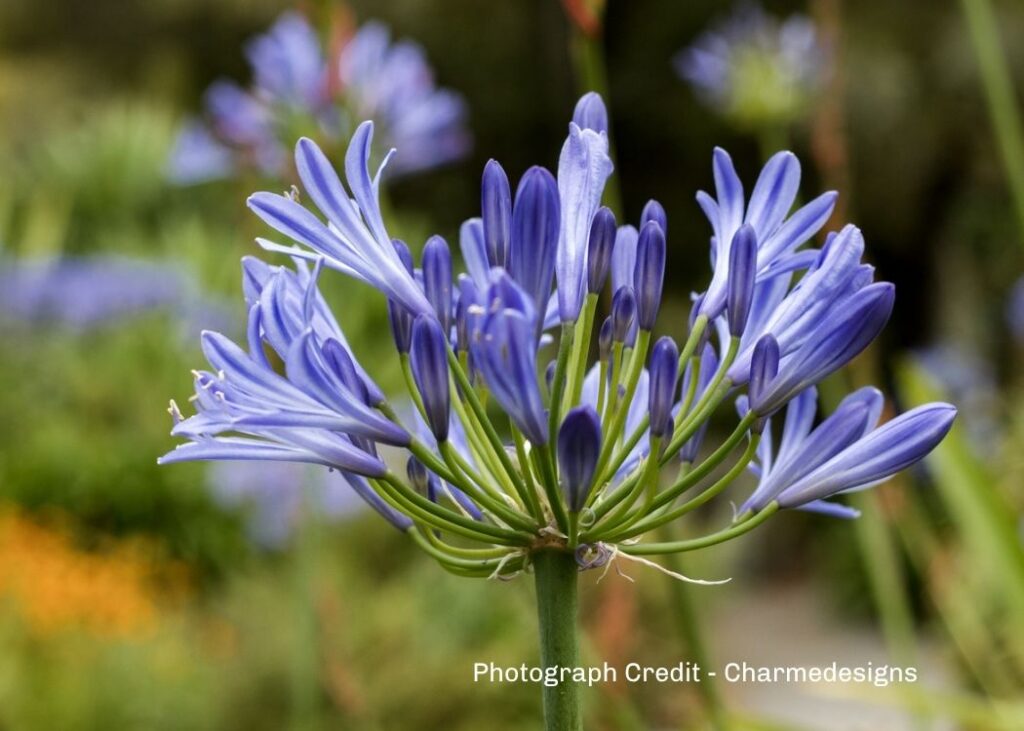
Purple comes in many colours. Symbolic of royalty and high office in Europe since ancient times, it was also linked to the women’s suffrage movement as well as being associated with mid-20th century psychedelia and counterculture. From pale lilac to rich royal purple through to deep indigo, its various shades and tones are thought to induce different feelings. Purples that are closer to blue tend to be cool and calming, whereas those with more red are more warm and vibrant.
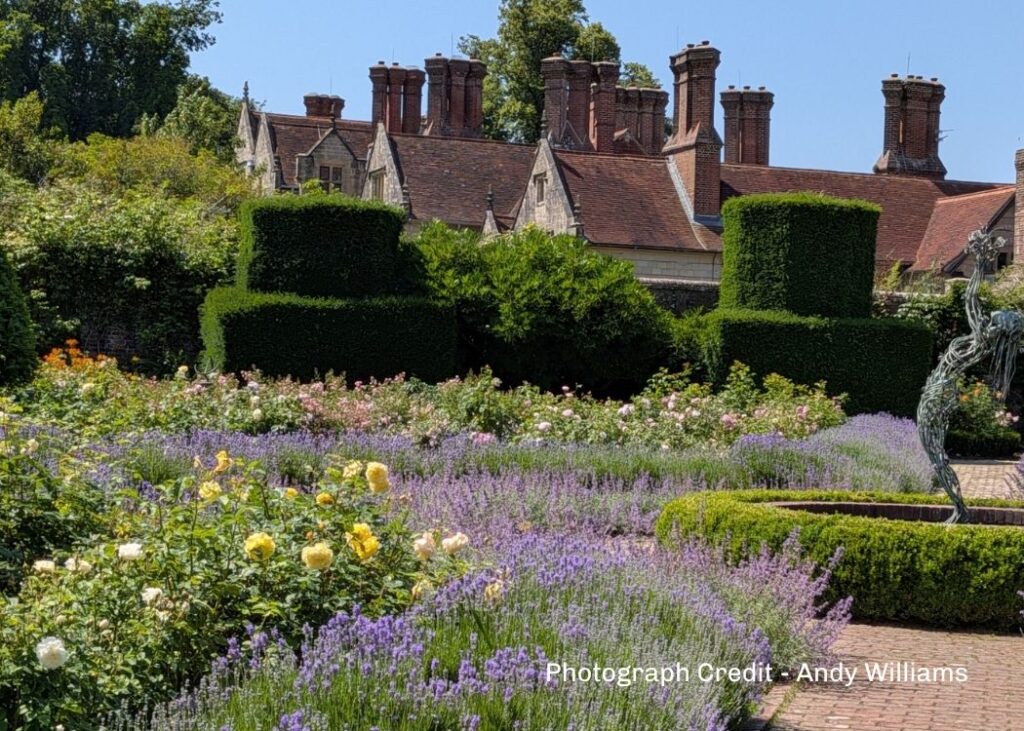
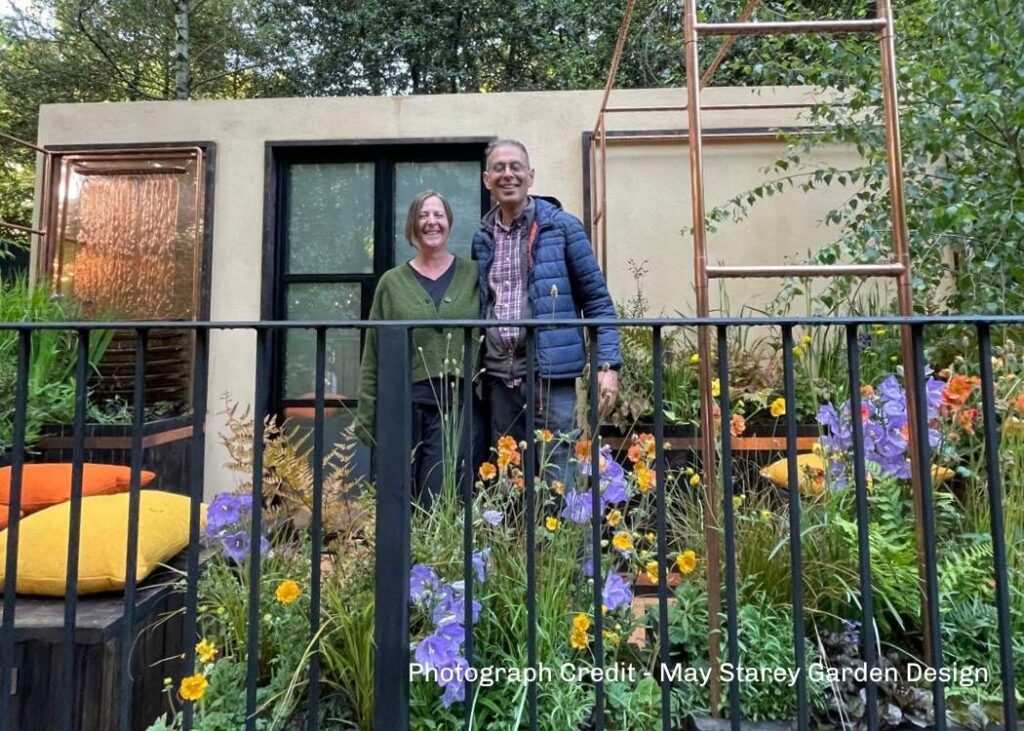
We can use these effects to create moods in the garden. Combine lilac with pastel pinks and whites for an ethereal, romantic feel, amethyst with burgundy and red for drama and impact, or royal purple with orange and lime for zing and bling. And all will highlight the soft autumnal golds and fawns of grasses in autumn. It’s a stretch to think of a colour it doesn’t work with in the garden given the right hue and if offset by foliage. We sometimes forget the role that leaf colour has to play. Don’t just stick to classic green; purple is particularly striking alongside lime, silver and copper.
Best for bees
When does purple become blue? Colour exists on a continuum of course and is often a question of perception as well as definition. And the quality of light has an impact too. The low golden sunlight of a summer evening can make flowers that look more ‘blue’ during the day seem purple.
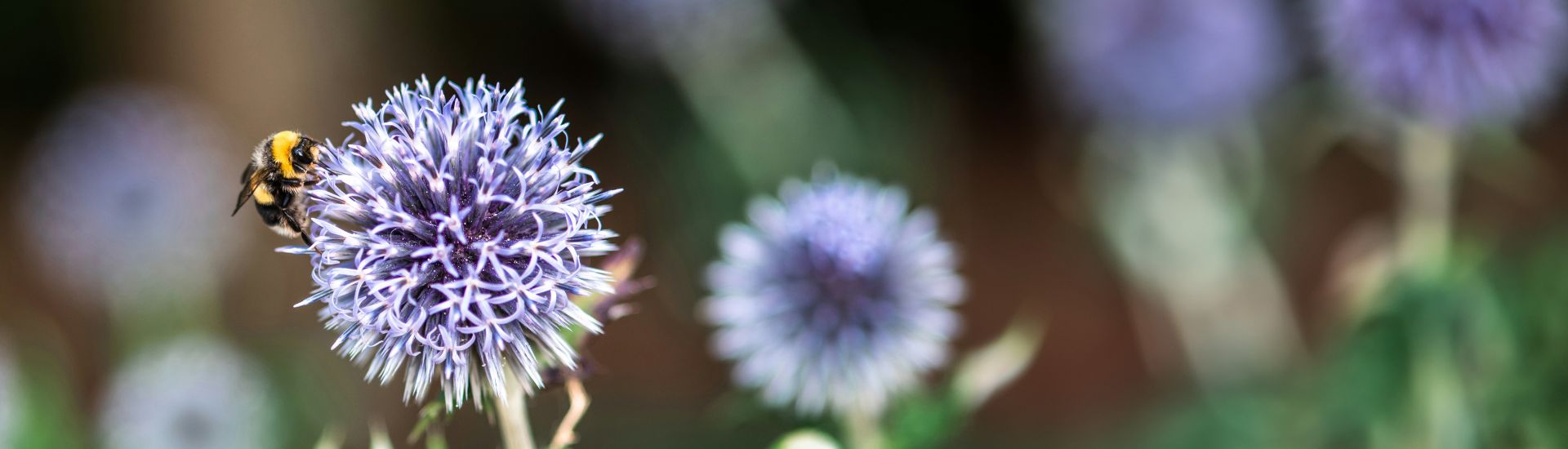
All this aside, ahead-of-his-time scientist Karl von Frisch discovered a century ago that bees can see colour. And we now know that flowers in the violet-blue range are most attractive to bees and some butterflies. It seems that the bees, at least, can see purple more clearly than other colours. This is because both their eyes and those of humans have three photoreceptors which help us to see colour. However, while we base our colour perception on blue, red and green, bees see blue, green and ultraviolet light.
Even more intriguing is a recent study indicating that flowers in the blue/purple spectrum are more nectar-rich than others. More specifically, violet flowers have the most nectar, with blue the next best. Knowing what we do about the wonder and complexity of the natural world this suggests that, far from being just a coincidence, bees have evolved their colour preference as an important survival strategy.
https://www.abc.net.au/science/articles/2007/06/25/1961099.htm
And as if this wasn’t remarkable enough, bees are also able to see patterns on flowers that are visible only in ultraviolet light. Invisible to humans, these act like insect-sized landing strips which direct them to the flower’s centre and the nectar.
https://www.beeculture.com/bees-see-matters/
Selected plants with purple power
There’s something purple for every part of the garden and almost every season. Below you’ll find a few ideas. Dot plants around for a small dose each season, plant large swathes for dramatic impact, or embrace it entirely and create a purple garden.
Spring
Crocus tommasinianus brings early spring cheer. Plant the corms in autumn and allow them to naturalise in grass. They’ll spread by themselves and form a colony. The pretty mauve flowers of biennial honesty follow in April. These develop into round, silvery white seedpods like small translucent moons, with the dark seeds just visible within. Glorious globe-headed alliums then bridge the gap between spring and summer.
Summer sun lovers
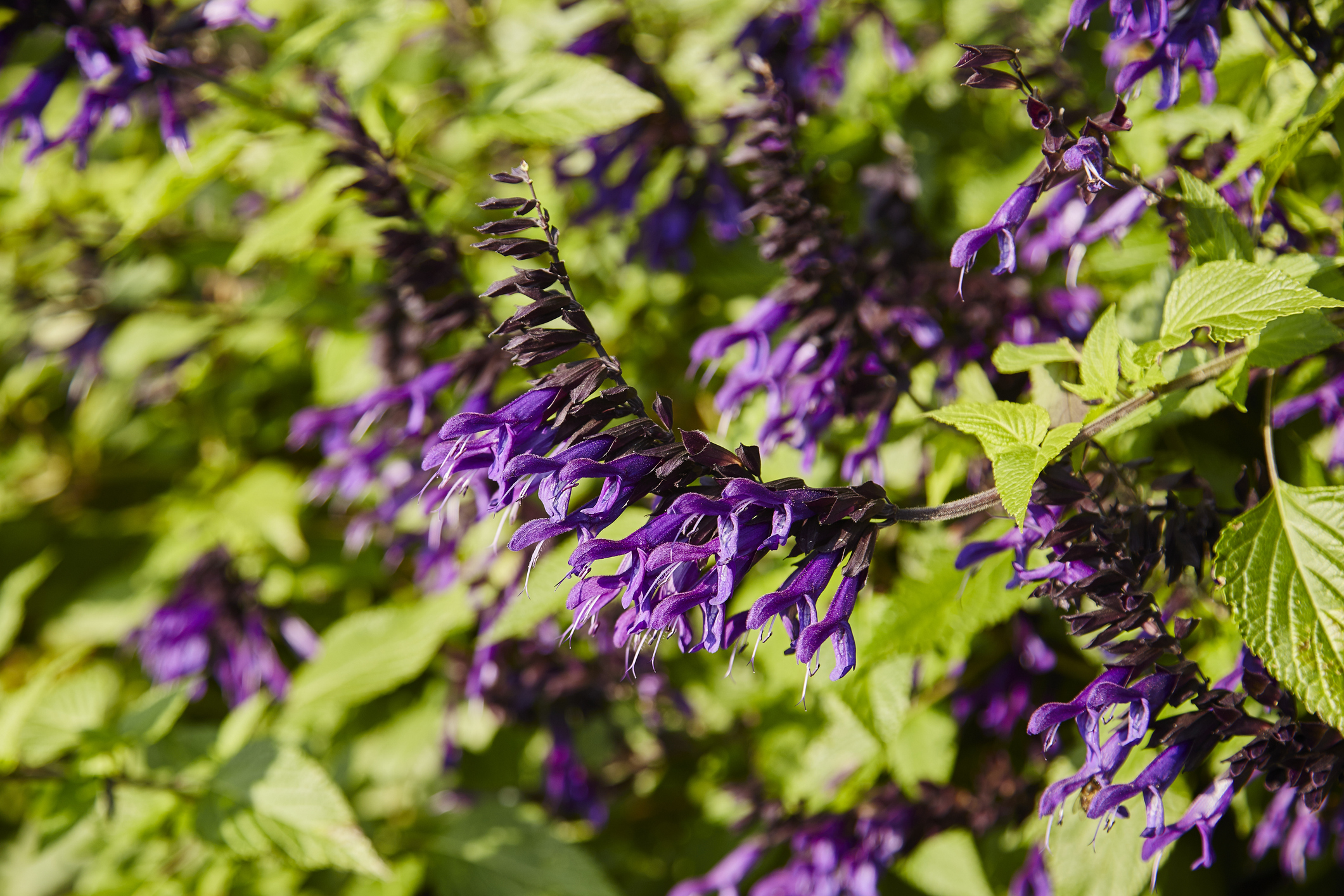
The spires of salvias appear in a range of colours, but three of the best for purple are S. nemorosa ‘Caradonna’, S. nemorosa ‘Ostfriesland’ and glorious, large-flowered, richly-coloured ‘Amistad’, which, if regularly dead-headed by removing the spent flowerheads, can bloom from mid-spring to early autumn.
The lush leaves of Baptisia australis resemble those of a large pea plant and seem to be unpalatable to slugs and snails. This, along with its indigo, lupin-like blooms, makes it an ideal substitute for the real thing if you have a problem with greedy molluscs. Phacelia tanacetifolia (purple tansy) has fluffy, spidery, pale lavender flowers that bees adore. The seeds of both can be sown in through August and September. Consider, too, Thalictrum delavayi with its delicate sprays of small lilac flowers.
Autumn
Seguing confidently from summer into autumn, and often with a long flowering period, asters have daisy-like flowers with contrasting yellow centres. Aster x frikartii ‘Monch’ and Symphyotrichum novae-begii are two of the most popular, but there are plenty to choose from. Usually grown for its striking rounded clusters of amethyst autumn berries, Callicarpa bodinieri also has small, pale lilac flowers in summer. And Crocus sativus, the autumn crocus, is the source of saffron, long-used to add flavour and colour to dishes such as paella.
Shady and woodland plantings
For spring colour, try wild violets, garden stalwart pulmonaria with its silver-spotted leaves, and the woodland bellflower, Campanula trachelium (which is best grown from seed sown around September). Shrubs add structure and large-headed Hydrangea macrophylla ‘Deep Purple Dance’, or H. aspera ‘Macrophylla’ – a lacecap with darker lilac buds opening to almost-white – will do the job perfectly.
Floriferous Linaria purpurea (purple toadflax) has tiny flowers like mini-snapdragons that can be squeezed open gently between finger and thumb. They’re loved by bumble bees, who, despite dwarfing the individual flowers, are easily able to slot their tongues in. It’s a prolific self-seeder in cracks in paving and other inhospitable nooks and crannies.
Mix them with other shade tolerant perennials like ferns, lily of the valley, tiarella and foxgloves.
For scent
Plant a lilac tree for headily fragrant flowers in early summer, or sweet rocket (there’s a white form too) for night-scented flowers. Go out on a warm May evening and inhale their gentle, rosy perfume. Delicious heliotrope smells of sweet almonds, or, some say, cherry pie. And of course there’s lavender, which needs no introduction.
For aromatic leaves opt for Salvia (formerly Perovskia) ‘Blue Spire’, or one of the many nepetas.
Tall and elegant
At about 2m tall, airy and leggy Verbena bonariensis has long stems topped by heads of tiny pale purple florets. Stately Madeiran native Echium candicans has large dramatic spikes of small, open flowers and also grows to about 2m tall. And you need a large border for giant Cynara cardunculus, the wild form of the globe artichoke. Even taller at 2.5m, it has huge felted leaves and soft, bristly flowerheads like thistles.
Climbers
Try one of the many purple clematis such as spring-flowering C. alpina, or C. ‘Jackmanii’ or ‘Etoile Violette’, both of which bloom in summer. The cascading flowerheads of wisteria are a joy to behold and annual morning glory (Ipomea tricolor) will clothe a fence or wall with its deep violet trumpets in no time at all.
Ground cover
Vinca minor ‘Ralph Shugert’ will creep courageously over difficult spaces. Hardy geraniums, too, are always good value, slug and snail proof and giving freely of their bounty. Long-flowering ‘Rozanne’ and ‘Brookside’ are rich violet, ‘Salome’ is glorious amethyst with a centre of deepest purple and G. pratense ‘Mrs Kendall Clark’ is softest pale lilac. And vigorous Campanula portenschlagiana will spread over walls and rock gardens, even in fairly shady conditions, as well as looking good in pots and borders.
We may not have all the plants listed in our stores but our staff will be happy to suggest alternatives.
For more ideas: https://www.gardenersworld.com/plants/plants-with-purple-flowers/
You may have seen the famous White Garden at Sissinghurst Castle, designed by Vita Sackville West and Harold Nicholson. It’s stunning during a hot, dry summer but a white garden can let you down if the weather is wet, becoming noticeably tinged with a slightly dirty-looking beige. Purple flowers, however, don’t show rain damage to nearly the same extent. If you’re thinking of a single colour garden, purple, with all its myriad tints and hues, is a stylish yet simple alternative.