Blog
Long-Blooming Achilleas


Long-Blooming Achilleas
Are you looking to add structure and colour to your garden? Then look no further than Achillea, also known by the common name yarrow. These beautiful herbaceous perennials are long-blooming and easy to care for, making them a worthwhile addition to any garden. In this blog we will explore the varieties of Achillea, how to grow them, and discuss some choice varieties.
What is it?
Achillea is a genus (a closely related group of species) of flowering plants belonging to the large and diverse sunflower family, or Asteraceae. The most well-known species of Achillea is Achillea millefolium, which is commonly called yarrow. There are many other species and hybrids of Achillea, each with their unique characteristics. For example, Achillea ptarmica, AKA sneezewort. This species has narrow leaves and produces sprays of small white flowers all summer long.
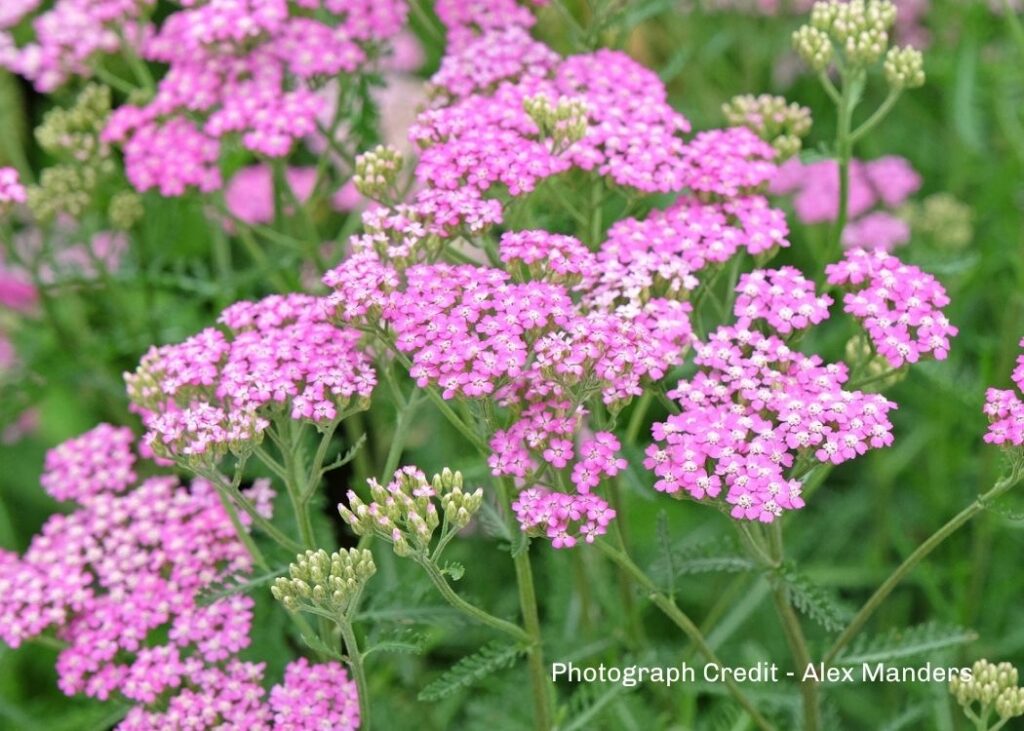
Achilleas are popular garden plants prized for their delicate feathery foliage and flat-topped flowerheads composed of tiny flowers borne in tightly packed or loose clusters. The flowers are carried above the leaves. Achilleas bloom during the summer months, providing much needed continuity of colour. Achilleas have become increasingly fashionable in garden design thanks to their long flowering period, new colour ranges, unique look and wildlife-friendly nature. Achilleas are one of the key plants in Piet Oudolph’s naturalistic garden designs, valued for both their colourful flowers and their skeletal winter silhouettes.
Did you know? – Achillea was named after the mythological Greek hero Achilles, whose soldiers were said to have used the plant to heal their wounds in battle. This association with healing has led to Achillea being called by other common names such as all-heal and bloodwort.
Value to Wildlife.
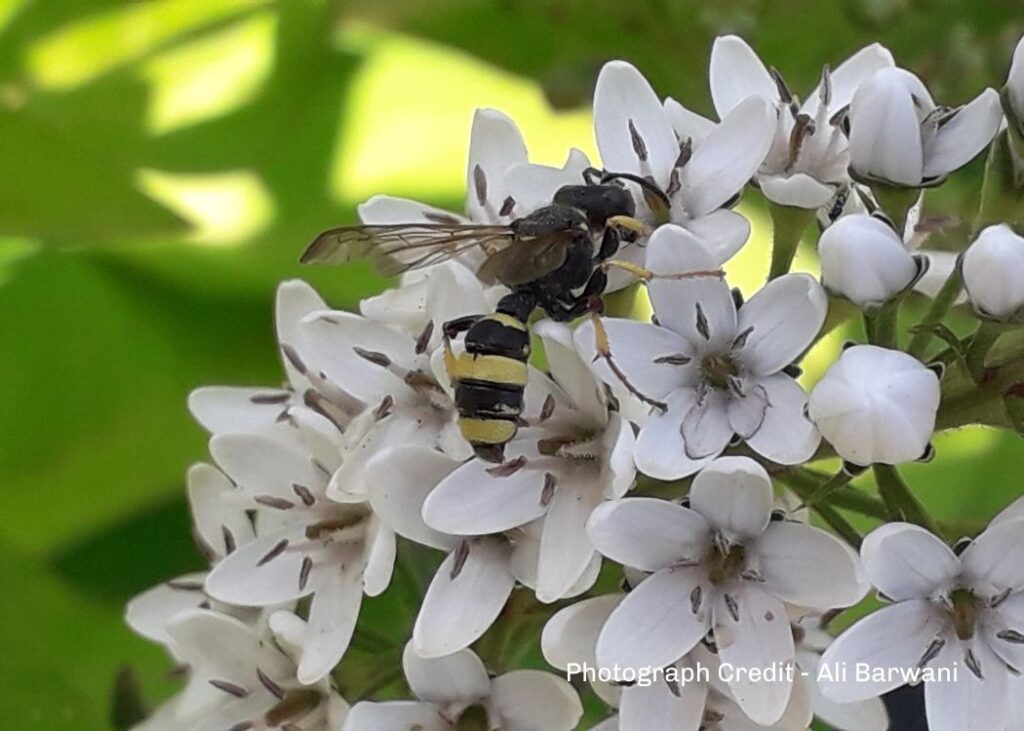
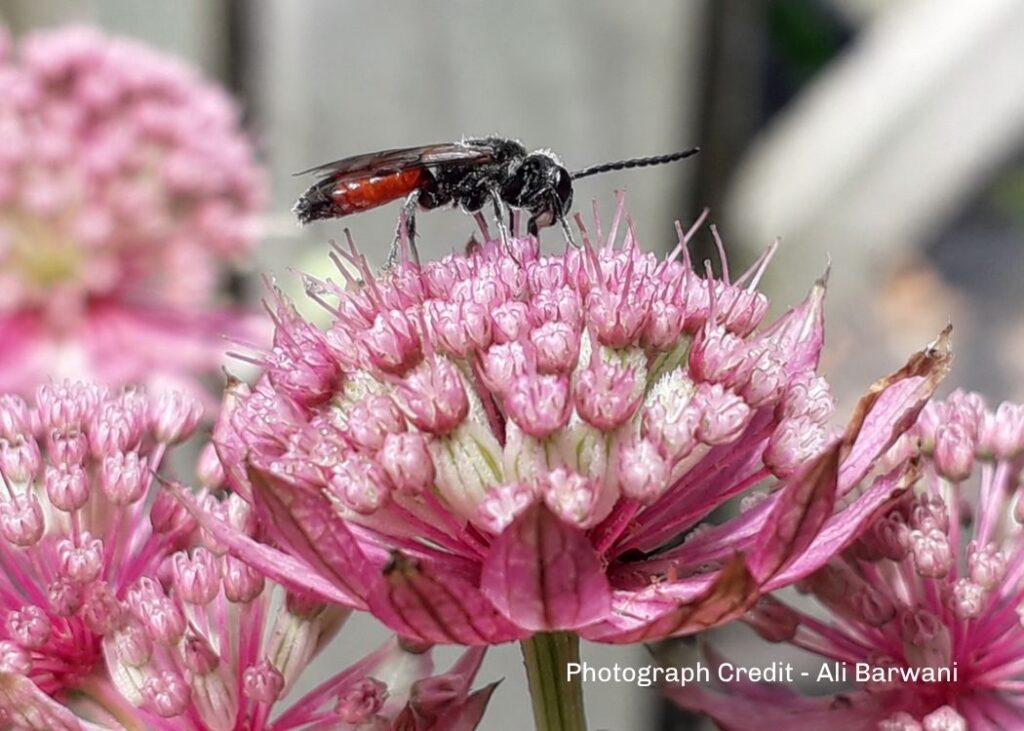
The flat umbels of nectar and pollen-rich miniature flowers are popular with insect pollinators. Greenbottles, honeybees, drone flies and marmalade hoverflies seem to be particularly fond of them. It is fascinating to watch the flat flowerheads rise and fall as they sway in the breeze, like the deck of an aircraft carrier in the swell of an ocean. Look closely, and you will observe how hovering insects wait for a moments stillness to make a safe landing onto the floral landing pad. If left to set seed, the seeds are popular with small seed-eating birds such as finches and sparrows.
Native Habitat and Varieties:
Achillea is native to Eurasia and North America, where it thrives in temperate regions.
Achillea filipendulina, also known as fernleaf yarrow, hails from central and southwestern Asia. Garden cultivars of this such as ‘Cloth of Gold’ and ‘Moonshine’ are valued for their beauty.
Achillea millefolium, is another species of yarrow. It is native to temperate regions of Asia, Europe, and North America. This species is known for its delicate white flowers and fern-like leaves, making it popular with gardeners. Many colourful cultivated varieties of this species are available to gardeners.
Cultivation and Care.
Achilleas come in many sizes, forms and colours, giving plenty of options to choose from. They prefer free-draining soil and thrive in full sun, although they can be grown in dappled shade. Achilleas hate waterlogging, especially during winter. To ensure good drainage, add grit to the bottom of the planting hole before placing your Achillea.
One of the best things about Achillea is that they are low maintenance. Simply deadhead the flowers as they fade to promote more blooms and cut back old foliage in the spring to encourage new growth. I recommend digging up and dividing your Achillea plants every three years to keep them renewed and healthy. Some varieties even self-seed, giving you free plants without any effort on your part.
Ten Good Varieties.
Achillea millefolium ‘Paprika’ (Galaxy Series): This variety produces scarlet flowers that add a pop of red. Flowers fade to pink-red with age.
Achillea millefolium ‘Moonshine’: With lemon-yellow flowers and grey-green foliage, this will shine out like a beacon in your garden.
Achillea millefolium ‘Lilac Beauty’: Sturdy flower stems that are self-supporting. The lilac-lavender young flowers fade to light pink and white as they age.
Achillea millefolium ‘Cerise Queen’: The deep pink flowers of this mat-forming variety are perfect for adding richness to your garden.
Achillea millefolium ‘Pomegranate’ (Tutti Frutti Series): Rich magenta coloured blooms that retain their vibrancy as they age. A compact growing plant.
Achillea millefolium ‘Summer Fruits Lemon’ (Summer Fruits Series): A clump forming variety that carries its flattened heads of pale yellow flowers above greyish-green foliage from summer into autumn.
Achillea ‘Walther Funcke’: A floriferous, low growing form. Its flat heads of orange-red flowers create a lower level of horizontal colour in a border.
Achillea filipendulina ‘Gold Plate’: Tall plants producing flat-topped yellow flowers. An architectural showstopper, that adds vertical interest.
Achillea ptarmica ‘The Pearl’: A great addition to the cut flower patch. You will often find sprays of its tiny white flowers in florist bouquets. Its flowers are the purest white among the yarrows.
Achillea ‘Hoffnung’: Very solid yellow flowerheads. I have noticed they are reliable repeat late season bloomers. Last year I was able to pick a few stems for a vase of flowers in November.
Good Companions.
Achilleas mix well with purple lavenders, Echinacea purpurea, Salvia nemorosa ‘Caradonna’, Michaelmas daisy, and billowy grasses such as Stipa tenuissima.
In Conclusion.
Achilleas are beautiful plants that can add a touch of elegance to any garden. With delicate foliage, vibrant colour, and easy care requirements, achilleas are a must-have for any garden enthusiast. Achilleas are the perfect choice for adding summer colour to your outdoor space. Remember, looking good in the garden now is as easy as planting achilleas!
Further information:
What is a drone fly? https://www.wildlifetrusts.org/wildlife-explorer/invertebrates/flies/drone-fly
Propagation tips.
https://www.gardenersworld.com/how-to/grow-plants/achillea-grow-guide/