Blog
Garden jobs for April

Sowing and Planting
April is the perfect time to sow flower seeds outdoors (although you can also sow in March and May.) Creating your own flower patch from hardy annuals like larkspur, nigella and poppies, and perennials such as echinacea, agastache and gaura is hugely rewarding, particularly if you’re a fan of indoor floral decorations.
Having flowers in your garden supports wildlife too. You can choose your own combination or buy one of the wildflower mixes designed specifically for bees, butterflies or birds.
Growing your own also leaves a much lower carbon footprint than buying them in a florist or supermarket. Flowers bought from a shop are unlikely to have been grown locally and indeed many have been grown abroad. So you’ll be avoiding air and road miles as well as the cellophane wrapping that supermarket flowers often come with, most of which isn’t recyclable. You also know they’re fresh (as a daisy!) when you pick them; this means they’ll last longer.
You’ll find all the information you need on growing flowers from seed here:
https://www.capitalgardens.co.uk/blog/top-ten-cut-annual-flowers-from-seed/
Continue to plant veg seeds
You can start sowing the seeds for your hardy home grown vegetables outdoors in March, but if you didn’t do it then, now is the time. And a quick reminder: to help you keep your veg coming in manageable quantities for longer, sow fast-maturing hardy plants like rocket, salad leaves and radishes outdoors every two to three weeks. https://www.rhs.org.uk/vegetables/successional-sowing
Tender plants like tomatoes, chillies, courgettes and runner beans can all be sown in pots indoors in April, ready to plant out in late May and June.
Plant second early and maincrop potatoes
If you didn’t sow first earlies in March (see our ‘Garden Jobs for March’ blog: https://www.capitalgardens.co.uk/blog/garden-jobs-for-march/), or even if you did, but are just very fond of potatoes, April is the time to start sowing second earlies and maincrops.
Second earlies take about 13 weeks to mature, so should be ready to harvest from mid-July as new potatoes. Ever-popular ‘Charlotte’, with creamy yellow flesh and a waxy texture, ‘Ratte’ – a traditional French variety with long tubers and a delicious chestnut flavour, or ‘Shetland Black’ – a heritage potato with striking deep purple skin and earthy-tasting flesh are just a few examples.
Maincrop potatoes are harvested between late August and early October. ‘Valor’ is a verstatile white potato which is said to be resistant to pests, diseases and drought. ‘Carolus’ is a heavy cropper with a floury texture and good resistance to blight. Pink-skinned ‘Caledonian Rose’ is another all-rounder with good resistance to eelworm (a common pest of potatoes) and disease.
There’s a potentially bewildering number of varieties to choose from. So if you want to experiment, why not form a Spud Gang (or a Potato Group if you want to be a bit more dignified) with friends or family and share a few bags? Then you can sample some of each and see what you like.
Ideally, potatoes should be chitted (or encouraged to sprout) around 6 weeks before you plant them to promote earlier maturing and a more plentiful harvest. But don’t worry if you’ve missed your chance. Plant them anyway and they’ll be fine.
https://www.gardenersworld.com/how-to/grow-plants/how-to-grow-potatoes/#planting
Plant strawberries
Sinking your teeth into that first ripe and fragrant strawberry of summer is one of life’s great joys. And not only are they utterly delicious, they’re also, like many plants that trail, a winner in a small garden. As long as they have a sunny spot, strawberries can be grown in pots, window boxes, strawberry planters, hanging baskets and even growing bags. These work on the same principle as strawberry planters, with openings up the sides for the plants to pop out their fruiting runners. They have the advantage of being lighter and less breakable than ceramic planters and so are easier to move around.
Plant your strawberries so that their roots are just buried, in peat-free, multi-purpose compost and water in well. In the ground they should be about 30-45cm (12-18 ins) apart but if you’re growing them in a container you can squeeze a few more in, as the runners will hang down, taking up less horizontal space. A 35cm (14 ins) basket, for example, can hold up to four plants. Anything that swells (ie produces a fruiting body) needs plenty of moisture, so make sure you water regularly, especially in hot weather.
Start boosting them with a high potassium fertiliser once the flowers appear. (Potassium stimulates the growth of fruit and flowers.) Tomato feed is perfect.
Your strawberry plants will start to get a bit tired and may produce less fruit after 3-4 years so you might want to replace them. But this doesn’t necessarily mean buying new ones. If you fancy a spot of plant DIY, they can be easily propagated from their own runners after fruiting – it’s a fun and very satisfying thing to do. You can find out how to do it here:
https://www.gardenersworld.com/how-to/grow-plants/how-to-grow-strawberries/
https://www.gardenersworld.com/how-to/grow-plants/strawberry-hanging-basket/
Maintenance
Check for weeds
By the beginning of April the weeds will be poking their heads above ground. It’s much easier to tackle them at this stage before they start to become thuggish. While they’re small a hoe is much the most efficient way to deal with them, even those which will mature to have a nasty big tap root. Leave them till they’re large and you’ll end up having to hand weed because all the hoe will do is chop off the root midway. So it’s best to get into the habit of regular weeding sessions. Letting them know who’s boss while they’re young means a manageable situation later on. (A lesson that can be applied to other aspects of life. If you’ve ever had a puppy you’ll know what I mean!)
Keep an eye out for aphids
By this time of year, especially if the weather has been warm, aphids will be making themselves known and feasting on those tender new plant shoots. Again, it’s a good idea to keep on top of them to stop them getting out of control. There a few ways of doing this. One is to pick them off as soon as they appear. Another useful trick is to plant sacrificial flowers such as nasturtiums some distance away. These will seduce aphids away from the plants you wish to protect.
Alternatively, try letting nature take its course and leave them for the birds. Blue tits, great tits and coal tits all love a nice juicy aphid. So leaving this natural food source should encourage them into your garden to help you deal with the problem.
You’ll find more detailed information here:
https://www.capitalgardens.co.uk/blog/how-to-get-rid-of-aphids/
https://www.gardenersworld.com/how-to/solve-problems/aphids/
Pinch out the tips of broad beans
Nutritious and really tasty when picked young and fresh, broad beans are a worthwhile addition to the garden. However, their tender young shoots are popular with blackfly in spring and you may well find they’re all over your precious plants like a rash.
Autumn planting can help mitigate this to some extent as the plants will mature earlier and be more resistant to aphids when they really start to invade as the season progresses. Pinching out the growing tips (the sap suckers’ favourite bit) should also help. This also encourages stronger growth lower down the plant and promotes the development of strong bean pods.
Pick developing seedheads off spring bulbs
Developing seeds takes energy that can be put instead into forming new flowers. But let the foliage of your daffs, hyacinths and other early flowering bulbs die back naturally, as the bulbs will store the nutrients it contains and use them next year.
Chop off the old brown growth of ferns and grasses
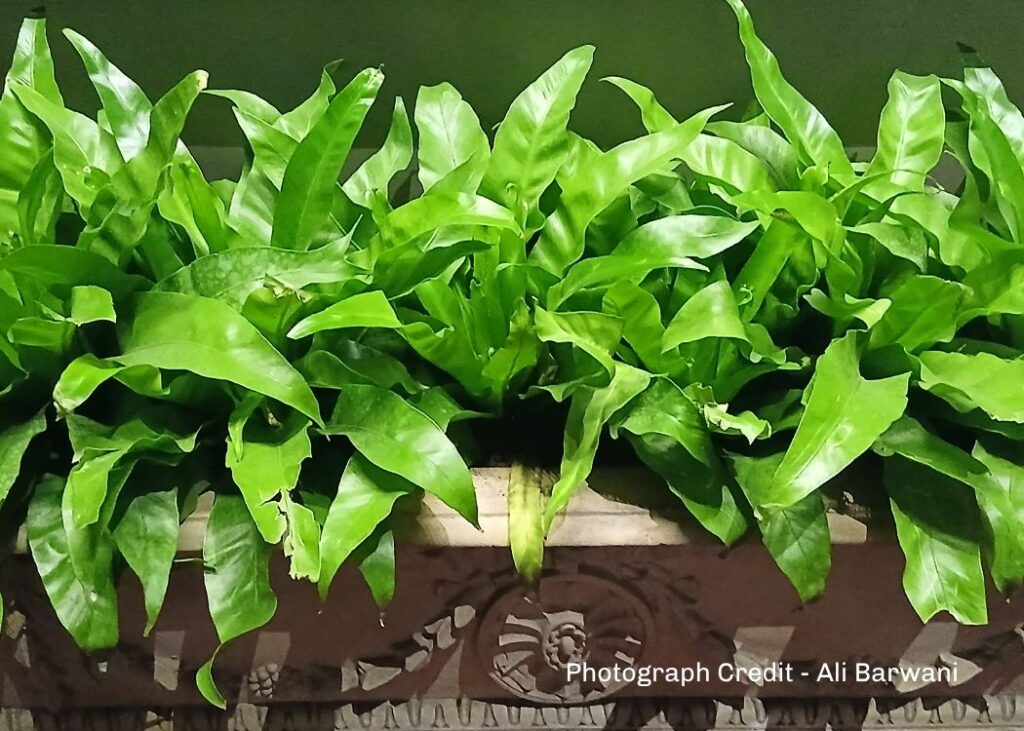
If this is a job you haven’t already got round to, now is the time. It’s easier to avoid accidentally harming the new growth if you cut back before it gets too big. And as well as getting rid of the ugly dead foliage, it allows more light, air and moisture to reach the eager new fronds.
Reinvigorate hardy perennials
Perennials such as hostas, hardy geraniums and crocosmia can start to become woody and bare in the middle after 3 or 4 years. Carefully digging them up, dividing them and replanting the outer portions separately is the best way to reinvigorate them. It also provides you with new plants and is actually the best way to propagate many perennials. Spring, when they’re just beginning to grow and the soil is warming up, is a really good time to lift and divide. The process of splitting your plants up may feel a bit brutal, but don’t worry! You’re unlikely to harm them as long as you do it properly, and you’re actually doing them a favour.
You’ll find advice here:
https://www.theenglishgarden.co.uk/expert-advice/gardeners-tips/how-to-divide-perennials/
And finally amongst all this activity, don’t forget to keep putting food and water out for the birds so they can eat, drink and bathe!