Blog
Garden jobs for August


August is another month of harvesting, sowing and keeping an eye out for garden pests and diseases.
Harvesting:
Vegetables
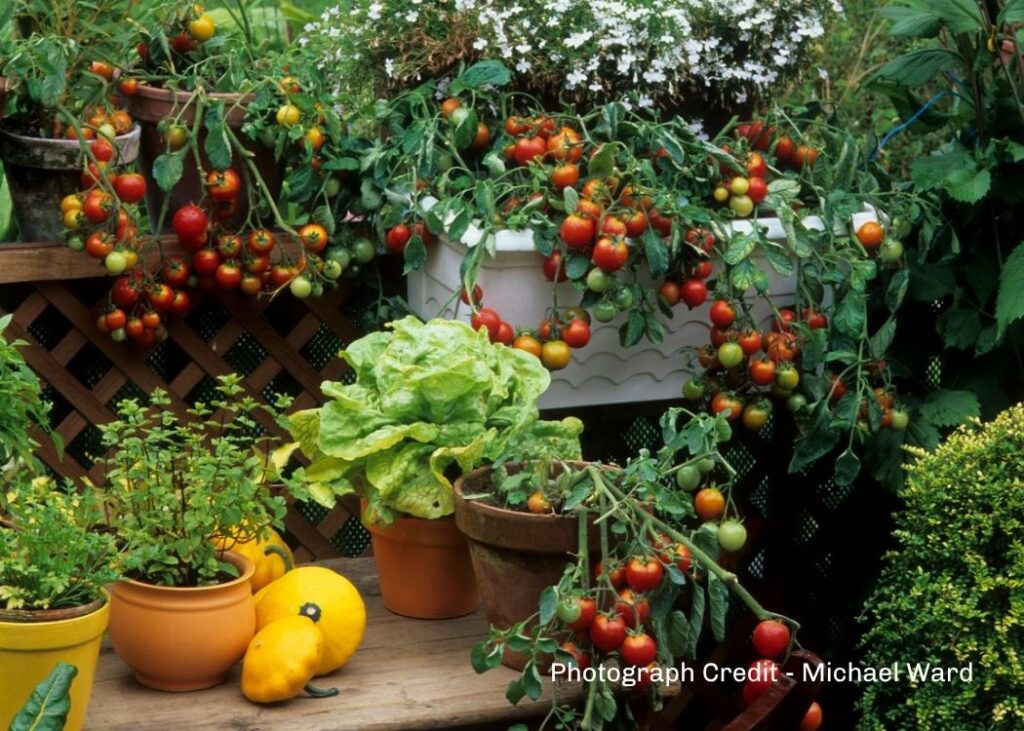
This month you have the immensely rewarding job of continuing to pick beans, courgettes, onions and second early potatoes. Plums, aubergines, tomatoes, globe artichokes and cucumbers should all ripen too and main crop potatoes should be ready from the end of the month.
Flower seeds
August is the time when the seeds of many flowers such as pot marigolds (calendula), cornflowers and poppies (both annual and perennial) are ripe and falling. You can either leave them to self-seed to create a wild cottage garden or collect them to sow now in gaps or store for future use.
The orange or yellow Welsh poppy often begins flowering in May and a few are still sending up new buds in my garden now, while also sporting seed pods. It thrives in difficult spots and adds a cheerful splash of colour to shady areas. Scabious seeds should also be ripening by the end of the month and it’s your last chance to collect any aquilegia seeds which haven’t already fallen.
You know the seeds of these flowers are ready when the pods or heads look dry and brown. Some (for example Welsh poppies) will rustle if you shake them gently. (Don’t do it vigorously or the seeds will fly out!) They may also have started to open, or have developed small holes.
What’s the best way to harvest them?
- Collect them in dry weather around mid-morning after moisture from dew has dried.
- Carefully turn the head upside down into an envelope or small paper bag while it’s still attached to the plant. (It’s best not to cut it. You’d be amazed at just how many seeds can bounce out of a pod with even the gentlest movement. It’s nature’s way of making sure they’re easily spread.)
- Depending on the structure of the pod the seeds may start to tumble in, or you may be able to shake them out.
- If the seeds are still attached to the head (as with, for example, calendula), cut the seed head off, leaving it in the bag or envelope.
- Seal it and label with the name of the plant and year.
- Don’t use polythene as this traps in any remaining moisture and your seeds may go mouldy.
- Store in a cool, dark place. Different flowers have different shelf lives but they should all be viable for at least a year.
Growing:
Sow hardy annual flowers, vegetables and herbs
A nice, relaxing garden job for a sunny day. Sowing in August, while the soil is still warm, means that seeds will germinate and grow quickly. So they’ll get a head start and should bloom and ripen earlier next year than plants sown in spring.
You’ll find lots of helpful information in our blog:
https://www.capitalgardens.co.uk/blog/15-easy-to-grow-flower-vegetable-and-herb-seeds/
Propagate strawberries
Strawberry plants become less productive over time so after about 4 or 5 years you may want to buy new ones or make your own.
You’ve probably noticed that they send out long, leafless stems. These are known as runners and you can use them to create new plants. They take quite a lot of energy to produce so for the first two years you should cut them off and let the plant concentrate on producing fruit instead. Once it’s matured, however, you can let the runners grow. After a while you should see a small plantlet appear at the end.
Leave the plantlet attached to the main plant for the time being. Using a u-shaped pin or piece of bent wire simply pin it to the soil or onto the surface of compost in a small pot. Make sure the plant is in firm contact with the soil to encourage it to root. Give it a gentle water and keep the compost damp (but not wet) for the next few weeks.
In 4-6 weeks it should have grown new leaves. Either dig it up carefully and replant it, or keep it in the pot or ground where it is. They are hardy but new growth may be damaged by late spring frosts.
Only use runners from healthy plants, and take a maximum of five runners from each plant.
https://www.growveg.co.uk/guides/how-to-grow-new-strawberry-plants-from-runners/
Pruning and cutting:
Trim lavender
Once they’ve finished blooming, usually around August, the flowering stems of lavender should be cut back to stop your plant becoming leggy.
This garden job requires a sharp pair of secateurs. Cut the stems back to where you can see new growth emerging. Be careful not to remove this new growth though and definitely don’t cut into the old wood. We often think of lavenders as being relatively tough plants, but they can be a bit sensitive and have a habit of keeling over if you do so.
Monty Don demonstrates how to do it here:
https://www.gardenersworld.com/how-to/grow-plants/how-to-grow-lavender/
Summer prune trained apple trees
Formally-pruned trees such as espaliers and stepovers, which bear lots of fruit in a small space, need a trim in summer to keep their shape and maximise the amount of fruit. Obviously you don’t want to chop off branches that are already bearing fruit. But the long, thin shoots that have grown this year should be pruned when the bottom third is woody. Pruning now also means that the soft, new wood can go in the compost and will rot down easily. It’s important, though, not to remove the short, full spurs that will produce flowers and fruit next year.
It’s less complicated than it sounds! You’ll find a simple video guide here:
https://www.gardenersworld.com/how-to/grow-plants/how-to-prune-apple-trees/
Maintenance:
Look out for tomato and potato blight
Infection in both crops is caused by the same fungus, Phytopthora infestans. It’s spread by windborne spores that, rather alarmingly, can be carried for up to 30 miles. Plants are more vulnerable in wet summers as the spores are able to germinate more easily and may also be spread into the soil or compost by rain. Infection spreads very quickly.
Symptoms:
Browning and wilting of the leaves and stems of both tomatoes and potatoes. They may look burnt as though by weedkiller. White fungus spores may appear around dark patches and on the undersides of leaves.
Tomatoes: dark watery areas appear and the fruit rots.
Potatoes: Tubers turn reddish brown and slimy.
How to deal with it:
Unfortunately there’s not much you can do once blight has struck. No chemical controls are available. You may be able to save some of your produce by removing all foliage as soon as you see the infection, ensuring it doesn’t fall off onto or touch the soil. Then harvest the crop immediately. You’ll need to eat it quickly though as it won’t keep. You’re more likely to be able to save potatoes than tomatoes as the infection takes slightly longer to travel down to the tubers.
Don’t be tempted to get rid of diseased leaves and stems in your compost heap – it won’t get hot enough to destroy the spores. Most councils’ green waste schemes will take them but check first. Otherwise they should be burnt.
The most effective way to deal with blight is to prevent it occurring in the first place by practising good garden hygiene – for example spacing your plants well and watering on the compost or soil rather than on the leaves.
Blight-resistant varieties of both tomatoes and potatoes are available too. They won’t escape infection completely if it comes rampaging through, but they will be less susceptible and less damaged.
You’ll find details about how to prevent and deal with blight here:
https://www.gardenersworld.com/how-to/solve-problems/potato-blight/
https://www.gardenersworld.com/how-to/solve-problems/tomato-blight/
And last but not least:
Carry on feeding, watering, deadheading and weeding…
…but consider leaving some seed heads such as teasels, rose hips and Verbena bonariensis for bird food later on. And some flowering weeds for pollinators too.