Blog
Bold and bright: Planting for a subtropical paradise

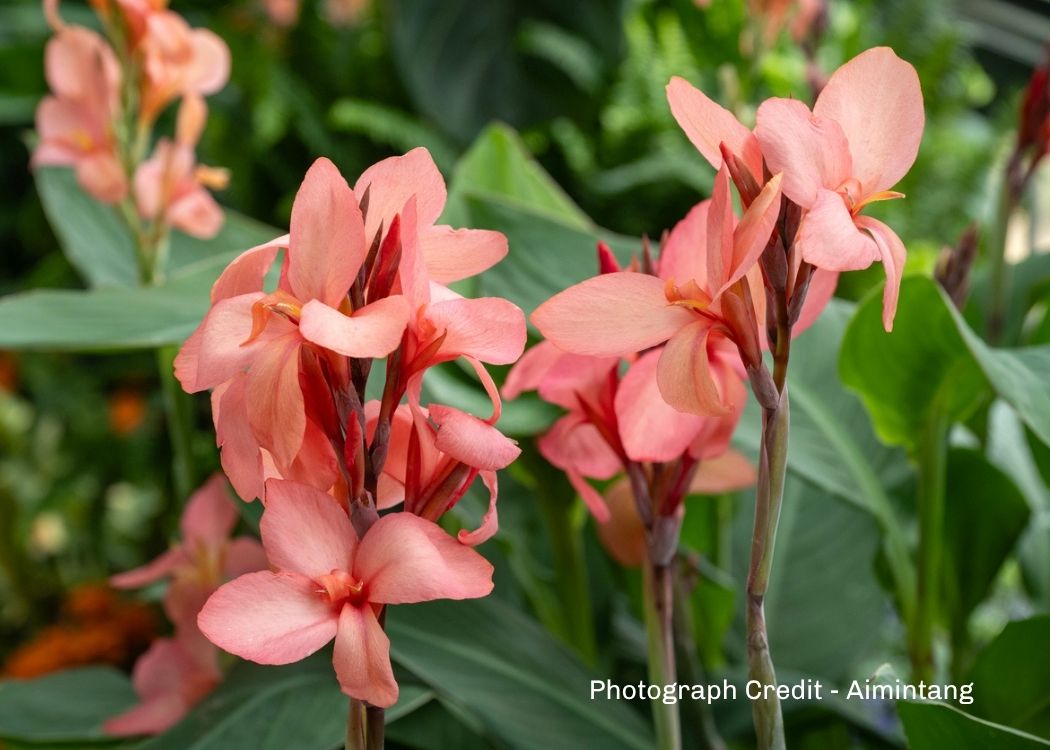
We have much to thank the plant hunters for. These intrepid explorers have brought us botanical marvels from around the world, without which our gardens would be much the poorer. For while native plants have their own beauty, it’s often the subtropical species from warmer climes which really shine.
The subtropics fall between tropical and temperate areas of the world and include places as diverse as the Mediterranean, South America and South East Asia. Unsurprisingly, the native flora is diverse too, from plants that tolerate hot, dry conditions and often have small, greyish leaves to those with huge, dramatic, bright green foliage found jostling cheek by jowl in warm, humid areas.
It’s this dense, verdant look, with large leaves aplenty and attention-seeking colours that characterises sub-tropical planting schemes. Shy and retiring they are not. Think big, bold and bright, with splashes of orange, purple, pink and yellow. We’re talking immersive, 3D, triple storey planting with climbers and large shrubs at the top, larger herbaceous perennials and small shrubs at mid-level, and smaller perennials and low growing ground cover below. This full-on planting also includes annuals and bulbs. And if all this exuberance is just a little too much, flowers in paler colours will tone it down but keep it looking just as lush.
Subtropical gardens are usually planted in sheltered places or warmer parts of the country. Small, walled gardens provide the perfect location. But the style allows for the use of both hardy and tender plants so can be tried even in unlikely-seeming places. (RHS Harlow Carr, near Harrogate, has a thriving subtropical area.) Plant according to the conditions you have and how much work you’re prepared to put in. To some extent conditions can be adapted or managed to create a suitable environment and reduce the potential workload. Shelter can be created with tall hardy evergreen hedging and large individual plants, while tender plants that don’t like frost may survive in a mild winter in sheltered spots but in other places will need protecting over winter. So it’s wise to have a higher proportion of hardy plants in colder areas to reduce the risk of damage or fatalities.
Usually sheltered, patio gardens also lend themselves to the subtropical style and plants can often be planted in large pots.
Subtropical tips
· Foliage is key. Contrasting leaf shapes and textures add to the multi-dimensional effect so mingle the paddle-shaped leaves of canna lilies with palmate Rodgersia aesculifolia, spiky phormiums and lacy ferns. And as many subtropical plants flower between summer and autumn, this foliage conjures up the all-important exotic atmosphere even in spring when flowers are less dominant.
· Plant with scale in mind. Subtropical plants, especially climbers and shrubs, can grow quite large, so check they’re suitable for your space before buying. Alternatively, some can be pruned to keep them to size.
· Many prefer bright, sunny conditions, particularly those that are larger. However, some, particularly low-growing ground cover plants, prefer part-shade. Luckily for gardeners this means that a lush, jungly effect can be achieved even if the chosen site isn’t ablaze with sunlight.
Winter protection
Half-hardy or tender plants can be lifted, mulched with bark chippings or wrapped in horticultural fleece or hessian as befits their requirements. Those in pots should be moved to a frost-free place.
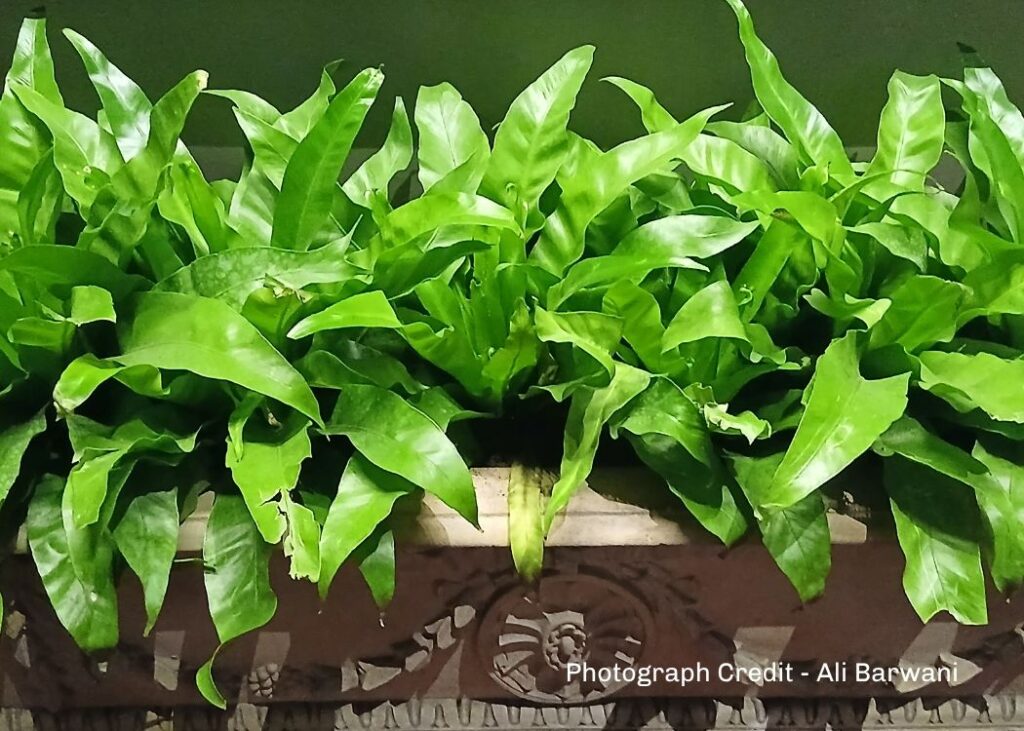
Keep year-round interest with hardy evergreens to provide structure and a backdrop for flowering plants. Glossy-leaved garden stalwart Fatsia japonica is a solid addition and does best with some shade. Majestic palm Trachycarpus fortunei and smaller Chaemerops humilis – which also has a preference for light shade – have stunning, fan-like leaves although they may be damaged by icy winds. Add spiky Phormium tenax and Yucca gloriosa which, when mature, has creamy white blossoms which smell spectacular, and low-growing ferns Asplenium scolopendrium and Blechnum spicant. Walls or fences can be covered in scented, spring-blooming, long-leaved Clematis armandii.
Other foliage plants
Try magnificent Japanese bananas (Musa basjoo) whose enormous arching leaves curve gracefully downwards, canna lilies striped in green, bronze and gold, prehistoric-looking tree ferns and ladder-leaved Melianthus major; all need winter protection. Striking, burgundy-leaved Persicaria microcephala ‘Red Dragon’ will tolerate some shade, while Tetrapanax papyrifer, with many-fingered foliage, reaches a height of 4-5m so needs a large space. Both are hardy, as are damp-loving, chestnut-leaved rodgersias.
The best of both worlds
A number of plants produce noteworthy blooms as well as impressive leaves. Canna lilies and strap-leaved hedychiums have mid to late summer flowers in shades of coral, apricot and lemon, while those of rodgersias and large, scallop-leaved Darmera peltata are creamy white to pale pink, the latter appearing in late spring. Both prefer light shade and damp conditions. All are good choices if space and budget are limited.
For spring to summer flowers
Try bright orange Fritillaria imperialis and annual Tithonia rotundifolia. Opal Fruit coloured zinnias (annuals too) will also pep things up. Add long-flowering alstromerias and begonias (the latter not hardy but flowers heroically in part shade) and pop in trumpet-flowered lilies or substitute hemerocalis to cope with part-shade. For bee-magnet spires of flowers use hardy foxtail lilies (but beware winter wet) and magnificent blue Echium candicans. It’s half-hardy but often self-seeds.
Hardy deep pink clematis C. ‘Acropolis’ or C. ‘Bourbon’ will almost glow in evening sunlight, and other early-summer flowering varieties are great performers too. Use tender violet Ipomeia purpurea and sunny Thunbergia alata as annuals. Both are fast-growing – sow now in a greenhouse or on a windowsill and watch them zoom up sunny walls and fences as summer takes off.
For late summer to early autumn flowers
In late summer, neon pink and royal purple salvias such as ‘Amante’ and ‘Amistad’ compete for attention with tangerine, deep plum and yellow dahlias. Add lime eucomis to tone things down a little or scarlet Lobelia cardinalis to create an exciting clash of colour. All except some salvias will need coaxing through winter so protect as appropriate. Give eucomis plenty of grit when planting.
Eccremocarpus scaber, the Chilean glory vine. has flaming red, orange or yellow tubular flowers. Evergreen in its native habitat, it’s only hardy to -5 degrees C so may not survive winter here but can be grown as an annual. Tender climber Cobaea scandens has cup-shaped royal purple blooms. Grow it as an annual or substitute hardy passionflower Passiflora cerulea or large-flowered clematis to scramble up walls and fences and through trees to complete the picture.
We may not have all the listed plants in our stores but our staff will be happy to suggest alternatives.
Sub-tropical plantings can be viewed in all their glory at Wakehurst Place in Sussex, Abbotsbury in Dorset and RHS Harlow Carr in Yorkshire. Other sub-tropical gardens are available!
Forget your fear of clashing and pack the plants and colours in. Subtropical plantings are brash and bold, embracing drama and laughing in the face of reticence. And there’s sufficient foliage among all the flowers to offset any real horrors anyway. Go on, channel your inner megastar-maker.