Blog
Three Primrose Flowers

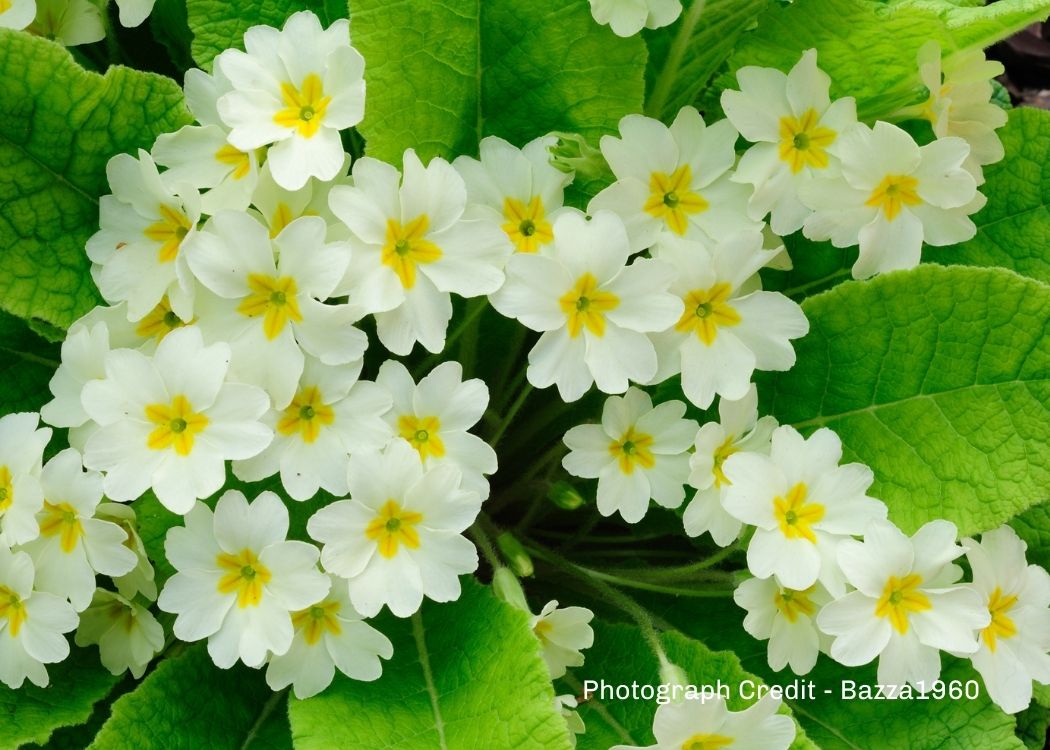
Three Primrose Flowers
Three unexpected flowers slip out of the pages of a book with sun-bleached green cloth boards. The volume is a copy of ‘A Flower Book for the Pocket’, by MacGregor Skene. This first flora belonged to my mother, and to prove it her maiden name is written in blue ink on the flyleaf in a confident, cursive hand. This guide was her companion during childhood and beyond. Even when young, she was a diligent botanist, ticking off the illustrations and underlining the scientific names of all the wildflowers she had encountered and identified.
The pressed blooms are all from the same plant, and it isn’t a rarity. Three primrose flowers. Currently they lie on my kitchen table, flattened but intact. The once yellow petals are the tawny colour of an onion skin and as thin as Bible paper. They appear as ancient and delicate as any of the wreathes and collarettes found buried with the boy-king Tutankhamun. These flattened primrose flowers also speak of absence and have their own tale to tell.
We have enjoyed a few lovely days. Duck-egg blue skies and sunshine after the morning fog has burnt off. Spring flowers are in abundance, snowdrops, crocuses, and now daffodils. Blackthorn blossom is melting away in the hedgerows. And in my local wood clumps of primroses are flowering beneath coppiced deciduous trees – not many flowers, because they have only just begun. But in a week or two they will be prolific.
By primrose I do not mean the whole range of approximately 430 species occurring in various habitats across the Northern Hemisphere. I mean the common primrose (Primula vulgaris), the uncommonly beautiful British wildflower that grows best in woodland clearings, and the mossy banks of country lanes and tracks. The primrose, or ‘prima rosa’ (first flower) blooms from January through to Easter. I find its simple beauty has magic. I still get a thrill spotting them growing in the wild. Perhaps it is to do with memory, the cheerful yellow blooms and crinkly leaves form a pathway to the past. My grandmother had a woodland garden on the Isle of Wight and created a meandering primrose path through it by dividing and planting rosettes of them along its length. At Easter, she would gather sufficient flowers to make a posy, surrounding the delicate blooms with five or six leaves, all held together by soft wool. These would be placed in a Tupperware bowl padded around with woodland moss and popped in a cardboard box and posted that morning to arrive in London the same afternoon. These gifts of love were treasured by my mother, and the three pressed flowers in the old book will have come from one of these rustic offerings.
As we approach Mothering Sunday (Sunday 15th March) for me it’s a time to look back much as others are looking forward. On this day I would go to the florist’s shop and search among the trays of brightly coloured hybrid primroses for the one that most resembled the iconic pallor of the wild primrose. I would give this small pot as a Mother’s Day gift and it would sit on the dining table until it had finished flowering, and then it would be moved out into the garden to fend for itself. There was power in this little plant, it was a reminder that renewal lay ahead.
Eleanour Sinclair Rohde (1881–1950) the pioneering British garden designer and horticultural writer described the flowers of a primrose as appearing like eyes looking back at you. If you look at the pale-buttery flowers with their inner star of saffron you can see the resemblance. And if you look very closely at the centre of the flowers of several clumps of primroses you will notice that the flowers come in two different forms, an occurrence long ago recognised by florists. The styles, a stalk-like structure connecting the stigma (the receptive part of the female flower) to the ovary, are of two different lengths. Primrose flowers will either be ‘pin-eyed’, where the stigma is at the top (and looks like a pinhead), or ‘thrum-eyed’ with a short stigma and the stamen above. The next time you visit a garden centre look at the trays of primroses and you will quickly become proficient in playing ‘spot -the-difference’ between pin-eyed and thrum-eyed primrose flowers. This physical difference in structure has a biological purpose. It avoids self-pollination, which results in lower genetic diversity. Charles Darwin (1809 – 1882) extensively studied how the common primrose reproduced, identifying the two distinct floral forms – a phenomenon he called ‘heterostyly’, and published his findings in 1862.
If you want drifts of primroses in your garden then remember their wild cousins flourishing in coppiced woodlands. They thrive in damp soil and require summer shade when they go dormant. So, give them plenty of composted organic matter to help conserve the roots. And why not combine them with their natural companions, violets, bluebells and wood anemones. Primroses also look great mixed with hellebores and pulmonarias if you desire a bolder planting scheme. Provide them with the right conditions and soon you too will be able to gather enough flowers to make a posy to gift to a loved one – although nowadays I would advise delivering it yourself if you want it to arrive on the same day that you pick them!
Further reading:
Charles Darwin’s observations on primulas – Read here
Eleanour Sinclair Rohde – the first woman to design a show garden at The RHS Chelsea Flower Show
How to divide primrose – Read here