Blog
Spring-flowering plants for bees and other pollinators


Spring-flowering plants for bees and other pollinators
This is the time of year when honeybees, having scoffed all their winter honey reserves, can fly for several miles foraging for energy-boosting nectar. A queen can be laying 2,000 eggs a day and colonies are beginning to grow.
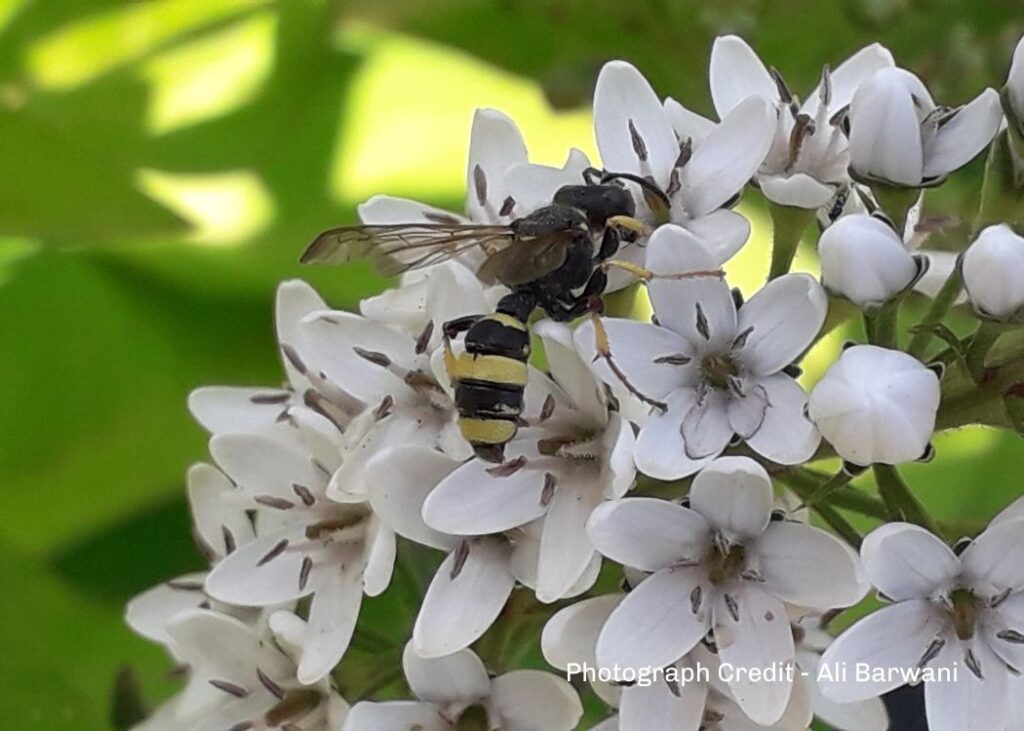
And it’s not just honeybees who need our help but other bees too – all are valuable pollinators and play an essential role in our ecosystems. Queen bumblebees hibernate underground over winter, making their appearance in spring to search for a suitable nesting site. Solitary mason bees are vital pollinators of early-blossoming fruit trees. And hoverflies are also out and about in April. While the larvae are predators of garden pests, adults need a regular fix of nectar to survive.
Trees
Flowering cherries, such as popular Prunus incisa ‘Kojo-no-mai’ are a common sight in parks and gardens in spring, and understandably so. They’re undeniably eye-catching but why not try something a bit different?
Our native crab apple, Malus sylvestris, has white flowers tinged with pink and yellow/green fruits. And there are many others with pink or white blossom and fruits across the spectrum of red, pink, orange and yellow. These can be used to make delicious crab apple jelly or left for an autumn display and a feast for birds, voles and even badgers. According to the RHS, crab apple trees can support 90 species of insects which are another food source for birds. They’re self-fertile so don’t need another tree to produce flowers and fruit. They’ll also pollinate apple trees nearby so you’ll be giving your neighbours and their pollinators a helping hand too. Generally quite compact, they’re good for small gardens. Plant in full sun to part shade for blooms in April to May.
https://www.gardenersworld.com/how-to/grow-plants/how-to-grow-crab-apples/
Amelanchier lamarckii: this beautiful tree has masses of starry white flowers in March or April which are a magnet for bees, and small, bronzey green leaves. In June it bears black berries and its autumn positively glow. It can grow up to 10m tall so if your space is limited you could opt for Amelanchier grandiflora ‘Ballerina’ instead which will only reach 4m x 4m. Full sun or part shade.
Shrubs
Chaenomeles japonica (Japanese quince): fiery red, pink or coral flowers appear on bare wood in March and April. This shrub has slightly spiny stems but is really easy to grow, either in full sun or part shade. It’s usually trained, heavily pruned and tied in against a wall but is also lovely when left more or less to its own devices for a while, springing out delicate curving branches. The blossoms often mature into green or yellow fruits. While not traditionally considered edible in this country (for this the fruit from the quince tree, Chaenomeles speciosa, is generally the thing), they are commonly used to make jellies, liqueurs and sweets in Asia. They’re also packed with Vitamin C!
https://www.theguardian.com/lifeandstyle/2016/oct/30/gardens-its-the-season-for-japanese-quince
Ribes sanguineum (flowering currant) blooms in April or May. As well as the long heads of small shocking pink flowers this has wonderfully aromatic, blackcurrant-scented foliage. Thriving in a sunny spot, it reaches a height and spread of 1.2 x 1.2m. It also makes an unusual hedging plant, although it loses its leaves in winter.
Climbers
Clematis armandii: with its large, oval, shiny evergreen leaves, this is not your run-of-the-mill clematis. The creamy white, almond-scented flowers appear in March and April. Preferring full sun, it’s a vigorous grower and can reach a height and spread of 5 x 3m. Given free rein it will scramble up a deciduous tree, where it makes a striking and unusual feature.
Clematis alpina: growing happily in full sun or part-shade, C. alpina is more compact than its almond-scented cousin, reaching only 2-3m in height, so is more suitable for a small garden. From April to May it bears four-petalled, hanging violet-blue flowers. These are followed by soft, fluffy seedheads.
Herbaceous perennials
Often seen tumbling over walls in cheerful cascades of bright purple and prolifically self-seeding in crevices, aubretia is, in gardening parlance, a really good do-er. Semi-evergreen and flowering from March to May, it will grow happily in sun or part-shade. Tolerant of any well drained soil and even exposed or windy spots, it’s a central feature of rockeries and also adds something special to window boxes.
Bergenias, with their heads of deep pink to whitish flowers, bloom between March and April. Also known as elephant’s ears because of their unusually large, roundish leaves, they’re excellent garden all-rounders, thriving in both full sun and part-shade. These low-growing evergreen plants make excellent groundcover and are tolerant of dry soil too. Among the many cultivars you’ll find deep purplish pink ‘Overture’, ‘Silberlicht’ with white flowers which darken to pink as they age, and ‘Ice Queen’, its displays of greenish white blooms lifting the garden on a gloomy day.
Erica x darleyensis: more tolerant of alkaline soil than some other heathers, Erica x darleyensis will be content with lots of sun in a flower bed or window box without the addition of ericaceous compost. Its long flowering period – from winter through to April – and masses of white or pink flowers make it a valuable plant for pollinators. Looking its best planted in a group, it also adds interest on its own.
Euphorbia amygdaloides var. robbiae, a form of wood spurge, flowers during April, May and into June. Despite its rather un-flowery appearance, it’s actually very bee-friendly. Darkish green leaves are topped by spires of smallish, lime, cup-shaped flowers. Tolerant of sun or shade, it’s also happy in dry soil so is another useful plant for tricky areas under trees. It’s evergreen too. What more can you ask of a plant? Spreading by underground runners, it creates year round ground cover with ease. ‘Purpurea’, as its name suggests, has dark purplish foliage. The milky sap is caustic so it’s best to wear gloves when handling it.
Pulmonaria (lungwort): Once used to treat lung disorders, Pulmonaria officinalis is the uncultivated form of this very pretty woodland plant. Thriving in part-shade, it has deep pink flowers which become blue as they mature, and silver spotted semi-evergreen leaves. There are many cultivars. ‘Blue Ensign’ has deep blue flowers while Silver Bouquet has predominantly silver leaves and flowers ranging from blue through to lilac and candy pink on each plant. The blooms of ‘Sissinghurst’, on the other hand, are white. Grow it in dampish but not soggy soil or compost. Height to around 30cm.
Native primulas are a boon to early bees. Primula vulgaris (the wild primrose) has fresh-looking white flowers with lemon yellow centres – a colour palette that matches just about anything. It blooms during March, April and May and sometimes even earlier if conditions are right. Primula veris (the cowslip) produces its clusters of warm yellow flowers slightly later, in April and May. And keep a lookout as they colonise your garden; you may occasionally make the joyful discovery that new cowslips are red or orange instead of yellow.
Bulbs
There’s a plethora of blue spring-flowering bulbs to choose from and they’re all pretty much a safe bet as far as bees and other pollinators are concerned. Liriope muscari (grape hyacinths), chionodoxa and scillas, for example, will all provide a much-needed source of nectar. And it wouldn’t be a proper spring without the stunning displays of our native bluebells carpeting woodlands and gardens.
A good foil for all that blue (if one is needed) is Fritillaria meleagris, the snake’s head fritillary. Nodding, pinkish flowers delicately etched with chequerboard lines appear from March to April and into May if you’re lucky.
https://www.theguardian.com/lifeandstyle/gardening-blog/2011/oct/13/spring-bulbs-bees
And finally, it’s important to remember that different pollinators are attracted to different flowers. Cowslips, for instance, are a source of nectar for long-tongued bees and bee flies, moths and butterflies. Grape hyacinths, on the other hand, are popular with the solitary hairy footed flower bee. So be as varied as you can in your choice of plants. And bear in mind that multi-petalled blooms with a complex structure are harder for any insect to access. It’s best to aim for those with simple flowers.