Blog
Spring Clean Your Garden


Just as some of us spring clean our indoor spaces (I’m not always in that category) we need,
likewise, to give our gardens a good going over at this time of year. We’ve suggested some
things you can get on with now to prepare to entertain loved ones from 29th March.
Six Spring Cleaning Tips For Your Rule of Six Barbecue
1. Tidy up containers
Can you see roots snaking out of the holes in the bottom of your pots and troughs? If you
can, it probably means that your shrubs have outgrown their space. And early spring is
the ideal time to transplant them into pots one size bigger using fresh compost.
2. Boost borders and hedges
These will, similarly, be feeling a bit undernourished, so they’ll benefit from a scattering
of fertiliser to give them some oomph too.
3. Cut back dead foliage
Quick and simple to do, this is an essential part of garden spring cleaning. Now is the time
to chop off the dead stems and foliage of herbaceous plants that you couldn’t face dealing
with in the freezing rain. It’s also one of those garden jobs that are really satisfying and it
makes a huge difference to the way your garden looks. It’s a bit similar to giving your
fringe a lockdown chop, but hopefully it’ll look rather better.
The flowers of some bulbs, for instance early-flowering daffodils and Iris reticulata, may be
dying off so if you’d like your garden to be extra neat and tidy, you can pinch off the faded
flowerheads. In addition this stops the plant from putting energy into seed production and
diverts it into building the bulbs up for next year. But leave the stems and leaves to die
back naturally; these will provide food for next year too.
4. Start to weed flower beds and borders
Already pesky weeds are starting to poke their heads out of the ground. They’re pondering
how to fight back against our garden spring cleaning and take up time we’d otherwise be
spending more enjoyably.
Quick weeding masterclass:
- Tackle them as soon as they appear. Because if you turn your back on them, they’ll
simply spread or self-seed, leaving you with a weightier problem to tangle with. - It’s always best to weed when the soil is damp, as you’ll find you can get them out
more easily. - The most effective way to get rid of plants with big tap roots (the shape of a carrot)
or spreading and tough root systems (like couch grass and bindweed) is to dig them
out using a hand fork and trowel. Make sure you get as much of the roots out as you
can. Critically, leaving just a tiny piece can allow it to survive and re-emerge. - On the other hand it’s much easier to deal with annual weeds such as chickweed.
You can either pull them out by hand or, if they’re still tiny, use a hoe to chop the
leafy part off. Do it before they set seed and spread, and hoe on a dry day, so the
weeds dry out and die.
A weed is really just a plant that’s sprung up somewhere inconvenient and unwanted. It’s
just a question of definition. Tastes differ. I long for forget-me-nots, with their delicate,
sky blue flowers, to self-seed in my garden. But when I worked in a public garden, yanking
most of them out was the order of the day. And some things that we generally think of as
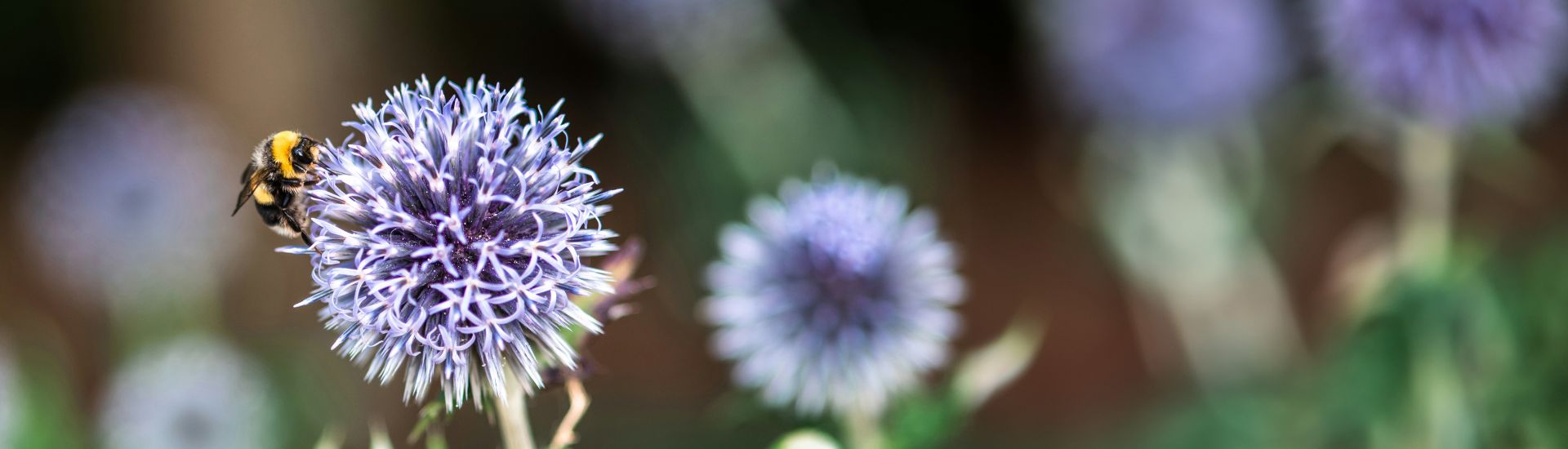
weeds are actually manna for wildlife. The nectar of the humble but sturdy dandelion, for
example, is a food source for butterflies such as the peacock and holly blue, as well as
beetles, hoverflies and bees. Goldfinches and house sparrows also love the seed.
You might find this useful for identifying some of the visitors to your garden:
https://www.rhs.org.uk/advice/common-weeds
5. Re-seed bare lawn patches
Lots of lawns are looking a bit scruffy at the moment after the ravages of winter (and
possibly the ravages of your home-educated children too!) However, bare patches
are easily dealt with.
- Firstly rake over the sad-looking areas so that you loosen the top 2-3cm of soil.
- Then, when it’s nice and crumbly, sprinkle with grass seed. (You should be able
to find something which suits your needs in our wide selection.) - Next, lightly rake again so that the seed is in properly in contact with the soil.
- Finally, water gently using a fine spray.
- Remember to check it regularly to make sure you keep it damp. It should
germinate in about 7-10 days.
You may find that hungry birds are after your newly sown grass in their own mission to
spring clean your garden. You can protect the seed by sprinkling a light covering of soil
on top. As well as this, hanging a bird feeder with tastier treats somewhere away from
the patch that you’ve just carefully sown will provide distraction.
6. Spring pruning
Pruning is one of my favourite garden jobs. Giving your plants a haircut
- keeps their size and shape under control
- cuts out dead, damaged or diseased stems, and
- encourages new growth and flowering
Some shrubs need pruning, some don’t. Most evergreen shrubs need little or no
maintenance of this sort. If you want to know more have a look at this:
https://www.rhs.org.uk/advice/profile?PID=168
However as part of your garden spring clean you can prune now several non-evergreen
shrubs that flower between July and October.
Having the right tools for the job makes it a lot easier and prevents accidental damage
to your plants. You’ll need:
- sharp secateurs for thin stems and branches
- loppers for stems larger than about 10-15mm in diameter
- a pruning saw for thick or tough branches
Where should I cut?
- Make your cut just above a bud or a pair of buds.
- This is because there are growth hormones in this area, so cutting here stimulates
new growth. - Cutting higher up, away from the buds, means that the area of wood in between will
just die back, leaving you with an ugly brown stump.
A few popular plants which you might have and which can be pruned now include:
Upright buddleias (butterfly bush):
Cut through the thick woody stems, around 30 – 60cm above the ground, using a pair of
loppers or a pruning saw.
Hardy fuschias:
Cut back every stem to a pair of leaf buds around 7cm to 10cm above the earth. I know
this sounds a bit ruthless, but they’ll come back fighting and stronger for it.
Hydrangeas:
- Mophead and lacecap hydrangeas: all you need to do to these is remove old
flowerheads to just above the top pair of buds. But if your shrub is older and
has a few thin, weak stems, it’s helpful to remove these around the base of the
plant. - Hydrangea paniculata (such as ‘Limelight’) and arborescens (such as ‘Annabelle’):
these will be happy with a bit of tough-ish love. So cut the stems back to between
30-60cm from the base of the plant.
If you’re not sure which one you have, don’t worry. Just deadhead for now and watch
how your hydrangea develops.
Mophead and lacecap hydrangeas flower on previous years’ growth (old wood).
Paniculata and arborescens flower on growth produced in spring (new wood).
- So if you see that your plant flowers on this year’s young growth, you can safely
prune it harder next year.
You can find more about hydrangeas and their pruning here:
https://herebydesign.net/pruning-hydrangeas-step-by-step-guide-old-and-new-wood/
Use cuttings as plant supports:
If you have lots of trimmings from your pruning fest, you might, contrary to common
garden spring cleaning wisdom, want to hold on to them.
Woody cuttings from shrubs and trees make great plant supports and add a natural
feel to your garden. Climbing plants such as sweet peas and runner beans need tripods
to clamber up, but other plants need help too! Because they can be prone to toppling as
they get leggier, plants like dahlias and cordon tomatoes (the tall ones) definitely need
anchorage. Even the lower growing ones, for example cranesbill, benefit from circular
supports to stop them flopping over too dramatically and blocking your path.
Importantly, make and position your supports before your plants actually need them.
It’s much easier to get them in the right place without damaging the plants and the foliage
will hide them very quickly.
Here’s an easy guide to making different supports:
https://www.gardenersworld.com/how-to/maintain-the-garden/how-to-use-plant-supports/
Isn’t gardening wonderful? All that fresh air and exercise as well as an end product that
tickles your senses. A recent study also indicates that it can help you to live longer:
https://www.bbc.com/worklife/article/20181210-gardening-could-be-the-hobby-that-helps-you-live-to-100
And spring cleaning outdoors is so satisfying. If you’ve completed our list of tasks you
must be glowing, not only as a result of your improved blood circulation but also with a
sense of achievement. So give yourself a pat on the back and look forward to showing off your
efforts at your garden’s post-lockdown re-opening.
By Andy Williams, Capital Gardens