Blog
November in the garden

November in the garden
The clocks have gone back, and winter is starting to bite. November’s icy fingers are beginning to spread across the land. With shorter and wetter days many people feel like they have had enough and retreat indoors to the comforts of central heating and television. Gardeners continue moving through the seasons and the weather. We quickly learn the value of waterproof gardening footwear and dry socks. I prefer wool socks in winter as they will keep your feet warm even if they get wet.
https://shop.britishwool.org.uk/how-wool-keeps-us-warm/
I avoid gardening in the rain. Soil quickly turns to mud and becomes difficult to work. Mud adheres to tools, which become harder to clean and put away afterwards. Once the rain ceases I venture outside. There is pain in my back, I strained it last week, but painkillers keep me mobile. Gardening still needs to be done.
Planting bulbs.
Crinkling plastic bags of bulbs sit on the ground, detached from their colourful capper cards, they need planting. I kneel in the mud to inhume tulip bulbs. There is a lot of kneeling in gardening, and not much time when dusk arrives at five.
Tulip bulbs can be planted in pots and borders in November. For best results bury them a minimum of twice their depth in soil or compost. If you are a fair-weather gardener, then plant up your containers indoors, just remember to put down plenty of newspaper before you begin.
Stay inside and you will miss seeing the garden wearing a sleeveless gown of crimson, tawny orange, russet, and gold. When the low sun pierces the miserable grey sky, whose face looks like it has just been pinched, and hits the winter leaves, they glow.
As the garden dies back garden birds become more visible. They flitter around me as I move. The resident robin sits nearby and observes as I clear a spot to plant more tulips. Then, bobbing alongside me, he stops singing and cocks his head sideways to focus on the freshly disturbed soil. He hops in and grabs a juicy worm before flying to a nearby twig to perch.
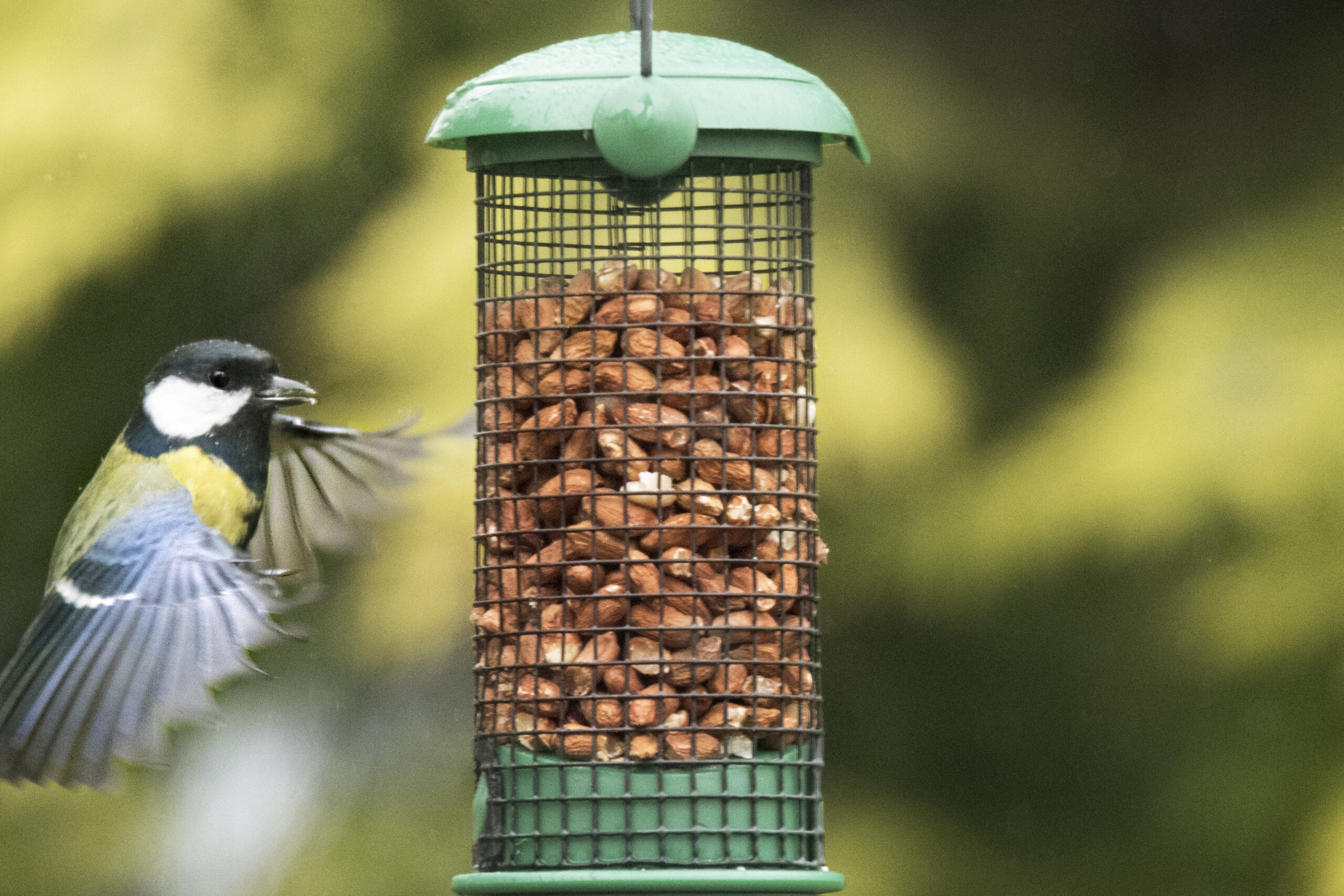
Help garden birds prepare for winter by filling bird feeders and providing a supply of clean water. Fat balls are a high-energy treat for many of the smaller birds that visit your garden.
Clear leaves from lawns and paths using a light rake.
Do not be sad for the falling leaves, they are dropped deliberately by trees and shrubs. Gathered leaves can be placed on borders or added to the compost heap. Fallen leaves from deciduous trees and shrubs will start turning into soil in just a few months. Rotting leaves teem with life. Beetles, worms, bacteria, and fungi breaking them down, making the nutrients available again to plants. The smell of autumn is that of the fungal mycelium spreading and deliquescing plant and animal remains.
Fallen leaves of roses suffering from blackspot should be gathered up and disposed of to reduce the level of reinfection next year.
https://www.rhs.org.uk/disease/rose-black-spot
Time to cutback.
Faded annual climbers and tatty looking herbaceous perennials can be tidied up now, and the waste added to the compost heap. It is nice to see the soil again. Tulips and wallflowers are going in. My back protests and I have to accept that the heavy bags of mulch will have to wait until spring to be spread.
Pots and containers.
Like backs, gardens need to be looked after in the cold. Remove saucers from under pots to prevent plants drowning and dying of root rot. Pots and containers should be protected from winter waterlogging by raising them off the ground on ‘pot feet’.
Tender plants in containers can be insulated using a double layer of hessian or bubble wrap held in place using garden twine. Grouping your pots close together now will give them more shelter than leaving them standing alone. It will also make it quicker to cover your plants with horticultural fleece when weather forecasts predict frost.
Now is the time to empty old pots full of soil when plants have finished and died. Otherwise, these pots act as refuges for overwintering pests and diseases. Cracked and broken pots should be discarded, and sound ones washed and scrubbed in warm soapy water and stored undercover until needed next year.
A stack of empty clay pots in the garden often becomes a hibernaculum for overwintering snails, and they will reemerge hungry in the spring ready to consume your tender young plants.
Having finished in the garden for the day I head indoors. The fallen leaves are brittle, and snap and crack as I walk over them, as though they were made in the same factory that packaged the bulbs.
Further jobs for November:
https://www.gardenersworld.com/what-to-do-now-november/