Blog
Garden jobs for November

Garden jobs for November
It may feel as though the gardening year is slowing down and indeed it is. But there’s no time to rest on your laurels (as it were).There’s still plenty to do. Here are some garden jobs for November.
Plant spring-flowering bulbs
Now is the time to get your bulbs in for next spring. Cheerful daffodils, brashly beautiful hyacinths, elegant irises, cool blue scillas…. You can plant them anytime during autumn, but tulips benefit from later planting (from mid-November onwards) as the cooler temperatures are said to reduce the risk of tulip fire. This is a fungal disease which causes withering, browning and distortion of the leaves. You can pop them in the ground – they’re great for under deciduous trees, taking advantage of the light gained by the lack of canopy in early spring. Or you can create a bright and breezy display in pots.
For helpful information on bulb planting, including details of how to create a ‘bulb lasagne’ have a look at our blog:
https://www.capitalgardens.co.uk/blog/spring-awakening-bulbs-in-containers/
Divide perennials
Dividing herbaceous perennials not only gives you new freebies but also benefits mature plants that have been in the ground for several years. This is because it helps de-clutter the centre of the root system, giving the plant a boost. It should be done when the plants are dormant, so most can be split in spring or autumn. (Grasses, however, prefer late spring.) The advantage of spring division is that your perennials are just about to burst into growth so will romp away. In autumn on the other hand the soil is still warm and damp, meaning that roots establish quickly and strongly in preparation for next year’s growing season.
How do you do it?
Dig up the whole clump using a fork. Shake off and then rinse off excess soil so that you can see the roots and just-emerging shoots. If you like, and depending on the size of the clump, you can separate it into several bits, as long as there’s an embryonic shoot for each one. For plants with stringy root systems such as hardy geraniums you should be able to work the root clump apart by hand. Older and more congested plants may need prising apart using two forks, or you can chop them using a sharp knife or a spade. Eek! I hear you cry, and it does sound a bit savage. The first time you have a go you may have to grit your teeth, then feel the fear and do it anyway (I did). But your plants will benefit and so will you.
Many plants will benefit from division and there’s more help on this here:
https://www.gardenersworld.com/how-to/grow-plants/how-to-divide-plants/
Mulch
A mulch is a layer of material spread over the soil or compost. Depending on what you use, this garden task fulfils a variety of functions such as keeping down weeds, helping prevent moisture loss, nourishing the soil and making it lovely and dark and crumbly, and adding the finishing touch to your garden. It’s actually a job that can be done at any time of year; indeed some gardeners mulch with organic matter regularly throughout the seasons.
Why do it in November?
Although the air temperature is dropping, the soil temperature timetable (like that of the sea) lags behind. The soil is still warm and damp this month so you’ll keep in that heat and moisture. An insulating layer gives some winter protection to the roots of any slightly tender plants.
If you’re mulching in an area containing plants that you’ve recently cut back, don’t cover the crown of the plant (the part that remains after chopping back). Instead, place the material around it and in the spaces between. If it gets really wet there’s a risk that the crown will rot if it’s covered. Similarly, leave a bit of a gap between your mulch and trees and shrubs.
You can use a variety of materials. Organic mulch such as bark chippings, compost, and straw will break down and add nutrients to the soil. Bark chippings in particular make a woodland-style garden look, well, just more woody. Non-biodegradeable materials such as slate or gravel are more often used as a decorative mulch on pots, or as an alternative to grass in a small area. A design tip: make sure the colour matches its surroundings. An area of ground covered with grey slate next to a red brick building can look a bit odd. You’d be better using something like an ochre-hued gravel – another colour in the warm spectrum. But if your brickwork is painted white or your fence is sage green, then slate will look lovely.
Sow garlic
Life before garlic. Now a scenario that’s hard to imagine but one that some of us actually grew up in. How on earth did we manage? Things were pretty one-dimensional and colourless, I can tell you.
Thankfully those days are over and you can even grow your own. Somewhat counter-intuitively for a plant we associate with food traditions from warmer climes, the best time to sow most varieties of garlic is in autumn and early winter. It takes a long time to mature and the cloves need a period of cold weather to develop into bulbs.
Garlic is grown from cloves rather than seed. But don’t be tempted to sow the stuff that you bought for eating as it can carry disease. Buy certified bulbs from garden centres. They can be sown directly into the ground or in pots in a sunny spot. If your soil has a high clay content they’re best planted in seed modules or small pots, and then planted out in spring to avoid winter waterlogging. Place the cloves fat end downwards with the pointy bit 2.5cm below the surface of the soil or compost. It should be ready to pick from July onwards. Your signal that it’s ready to go is when the top growth has started to yellow and die back.
Sow broad beans
You might not think of this as an autumn garden job and indeed the usual season for starting off this delicious, high protein crop is spring. However, very hardy varieties of broad bean, such as ‘Aquadulce Claudia’ can be sown up till the end of November. If you do this, you’ll get an earlier crop than if you sow in spring, with a first harvest usually in May. AND it helps avoid the dreaded blackfly (a scourge of this particular veg.), because their tender tips will have passed beyond the point of temptation by the time the aphids arrive.
Your broad beans should germinate within 2-3 weeks if the weather is mild enough. They then won’t do very much until spring but you’ll have given them a good head start. The really hardy varieties should be fine over winter but you might want to cover them with a cloche or horticultural fleece if there’s a hard frost, just to make sure.
Broad beans like lots of sun and fertile, well-drained soil. Sow them 5cm deep and 20-25 cm apart and water in well. After that you can leave them to do their thing. As with garlic, if your soil is very heavy it’s best to start them off in pots so they don’t rot in the winter wet. You can then transplant them into the ground in spring. However, they can also be grown right up to their harvest point in pots if you lack space. It’s best to use large, deep pots to give them plenty of room to grow.
Undercover activities:
If you want to garden all year round, it’s worth thinking of investing in a cloche, small polytunnel or cold frame. These all cover and protect tender or young plants from winter chills and will allow you a longer season for growing and propagation. Horticultural fleece will also provide what you need for many of the gardening activities listed below but is a bit more fiddly to manage.
Sow winter leaves
Pak Choi, Mizuna, Chinese Cabbage and Mibuna are all amenable to sowing indoors now and through the winter. They’re then planted out in a mini polytunnel or under cloches once their second pairs of leaves appear. Kale (if you haven’t had your fill of it), particularly ‘Nero de Toscana’, can also be sown for sweet baby leaves. For details, have a look at our seed sowing blogs. Gardeners’ World also has good advice.
https://www.gardenersworld.com/how-to/grow-plants/how-to-sow-salad-seeds-in-modules/
Sow sweet peas
Lovers of these fragrant summer stars can give them a head start by sowing up until mid-November instead of in spring. This gives them time to produce a better root system, more vigorous growth and, most importantly, a better, and earlier, crop of flowers. Sweet peas have long roots so need deep cell trays or small pots. The cardboard insides of finished loo rolls also fit the bill nicely if you want to do your bit for the planet. Fill them with peat-free seed or multipurpose compost and put 2 seeds in each so that they’re covered by about 2cm of soil. You can also squeeze 3 seeds into a 9cm pot. Nicking the seeds with a knife will help germination, but be sure to avoid the ‘eye’ area. Water and put on a warm windowsill until they germinate. Then grow them on in a cool place, for example a cold frame or shed windowsill. Harden off them off in spring by putting them outside in the day and bringing them inside at night. They should be ready to plant outside in May after the risk of frost has passed.
Take hardwood cuttings
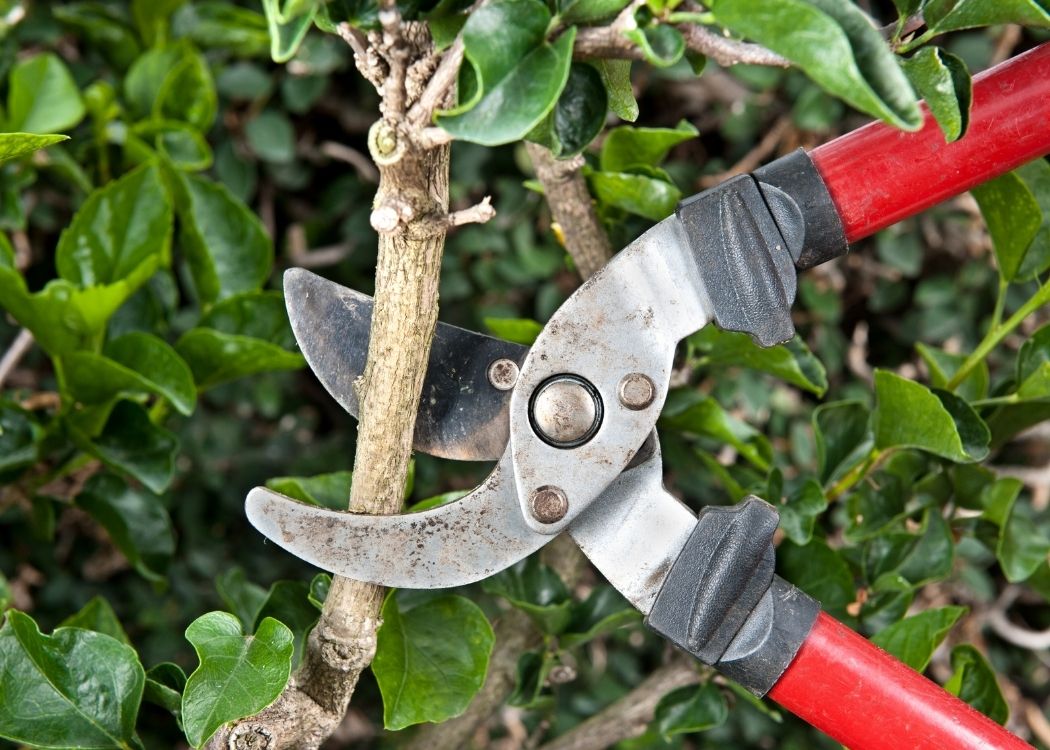
Deciduous shrubs such as Forsythia, Philadelphus and Buddleia can all be propagated by taking cuttings in November and December. It’s a relatively simple but rewarding garden task and another one that gives you new plants for free as well as the satisfaction of creating something new.
You’ll need:
- a sharp knife or secateurs
- some smallish pots
- peat-free compost
- hormone rooting powder
- a cold frame or cloche
You’ll find a step-by-step guide here:
https://www.gardenersworld.com/how-to/grow-plants/how-to-take-hardwood-cuttings/
So contrary to what you might have expected, November is no time for slacking. There’s lots of sowing and indeed many other garden jobs to keep you going.