Blog
Creating Your Own Edible Flower Garden


At a time of year when nature’s bursting forth it’s worth remembering that
the Ancients knew their stuff when it came to making the best use of plants.
Chinese cooks were experimenting with edible flowers way back in 3,000
B.C. and the Romans were partial to violets, roses and lavender in their fare.
How can you use them? Let us count the ways. Try them in salads, fruit salads,
ice cubes, cocktails, jellies for the kids (adults too if you want to add a little
splashette of something), to liven up and decorate cakes and puds, to make
teas/infusions, or to sprinkle over omelettes. They have the biggest impact as
just a scattering of pops of colour and flavour. So let your imagination run
wild and let these lovelies create little riots of colour on your dinner table.
A couple of notes of caution before we begin:
It’s best to avoid eating flowers if you’re susceptible to allergies, especially
pollen.
Accurate identification of flowers is essential – if in doubt, don’t eat! Botanical
names in Latin can seem a bit intimidating until you get used to them but we’ve
put them in here because you need to be sure you’re eating the right thing.
You only need a few for each dish – less is definitely more here. Some don’t
taste of much, but others pack a powerful punch. And the effect of scoffing a
whole bowlful of, for example, cornflowers, hasn’t been properly researched.
How do I grow them?
One of the best ways to get edible flowers is by sowing seeds now for later.
Sowing every couple of weeks (successional sowing) will allow you to plant lots
of your favourite things AND have a longer lasting supply, in some cases
throughout summer.
Alternatively you can, of course, buy flowering plants. Because of the use of
pesticides in commercial horticulture, the RHS recommends that you wait for
three months after buying plants before you eat the flowers unless they’re labelled
‘For culinary purposes’. But Capital has several plants with edible flowers for sale
now that should still be flowering in July and beyond. So if seed sowing isn’t your
bag, or certain seeds aren’t available, you can still safeguard your harvest for this
year. Buying mature plants is also the best way to get your crop from plants that
aren’t easy to grow from seed or take time to mature.
Most edible flowers prefer a sunny spot. You’ll find detailed guidance on the back
of the seed packet or plant label, or ask one of our staff for help.
Five edible flowers from annuals
Annuals live for a season and then die. But lots of them self-seed willingly, giving
you free plants for next year.
1. Cornflower (Centaurea cyanus):
These have a sweet-to-spicy flavour reminiscent of cloves and the flowers, in rich
shades of blue and pinks, make a bright and cheerful garnish. You can sow seeds
directly into the ground now. Flowers from May to July.
2. Electric daisy (Acmella oleracea):
Not for the faint-hearted but loved by many! An initial burst of citrus matches the
bright yellow flowers. Then there’ll be a tingling sensation. And finally a sort of
numbness that can last for up to 15 minutes. For those of us creaky enough to
remember the 70s, the sensation is like sucking Space Dust. Sow seeds on a warm
windowsill and plant out in May. Flowers from June to October.
3. Nasturtium (Tropaeolum majus):
These have cheerful yellow, orange or red, peppery flowers so are excellent in salads
and to pep up pasta. Use the whole flower, leaves, and buds or just the petals for a
milder flavour. You can sow the seeds outdoors now. Flowers from mid-summer
through to autumn.
4. Pot marigold (Calendula officinalis):
Orange, white and yellow flowers and a peppery taste which goes well in soups. You
could also dry the petals and add them to oil or butter for an alternative spin on
garlic bread. You can sow the seeds outdoors now. Flowers from June to October.
5. Viola (Viola cornuta, Viola hybrida):
These taste of lettuce and their additional clout as an edible flower is that they flower
in winter. So your cold weather menu needn’t be bereft of a shot of flower power.
Sweet violets (Viola odorata) have a scent and flavour all of their own. Available
and flowering in autumn, winter and spring.
Five edible flowers from herbs and veg
1. Borage (Borago offincinalis):
The small, bright blue star-shaped flowers taste of cucumber and are often used in
summer drinks or frozen in ice cubes. You can sow the seeds outdoors now. Flowers
from August to October. (If you’re pregnant however, the advice is not to eat
them as they can trigger lactation.)
2. Chives (Allium schoenoprasum):
For something a bit different, the tufty, candy pink flowers have a mild oniony flavour.
So use them wherever you’d use chives or onions. Sow on a warm windowsill and plant
out in May. Flowers from May to June.
3. Courgette (Cucurbita pepo):
remember when we could buzz off to Italy for a bit of a break? Or munch on courgette
flower fritters in our local Mediterranean restaurant? Those days will return. But in the
meantime you can (sort of) replicate the experience at home. Use the male flowers so as
not to reduce yield (unless you’re suffering from a glut!) These arrive earlier than the female
flowers and are produced on long, thin stalks. Female flowers, on the other hand, have an
immature fruit swelling behind them. Flowers from mid to late summer/autumn.
4. Oregano (Origanum vulgare):
Tiny, pretty white or pinky purple flowers which you can use to garnish lamb, chicken and
soups. Sow on a warm windowsill and plant out in May. Flowers from July to August.
5. Salad rocket (Eruca vesicaria):
Growing at the speed of, ahem, a rocket, this has tiny, yellowy flowers which add a peppery
flavour to salads. You can sow the seeds outdoors now. The flowers can appear within a
month or so of sowing if you leave a patch of leaves unpicked. Flowers from mid-late
summer.
You can find general advice on seed sowing here:
https://www.capitalgardens.co.uk/blog/vegetable-seeds-you-can-start-sowing-now/
Several herb and vegetable flowers are edible. Some you may not want to eat – such as
peas (but not sweet peas) and runner beans – because you’ll lose the veg that would have
followed. But if you have a glut, why not seize the opportunity to try a few?
You can also buy herbs now, such as some thymes, that we wouldn’t recommend harvesting
the flowers from this year because they flower too soon (remember the RHS three-month
rule). But you can buy them now for flower consumption next year and take advantage of
their delicious leaves in the meantime.
Five edible flowers from perennials and shrubs
1.Dahlias (Dahlia spp):
Have a sweet and spicy flavour. (And the tubers – sweet potato-like roots – are apparently
delicious too, or so the Aztecs thought! It’s said that the flavours range from water chestnut
and spicy apple to carrot;
https://www.theguardian.com/lifeandstyle/2016/jul/03/gardens-one-of-your-five-a-dahlia
Flowers from early-late summer depending on which one you choose.
2. Hibiscus (Hibiscus syriacus and Hibiscus rosa-sinensis):
White, pink and red hibiscus flowers make a refreshing citrus-flavoured tea. Drink it hot
or iced. Flowers mid-late summer.
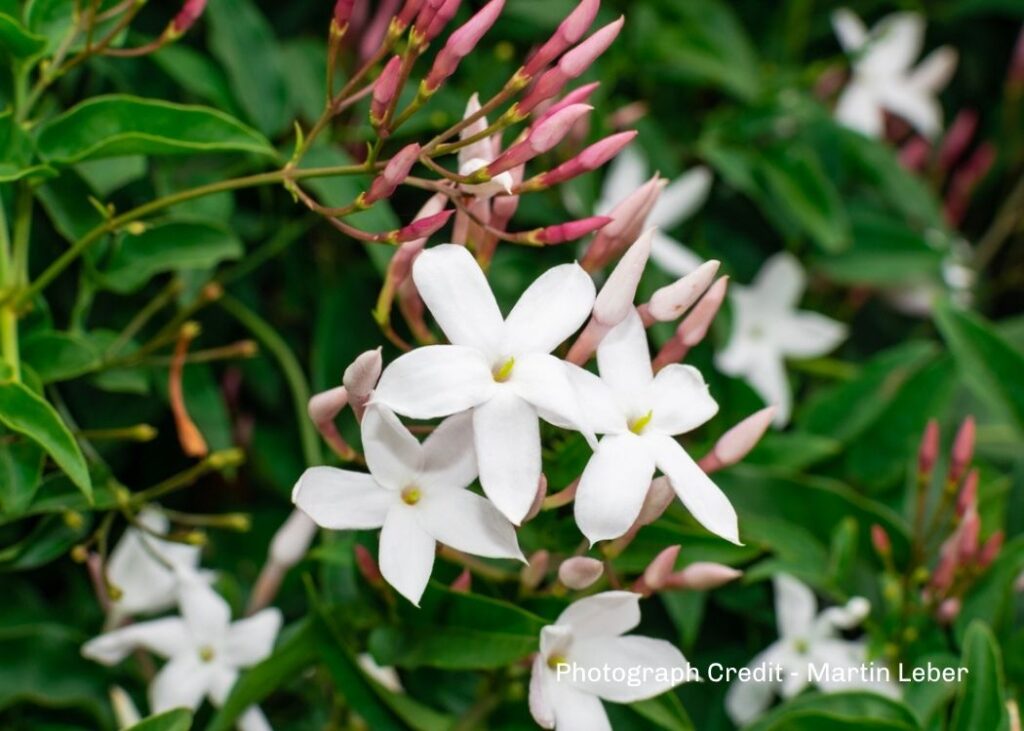
3. Honeysuckle (Lonicera periclymenum) flowers July to October,
Lonicera japonica – flowers April to August:
When I was a child, sucking the nectar from a honeysuckle flower on a country walk was a
real treat. (I was easily pleased.) But you can also use the whole flowers in drinks and cocktails.
https://www.diffordsguide.com/encyclopedia/1695/bws/bartenders-guide-to-foraging-honeysuckle
4. English lavender (Lavandula angustifolia):
Use to flavour sugar, honey or vinegar and bake it in biscuits and cakes. Flowers mid-
late summer.
5. Rose (Rosa):
All roses are edible and the more fragrant roses are the best. Petals can be crystallized, used to
flavour drinks and sugar and decorate icing for summer cakes. Flowers early to late summer,
depending on which rose you have.What’s the best way to harvest them?
What’s the best way to harvest them?
- Pick on dry mornings, before the sun becomes too strong, so the colour and flavours will be
more fresh and intense. - Shake them gently to dislodge any insect stowaways.
- Next wash and dry them by dipping them in a bowl of water and gently shaking so that they
dry off quickly. - If you’re not going to use them straightaway however, put them in the fridge in a plastic
container and try to use them within a few days. - You can eat small flowers (for example chives) whole. But it’s important to remove the stems.
These are bitter and unforgiving and are not edible! - Larger flowers however, such as roses, need a bit more input. Only the petals are really tasty.
So remove the heel at the base of the petal (it’s bitter), as well as the stamens and pistils (the
long central bits that poke out of the centre of the petals and carry the pollen.) It’s also best
to take off the calyx (the green bit cupping the base).
Dealing with the competition
The RHS advises that no chemical sprays are specifically approved for use by home gardeners on
edible flowers. But you can deal with insects such as aphids which want to share your feast by
picking them off by hand. Or try encouraging natural predators such as ladybirds, lacewings and
birds.
You could also try a homemade natural spray made, for example, from oil, garlic or chilli.
https://www.permaculture.co.uk/readers-solutions/diy-natural-insecticides
Similarly it’s best to combat any disease problems by cutting back and encouraging regrowth.
As the beech trees look as though someone has spray-painted them (in the nicest possible way)
with dazzling sap green, creating your own edible flower garden is, in my humble opinion, one of
the best ways to spend a weekend. It’ll give your kids and their friends a focus if their screams of
excitement at getting together other again become just a teeny bit too much and will bring all that
spring energy and good cheer to your door.
More flowers than you might think are edible. Here are a few suggested websites:
https://www.thompson-morgan.com/edible-flowers
https://www.rhs.org.uk/advice/profile?PID=764&awc=2273_1616930804_9442a06d4235088cbc573a659599b335
https://www.jamieoliver.com/features/edible-flowers/
Disclaimer
Andy Williams/Capital Gardens cannot be held responsible for any adverse reaction to the flowers
we’ve listed. All should be safe but we can’t guarantee that any particular individual won’t have an
adverse reaction to plants generally acknowledged as safe.
By Andy Williams, Capital Gardens