Blog
A Parade of Pelargoniums

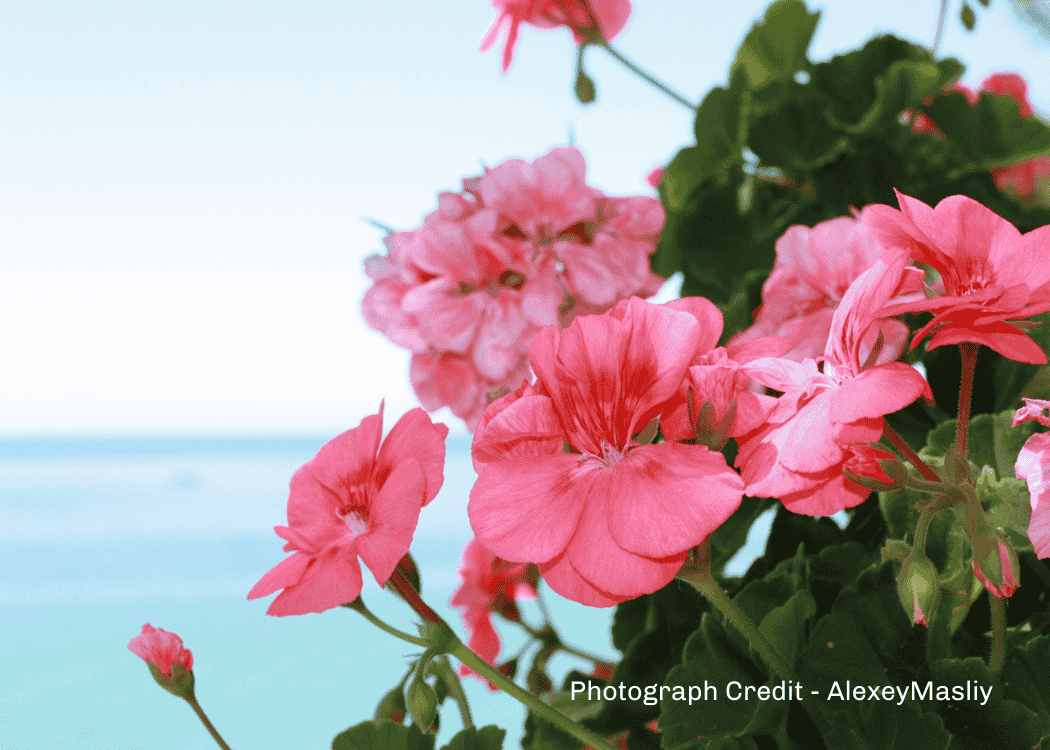
Jaunty and flamboyant, pelargoniums evoke memories of sun-drenched holidays in the Med, where they’re to be seen overflowing from pots on balconies and lining the steps and walls of whitewashed houses in higgledy piggledy streets. Blooming abundantly in vibrant colours, they’re also drought-tolerant, and some bedding varieties will flower all summer and into autumn, given enough sunshine and if deadheaded regularly. They can be planted in the ground but look their best showcased in containers, packed in tightly with other sun-worshippers. They’re also at home in greenhouses and conservatories, where their aromatic leaves really come into their own on a warm day.
Often referred to as geraniums, pelargoniums are botanically different to hardy geraniums or cranesbills, although they do belong to the same plant family. Pelargoniums mostly hail from South Africa and need protection from frost to survive our cold, wet British winters.
These garden favourites have been brightening up our gardens and windowsills for some time. The first pelargonium seeds are thought to have been brought to Europe from South Africa around 1600 and then to the UK by plant hunter John Tradescant in 1631. Or, another version of the tale goes, it was Tradescant himself who brought them from South Africa. Either way, we have much to thank him for.
Their popularity reached its zenith during the Victorian and Edwardian eras. ‘There are no better summer flowers than the single and double zonal pelargoniums.…’ wrote renowned horticulturalist and garden designer Gertrude Jekyll. Scarlet pelargoniums were Charles Dickens’ favourite flower and are still the emblem of the Dickens Fellowship. Geraniums (as they were then known) were popular with the Victorians all round, not just as cheerful bedding in parks but at home too. These most democratic of plants were cheap and undemanding and could be grown in pots on windowsills or tiny back yards, so were available to poor and rich alike.
They also featured in several moral tales for children. One such fable, ‘The Sulky Geranium’, tells forbiddingly of a plant who disliked her pot of earth and refused to grow. In consequence she was tied to a stick and put in a dark cupboard until she co-operated by increasing in size and straightening up. Let that be a lesson to you! https://dickensmuseum.com/blogs/charles-dickens-museum/dickenss-favourite-flower-by-jenny-hartley
Cultivation
Most pelargoniums need a sunny spot and good drainage, so add grit to planting holes if your soil is heavy. In containers use any peat-free multipurpose compost. Happy kept slightly damp, they’ll cope with dry conditions too. Regal types will tolerate part-shade.
There are several types of pelargonium.
Zonal: Common or garden bedding pelargoniums, bushy in habit with long, upright flower stems. The leaves are matt, sometimes faintly furry and aromatic if rubbed gently between thumb and forefinger. Some have foliage edged with cream or pale gold. Their crowning glory though is their generous display of flowers in colours that sing.
Ivy-leaved: Glossier, more rigid leaves and strong, slim trailing stems, The flowers of some cultivars are daintier and better defined than those of zonal pelargoniums. Perfect for window boxes and hanging baskets.
Both zonal and ivy-leaved plants have blooms in white, crimson, coral and orange and some astonishing shades of pink from lilac, blush, candy and neon to salmon. Varieties of both have attractive burgundy rings around the centre of the leaves.
Regal and angel: Regal pelargoniums have large flowers and substantial leaves with toothed edges. Angel types are smaller but similar. Flowers are deepest red, pinks, mauves and white, often with striking dark raspberry or blackcurrant splashes.
Scented-leaf: A gentle squeeze of the foliage of these types fills the nostrils with the scent of attar of roses, apple, peppermint, citrus or cola (which, contrary to what you might expect, is delightful). There are numerous other cultivars on the market too and even if you’re not by nature a collector it’s easy to be seized by a longing to have them all. Some scented-leaf pelargoniums have fine, lace-edged foliage and their five-petalled flowers are more delicate in appearance than those of zonals, appearing in white, lilac and pink, some marked with splotches and delicate, needle-thin striations of darker colour. Both leaves and the mildly-flavoured flowers are edible. Use the latter to decorate cakes, freeze them in ice cubes or scatter over salads. While the stronger flavour of the leaves means biting into them isn’t particularly pleasant, they can be used to flavour sugars, drinks and desserts, in pot pourri and to make scented bags to keep in drawers or hang in wardrobes.
Plant with….
…. other pelargoniums. Dare to scare your more conventional neighbours with a bevy of beauties in wild, clashing colours. Or combine with salvias, marigolds, euphorbias and cosmos for a less dazzling but equally colourful display. In window boxes and hanging baskets, add lobelia and trailing calibrachoa, petunias and verbena. Intersperse with foliage plants – silver Stachys byzantina and Senecio cineraria with ivy – for something a little more downplayed and tasteful.
Pelargonium care
In containers, water just enough over the growing season to keep the compost or soil damp but not wet. Once they come into flower, feed every couple of weeks with a high potassium fertilizer such as tomato feed.
Regular deadheading keeps the flowers coming. While you may want to pinch off individual flowers as they die, to keep plants looking tidy, this won’t encourage new flowers to grow. So snip off spent flower stalks at the base too. Removing spent leaves as well will prevent them rotting in wet weather.
Over winter, before the first frost, move plants to a greenhouse or a bright place indoors. Cut them back by about a third. If keeping them indoors, place well away from radiators and fires. Pelargoniums don’t go into complete dormancy so water occasionally and sparingly, allowing the compost to dry out in between. In March, begin to water properly again as growth begins. Plants can be put outside again once all danger of frost has passed. This is usually towards the end of May. Pelargoniums have been known to survive outside in window boxes over a mild winter (particularly, in my experience, on the sills of old houses with single glazed, poorly fitting sash windows), but it’s wise not to just leave them and hope for the best.
https://www.rhs.org.uk/plants/pelargonium/growing-guide
With their lavish displays of flowers and aromatic leaves, these are incredibly rewarding plants to grow and relatively easy to look after. Brightly-coloured and with leaves in a mixture of shapes and textures that add to their beauty when grouped together, they’re the sort of plants that, once seduced by their charms, you find you can’t do without.