Blog
Garden jobs for March

Garden jobs for March
Your first garden job in March is to get ahead by warming up beds and borders if you have them, ready for early plantings and sowings. Dig in some compost and then place cloches, polytunnels, horticultural fleece or plastic sheeting over your beds. Doing so a few weeks before sowing can increase the soil temperature by up to 10 degrees C, which is said to speed up germination by 10-14 days, so it’s well worth it. This means that your veg will be ready to eat earlier and as well as your tummy thanking you, you’ll have extra space for summer crops such as leeks or kale. If your cover of choice is horticultural fleece it’s a good idea to double layer it. This is because although it does a good job of covering large areas, it’s not as effective at keeping the day’s heat in overnight as, for example, plastic sheeting. It also lets in rainwater, and planting in waterlogged soil is not a good idea.
Get weeding
Warming up your soil like this means that at least some of the weed seeds that will almost certainly be lurking in the ground will also germinate. This may seem like a bit of a pain, but it would have happened anyway once the soil warmed up naturally. So look on the bright side. Stimulating them to sprout early means you can get busy with a hoe in good time, giving you a head start on weeds too before the gardening year really hots up.
https://www.growveg.co.uk/guides/warming-up-soil-how-to-start-seeds-earlier-in-your-garden
Start early sowings of hardy vegetable seeds outdoors
Towards the end of the month you can begin to sow a wonderful array of hardy veg. Artichokes, beetroot, broad beans, Brussels sprouts, cabbage, cauliflower, chard, lettuce and leaf mixes, parsley and spinach seeds can all go straight into the ground or into pots. Some varieties are particularly good for early sowing. ‘Aquadulce Claudia’ broad beans are particularly hardy and good if spring is not as warm as we’d like it to be. ‘Boltardy’ beetroot has, as the name implies, good resistance to bolting. ‘Red Salad Bowl’ lettuce and ‘Bright Lights’ and ‘White Silver’ chard are also good choices for March.
You could also start your carrots now but early sowings are particularly vulnerable to carrot root fly which can secretively but ruthlessly eat into your crop. So you might prefer to wait until June. If you’re a carrot fanatic and can’t wait, try sowing under a cloche or fleece. You can find other tips here: https://www.gardenersworld.com/plants/10-ways-to-avoid-carrot-root-fly/
These early sowings will need some shelter from the weather and you want to retain all that lovely heat you may have planned ahead to build up too. So place your coverings back over them until things start to warm up properly.
And a quick reminder: gardening practices are not necessarily set in stone. So use your noddle and be guided by the weather. If it’s still really cold, delay for a week or so until things improve.
Sow tender vegetable seeds indoors
Aubergines, tomatoes, chillies and sweet peppers as well as other tender vegetables can be sown now in a heated greenhouse or on a sunny windowsill. The hottest chillies take longest to mature, so if you’re planning on adding lots of spice to your life, it’s a good idea to get them started now if you haven’t done so already.
https://www.capitalgardens.co.uk/blog/vegetable-seeds-you-can-start-sowing-now/
A word about successional sowing
Successional sowing is simply sowing seeds every two or three weeks. You should then get an even harvest throughout the season, thus avoiding a glut of carrots or a shortage of spinach at a crucial time! It’s usually used for quick-maturing veg (such as carrots and spinach) or crops that are prone to bolting, like lettuce and rocket. But you could also try sowing a couple of separate batches of, say, courgettes or cucumbers – which have a long fruiting season – to extend their season for as long as possible.
https://www.rhs.org.uk/vegetables/successional-sowing
Plant spring shallot and onion sets
The difference between onions and shallots is that shallots are smaller and form clusters of bulbs (a bit like garlic), whereas each onion set will only produce one onion. Shallots generally have a milder flavour but are more fiddly to peel.
Onion and shallot sets (or small bulbs) are sold as autumn or spring planting varieties. The latter should be planted between mid-March and mid-April. They like a sunny spot and well-drained soil and really aren’t keen on sitting in the wet. So if your garden is prone to this, try putting them in raised beds or containers. Plant them approximately 15cm (6ins) apart in rows 30cm (12ins) apart. The tip of the bulb should just protrude from the soil. Birds are keen snatchers of tempting new onion and shallot shoots, so it’s wise to protect your crop with raised netting or horticultural fleece for about a month.
Harvest in late June or early July, a week or so after the leaves begin to yellow.
Plant first early (new) potatoes
This is a job for mid to late March. You’ll need a sunny spot and fertile soil with good drainage.
In the ground:
Dig a trench. If you haven’t added compost or manure already, fork some into the bottom of the trench.
Plant each seed potato about 15cm (6 ins) deep and about 30cm (12 ins) apart, leaving about 45cm (18 ins) between rows. If your space is limited however, you can plant them closer together and still get a good yield.
As shoots appear and grow, draw up the soil into a ridge to cover them, using a rake or hoe. This is known as earthing up. It increases yield and also keeps your developing tubers well below the surface, thus ensuring you don’t dig up your buried treasure to be faced with disappointing green potatoes.
In pots or sacks:
You’ll need:
- A container at least 40 litres in size. This could be a plastic pot, sack, or even an old bucket or bin. (If you’re using a bin or bucket, be sure to drill some drainage holes in the bottom.)
- Peat-free, multi-purpose compost
- Seed potatoes
- A watering can
Cover the bottom of the container with about 10cm (4 ins) of compost. Place 4 or 5 seed potatoes on the surface and cover with another 10cm of compost. Water well. When the shoots have grown to about 10cm, cover them again. Keep doing this until your container is full.
Potato tip: if frost is on its way, cover young seedlings with horticultural fleece.
Your potatoes will be ready to harvest when the plants begin to flower.
Last chance to plant lilies
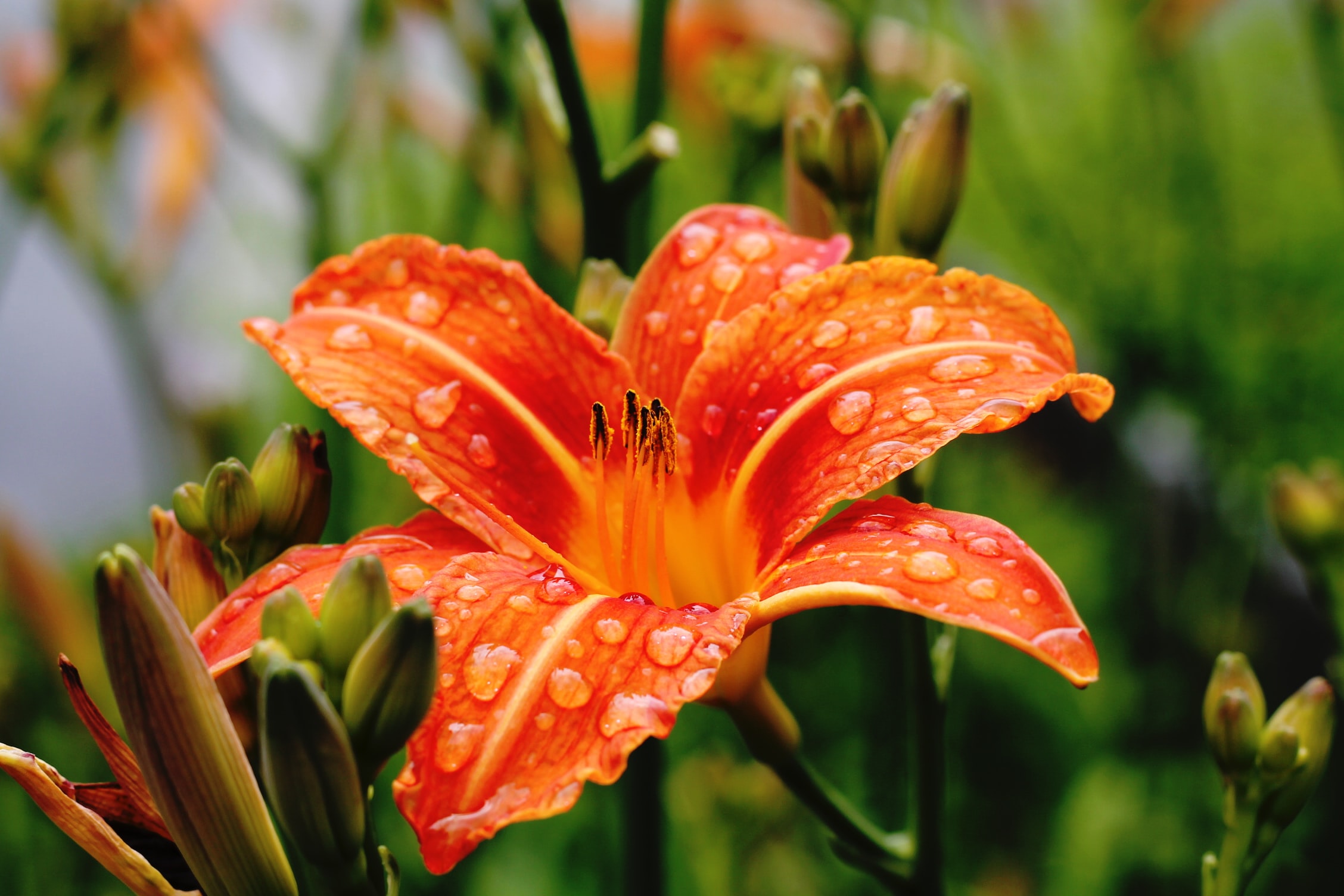
Lilies can be planted in autumn or spring, but really they should be in the ground or pots by the end of March if you want to see flowers this summer.
https://www.gardenersworld.com/how-to/grow-plants/how-to-grow-lilies
Protect bulbs and early sowings and plantings from slugs and snails
Some of the gardener’s most persistent enemies, molluscs adore tender new shoots and will indulge in a spring binge given half a chance. The most natural way to deal with them, and the way that brings additional benefits both to you and to other wildlife, is not to kill them.
Instead you could create a virtuous circle: set up a snail patrol and pick them off your favourite plants, tossing them aside when they become too infuriating. Alternatively you may choose a barrier such as copper bands placed around pots or a wool pellet mulch. You can then tempt other wildlife into your garden. Hedgehogs, newts, toads, slow worms and some birds such as thrushes are all avid gobblers of slugs and snails and will be encouraged to stay. So by showing mercy to the molluscs (at first anyway) you’ll help wildlife and help yourself reduce the problem.
If you decide to be more ruthless and do away with the enemy, biological as well as chemical control is available.
Microscopic nematode worms enter slugs’ bodies, infecting them with bacteria which cause fatal disease. They can be watered into the soil from spring to autumn, when the soil temperature is between 5 and 20 degrees C.
Alternatively, you can use slug and snail pellets. Metaldehyde, which is extremely toxic not only to slugs and snails but also to birds and mammals, is now banned. It’s been replaced by ferric phosphate pellets but there’s still some debate as to how harmful these are to birds, pets and earthworms (an essential part of your garden’s ecosystem.) So if you do use them, do so sparingly.
Mulch
A nice, easy March gardening job for a day when you haven’t much energy. Add a generous layer of compost around the base of roses, fruit trees, and shrubs to give them a boost as they begin to grow. It will also help to keep weeds down.
Prune buddleia
Most buddleias sold in garden centres are Buddleia davidii, which flowers from mid to late summer on the current season’s wood. Pruning in spring triggers healthy new growth and lots of flowers for the butterflies.
The exceptions are Buddleia alternifolia and Buddleia globosa which flower on stems grown the previous season. So chopping them back now would cut off the flowering wood. Buddleia globosa is easily distinguishable with its orange, globe-like flowers, hence the name. Buddleia alternifolia, though, is similar in appearance to Buddleia davidii. So if you’re not sure which you have, leave it and observe what happens. Buddleia alternifolia flowers earlier, in late spring and early summer. You’ll find a good practical guide here:
https://www.gardenersworld.com/how-to/grow-plants/pruning-buddleia/
Keep deadheading winter and spring bedding so it continues flowering for as long as possible.
March is, I think, one of the most exciting months in the garden, a month full of anticipation for the year ahead.