

Blog
Six autumn tips for a butterfly-friendly garden


Six autumn tips for a butterfly-friendly garden
You may know that Butterfly Conservation recently declared a ‘butterfly emergency’. We have 59 native and migratory species of these delightful winged creatures in the UK but the average number spotted this year was the lowest in the 14 years since the annual Big Butterfly Count started. This alarming piece of news is thought to be due in part to the weather; rain is not good news for butterflies. However, there are other factors too – habitat loss, climate change and the use of pesticides. But it’s not all bad news. Butterflies have been doing much better in some places than others, and there’s plenty you can do in the garden, even at this time of year, to make it a butterfly-friendly place and begin to create a haven to help boost their numbers next year.
Butterflies are usually on the wing from late March until October or November. But they’re just one of the four-stages in the life cycle of these charismatic insects. They need help all year and during every part of their life cycle. Because without eggs there are no caterpillars, without caterpillars there are no chrysalises and without chrysalises there are no butterflies. And all of these intriguing life forms are around throughout the year. In autumn, as the weather cools, they’re generally preparing to settle down for a nice long sleep over winter. Thirty one species overwinter as caterpillars, and eleven survive inside a chrysalis, waiting to complete their transformation to butterflies the following year. Others survive as eggs or adult butterflies.
So what can we do to help them in autumn?
- Plant food for butterflies
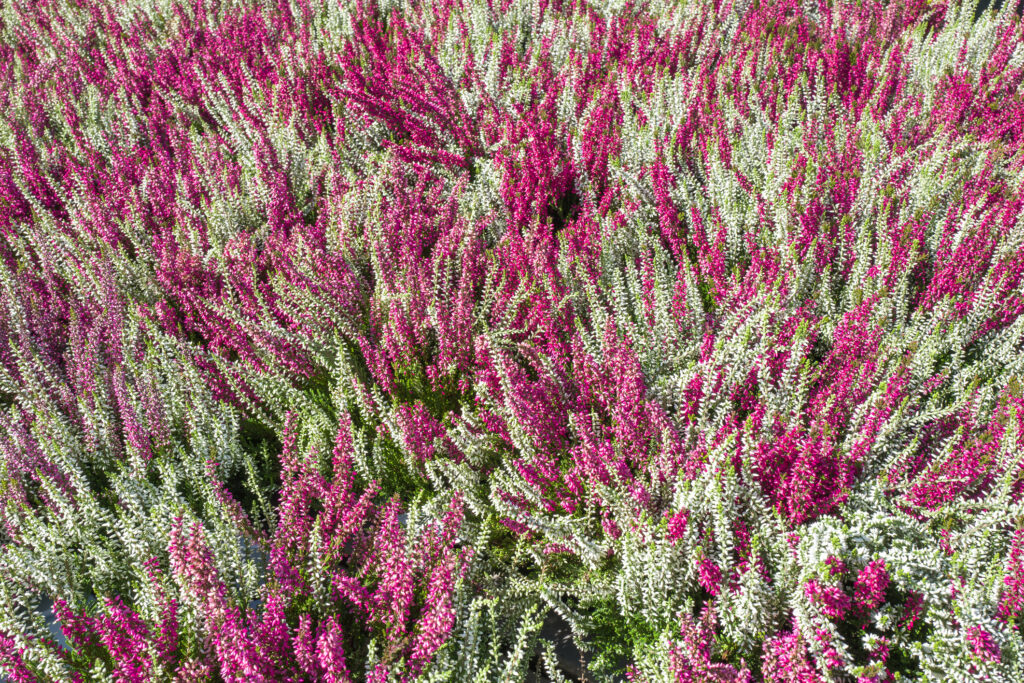
You may see species such as the wall or speckled wood still on the wing in October and these late flying butterflies really need to stock up on nectar. The more they can get now the more energy reserves they can build up to help them survive the winter. Autumn-flowering plants such as asters, sedums, open-flowered dahlias, like ‘Bishop of Llandaff’ and heathers are all good sources of nourishment. Some are past their peak but if you’re lucky, you may find them still for sale and they’re worth snapping up for next year as well as this.
You can prepare for next year too. Early flyers will be hungry when they emerge and good sources of spring nectar to plant now include the bulbs of delicate blue grape hyacinths (Muscari armeniacum). Keep trees in mind as well. Apple, cherry and plum will all blossom in spring but can be planted too, especially in late autumn, when they’re going into dormancy but before the soil gets too cold.
Evergreen hebes can also go into the ground now for fluffy pink, purple and white flowers next year. Several will bloom for ages, from spring through to autumn. Buddleia, nepeta and lavender are all good sources of summer nectar and may be available on sale tables. Make the most of any bargains you find. Butterflies flock to the flowers of herbs too. Evergreen thyme blooms in summer but can be used throughout the year to add zest to lunches and suppers.
- Plant food for caterpillars
Many caterpillar food plants are hedgerow plants or grasses. But each species has its niche and specific shrubs and small trees are essential for some. Most butterflies lay their eggs on or near their caterpillar foodplants. Eggs will already have been laid this year but planting now will ensure you have something in place for the batches of eggs that next year’s butterflies will produce.
- Holly: Holly blue caterpillars eat the flower buds, leftover berries and leaves in late spring.
- Common rock roses (Helianthemum nummularium) provide food for brown argus and green hairstreak caterpillars.
- Dogwoods (Cornus sanguinea) are also a foodplant for the green hairstreak.
- Birch and willow are fodder for the large tortoiseshell. Willow is also popular with purple emperor and comma caterpillars. Both can grow fairly large but there are several dwarf forms which are suitable for smaller gardens.
https://butterfly-conservation.org/moths/why-moths-matter/about-moths/caterpillar-foodplants
As well as getting out there and planting, go easy on the autumn clearance tasks. It’s tempting at this time of year to have a thorough tidying up session but both caterpillars and chrysalises need cosy hiding places.
- Leave fallen fruit on the ground
Late flying red admirals and painted ladies love the juice of over-ripe fruit such as apples, pears and plums.
- Leave a patch of nettles
Nettles can be a pain (literally). They are, though, valuable fodder for the larvae of several butterflies – the small tortoiseshell, red admiral, comma, peacock and painted lady. So leave a patch as large as you can bear. Caterpillars and eggs both overwinter on them, ready to come out munching when the weather warms up.
- Leave fallen leaves
Making a clean sweep is immensely satisfying, but fallen leaves provide the ideal nesting place for overwintering caterpillars and chrysalises. And for those that burrow underground they provide insulation, helping to keep the soil warmer. So by all means rake up leaves from your lawn, but maybe put them in a welcoming pile in a corner. And consider leaving some on beds and borders too. As well as providing shelter they’ll break down over time and be worked in by worms and other invertebrates, enriching the soil.
(A note of caution: If leaves are diseased, gather them up and put them in your council’s green waste instead. Unlike home compost, it gets hot enough to destroy most nasties.)
- Plan your butterfly garden for next year
Autumn, as the weather cools and becomes even wetter, is a good time to hunker down indoors and make gardening plans for spring and summer. Which butterflies you’re likely to be able to attract depends on several things, but geography is one of them. Some butterflies are widely distributed, others are only found in certain parts of the UK and Butterfly Conservation’s website has a distribution map for each species, allowing you to check which ones can be found where you live. It’s a useful tool for planning caterpillar foodplants. https://butterfly-conservation.org/uk-butterflies/a-to-z
You’ll find a helpful season by season list of nectar-rich plants here: https://www.gardenersworld.com/plants/make-your-garden-butterfly-friendly/
With over 9,000 reports of no butterflies at all in the Big Butterfly Count this year, it’s good to know that we can make a difference by taking just a few simple steps this autumn. Choosing plants that feed both caterpillars and adult butterflies and being less diligent with clearance tasks, although it won’t solve the problems they face, will help to provide butterflies with the environment they need to flourish. And of course, we benefit too.








Can anyone tell me why Butterfly World at Chiswell Green, Hertfordshire, closed down a few years ago. It had only been open for a few years and was still in the process of being developed when it closed permanently. A few years before that, The Royal National Rose Society Gardens at Chiswell Green closed permanently.