

Blog
Crocosmia: vivid late summer perennials


Crocosmia: vivid late summer perennials
Erupting like fiery fountains in beds and borders, the glowing orange, red and yellow blooms of crocosmia appear from mid-summer to early autumn. Their long, arching stems hold parallel rows of tubular flowers which open two by two, while their tall strappy leaves mirror this elegant growth habit. Fat three-lobed seed pods like three-dimensional clover leaves are an autumn bonus. Members of the iris family, they’re related to gladioli and freesias, to which they bear a resemblance, and make unusual but long-lasting cut flowers.
You might know them as montbretia, their common name, which honours the grandly-titled Antoine Francois Ernest Conquebert de Montbret – botanist to Napoleon Bonaparte during his Egyptian campaign. Their botanical name is said to derive from the Greek ‘krokos’, meaning saffron, combined with the word ‘osme’ (Greek for ‘aroma’ or ‘smell’) because the leaves are said to smell of saffron when crushed or immersed in hot water.
Happy in sun or part-shade, crocosmia prefer moist, well-drained soil but most aren’t particularly fussy. They’re tough and resilient, not prone to diseases and generally left alone by aphids, slugs, snails, rabbits, deer and other garden visitors with healthy appetites. Native mainly to southern and eastern Africa, they’re nevertheless hardy to between -5 and -10 degrees Centigrade.
Boosting biodiversity
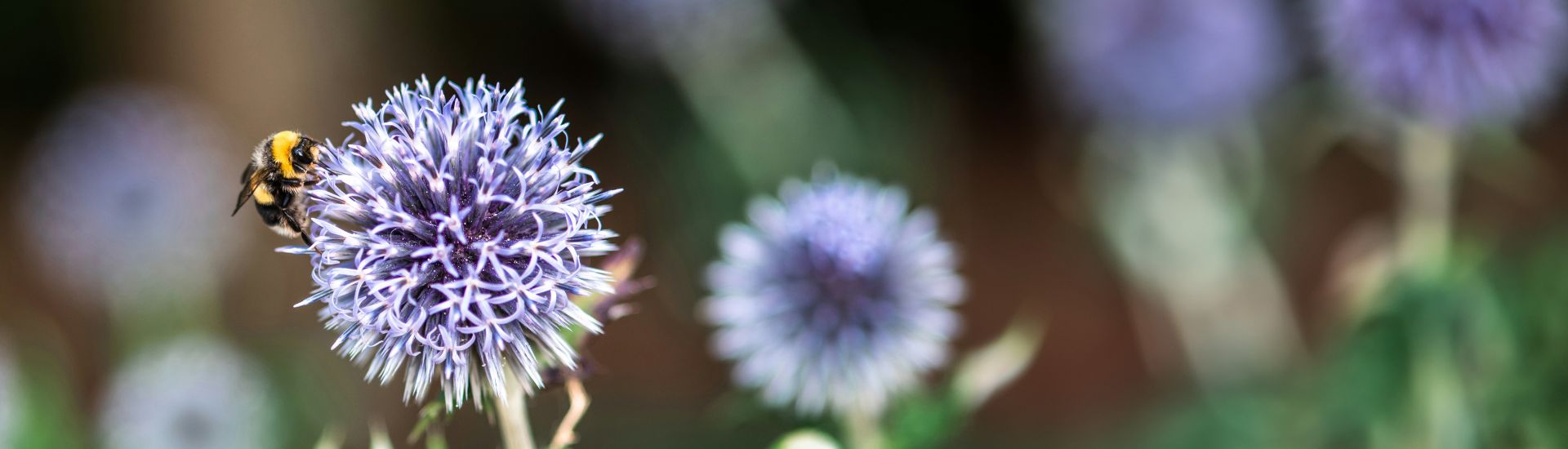
Crocosmia also attract bees, hoverflies and other pollinators. National Allotments Week this year runs from 12-18th August. The theme? Biodiversity – encouraging pollinators and other wildlife onto allotment plots. These creatures make a vital contribution to soil health and pollination as well as the tedious task of keeping on top of pests, all of which are needed for bumper harvests. And hoverflies, for example, are multi-talented. As well as being efficient pollinators, the friendly, curious-seeming adults have voracious children – larvae which hoover up aphids, scale insects and other sap-suckers, while others feed on decaying plant matter, helping to recycle it and putting vital nutrients back into the soil. https://www.rhs.org.uk/biodiversity/hoverflies
The obvious way to woo pollinators is by including flowering perennials and annuals like crocosmia in your plot. It doesn’t matter if you don’t have an allotment, a veg patch will do just as well! https://thenas.org.uk/national-allotments-week
Crocosmia care
Crocosmia have corms – swollen underground stems similar to bulbs which are used to store food. These form clumps which tend to become congested and start to flower less profusely after a few years. Lifting and dividing in spring will deal with this minor issue and increase your plant supply into the bargain.
Water new plants until established. After that, however, they need very little attention in beds and borders except during periods of drought. In pots continue to water regularly during the growing season, keeping the compost lightly damp but not wet.
Although the plants are hardy, it’s as well to mulch before winter in cold areas, just in case.
https://www.gardenersworld.com/how-to/grow-plants/how-to-grow-crocosmias/
Choice plants
Orange:
Crocosmia x crocosmiiflora: sometimes seen in hedgerows as a garden escapee, this is an adaptable plant, tolerating dry soils well and springing up in inhospitable places. Restrained in stature at 60cm tall, its persistent nature can be a blessing if you have a garden with dark corners where nothing much will grow. The flipside is, of course, that it can eventually start to spread beyond acceptable boundaries. But the plants have shallow roots and keeping on top of them by pulling out unwanted seedlings shouldn’t be difficult. It has several cultivars but most – and most other cultivars generally – tend not to be invasive.
Crocosmia ‘Limpopo’: up to 75cm tall with a long flowering period and gorgeous deep peachy orange, large, fairly open flowers.
A. x crocosmiiflora ‘Emily Mackenzie’: said not to be as invasive as the original. Up to 60cm tall with open flowers, burnt orange at the base of petals, forming a halo at the centre.
A. x crocosmiiflora ‘Star of the East’: up to 50cm tall with large but delicate-looking, outward facing flowers. Said to tolerate wet conditions well.
Red:
Crocosmia ‘Lucifer’: tall and vigorous at 1.5m and tolerant of dry conditions. Very popular.
A. ‘Hellfire’: smaller at up to 90cm tall, with large, open flowers.
Yellow:
A. ‘Paul’s Best Yellow’: up to 1.5m tall with bright, open flowers.
A. masoniorum ‘Rowallane Yellow’: up to 80cm tall, with sunny and unusual upward-facing flowers.
We may not have all of the plants listed here in our stores but our staff will be happy to suggest alternatives.
Planting companions
Crocosmia are versatile plants and work well in most types of garden. Plant with other blazing late summer sun-lovers like heleniums, rudbeckias, echinacea and coreopsis in a ‘hot’ border, or mix with dahlias and canna lilies and feel yourself transported to tropical climes. In a cottage garden add blueish purples in the form of agastache, veronicastrum, salvias and English lavender. And weave through grasses, achillea and kniphofia (red hot pokers) to create a prairie planting.
In part or dappled shade combine with day lilies, hedychiums (ginger lily), Phlomis russeliana, or purple geraniums ‘Orion’ and ‘Rozanne’.
Beautiful and architectural, crocosmia are also easy to grow. And many, including ‘Lucifer’, ‘Hellfire’, ‘Emily Mackenzie’, ‘Paul’s Best Yellow’ and ‘Limpopo’ hold the RHS prestigious ‘Award of Garden Merit’, given, after intensive trials, to plants that are solid and reliable performers. Well worth having in the garden!








Do you dead head during flowering? How can I increase my stock?