

Blog
Lawn alternatives – creating a wildflower-rich lawn

Lawn alternatives – creating a wildflower-rich lawn
A carefully manicured and maintained lawn has its own special beauty. And there’s something very soothing and comforting about the orderliness of those perfectly straight mowing stripes in alternating shades of green.
A lawn that’s composed entirely of short grass, however, is effectively a monoculture which offers nothing to wildlife. But adding a bit of variety in the form of nectar and pollen bearing flowers will actively encourage beneficial insects into your garden. Some of these beneficial insects are your best garden friends, preying on destructive pests such as aphids. And more insects mean more birds. And more birds mean fewer slugs and snails. So why not incorporate some low-growing flowers into your lawn?
Dandelions, buttercups and daisies are often dismissed as ‘weeds’. But the much-maligned dandelion, for example, flowers almost all year round and is a vital source of food for bees and other insects. As we’ve said before, it’s a question of definition. A ‘weed’ is simply a plant that you’d prefer not to be there.
You don’t have to completely eliminate your grassy lawn to provide an environment that’s more attractive to and better for wildlife. A happy medium between a perfectly green sward and a wild meadow is possible and indeed can be quite easy to create.
There are other benefits too. A lawn composed entirely of turf needs quite a lot of water to keep it green. Leaving the grass a little longer provides extra protection from the sun and so helps make the lawn more resilient during a drought. And many wildflowers stay greener for longer over long, dry periods than grass.
What’s the best way to do it?
First of all, dump the lawn fertilisers and weedkillers. (Not literally; any leftovers should be disposed of in a suitable, non-hazardous manner.) The flowers you’re aiming to encourage struggle to grow in soil that’s rich in nitrogen (the main component of lawn feed). And weedkillers will wipe out anything that isn’t grass.
Once you’ve done that, there are several paths to follow depending on how much time and effort you want to put into creating your wildflower-rich lawn.
The simplest method is to set the mower on a higher cut or mow less often and see what emerges. All sorts of treasures may be lying in wait, eager to show themselves if given the opportunity. Instead of mowing every week in summer, try changing to a 3, 4 or 6 week cycle. This may well be enough to allow flowers such as daisies, clover and speedwell to flower.
If not much emerges, try growing your own plug plants by sowing seed in trays indoors or under cover. Many different lawn flowers are now available as seed. When you sow will depend on the flower. Bird’s foot trefoil, for example, is best sown in spring or late summer. Daisy and self-heal, on the other hand, can be started off in spring or autumn. You’ll find instructions about when and how to sow on the packet and for seed growing tips, have a look at our blogs here:
https://www.capitalgardens.co.uk/blog/vegetable-seeds-you-can-start-sowing-now/
https://www.capitalgardens.co.uk/blog/top-ten-cut-annual-flowers-from-seed/
Once they’re big enough, prick your plants out into modules for growing on. And when they’ve reached a healthy size in spring, plant them out into the lawn:
- Cut the grass short before planting them out as this will help the plants establish.
- Dig out a small area the size of the plug module or use a bulb planter to remove a small circular area of grass.
- Pop your plug in, firming it into the ground.
- Water in well and keep watering until established.
Alternatively, wildflower plugs are often available in spring.
Another option is to sow seed directly outside. Scattering wildflower seed onto an area of grass doesn’t usually work very well. But if you have a patch that needs re-seeding, you can now buy lawn mixes that contain flowers such as daisies and clover as well as grass.
The only maintenance that’s really needed is an occasional mow.
https://www.rhs.org.uk/wildlife/lawn-and-mini-meadow-habitats
What flowers work well?
The following are flowers that generally grow in lawns that are kept to a length of about 6-15 cm (2-6 ins), so experiment with mower settings to see what works best in your garden.
As well as daisies, dandelions and buttercups, look for:
- Bright yellow bird’s-foot trefoil (Lotus corniculatus) with its gorse-like flowers.
- Black medick (Medicago lupulina) which is related to clover and has a similar tiny, yellow flower.
- Dove’s foot cranesbill (Geranium molle) – a tiny, pink wild geranium.
- Eyebright (Euphrasiaofficinalis) – white with yellow centres and delicate purple veining.
- Scarlet pimpernel (Anagallis arvensis) – small, fiery blooms with darker centres.
- Royal purple self heal (Prunella vulgaris) – loved by bees!
- Low growing speedwells such as creeping speedwell (Veronica repens) or slender speedwell (Veronica filiformis).
- Wild violets, especially scented Viola odorata.
- Creeping thymes such as Thymus serpyllum and T. polytrichus.
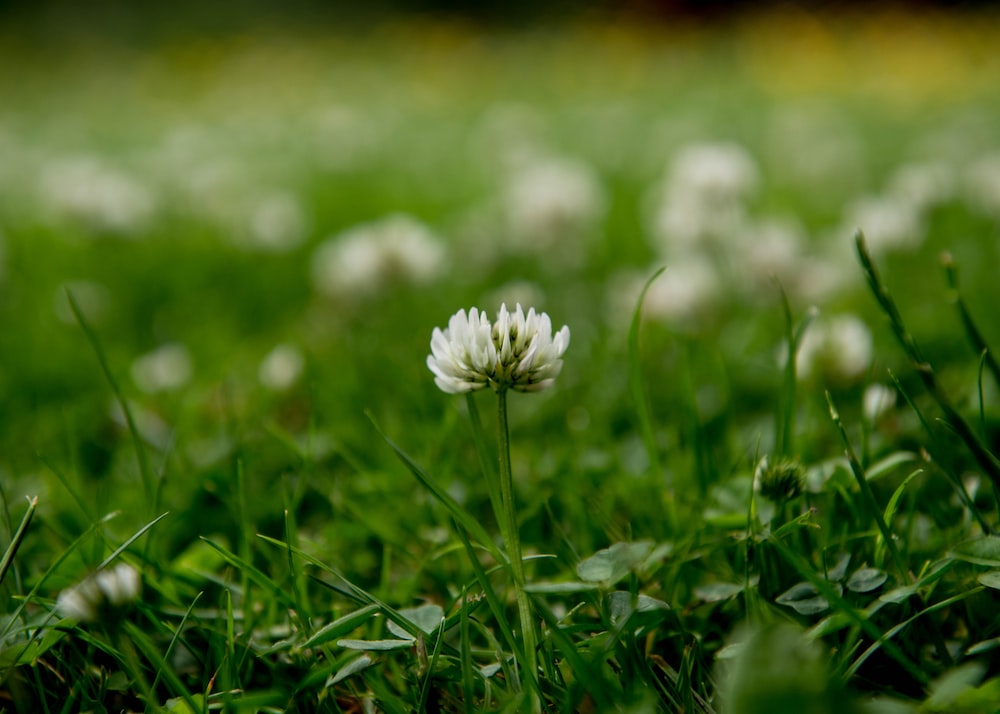
- White clover (Trifolium repens) – also really popular with bees
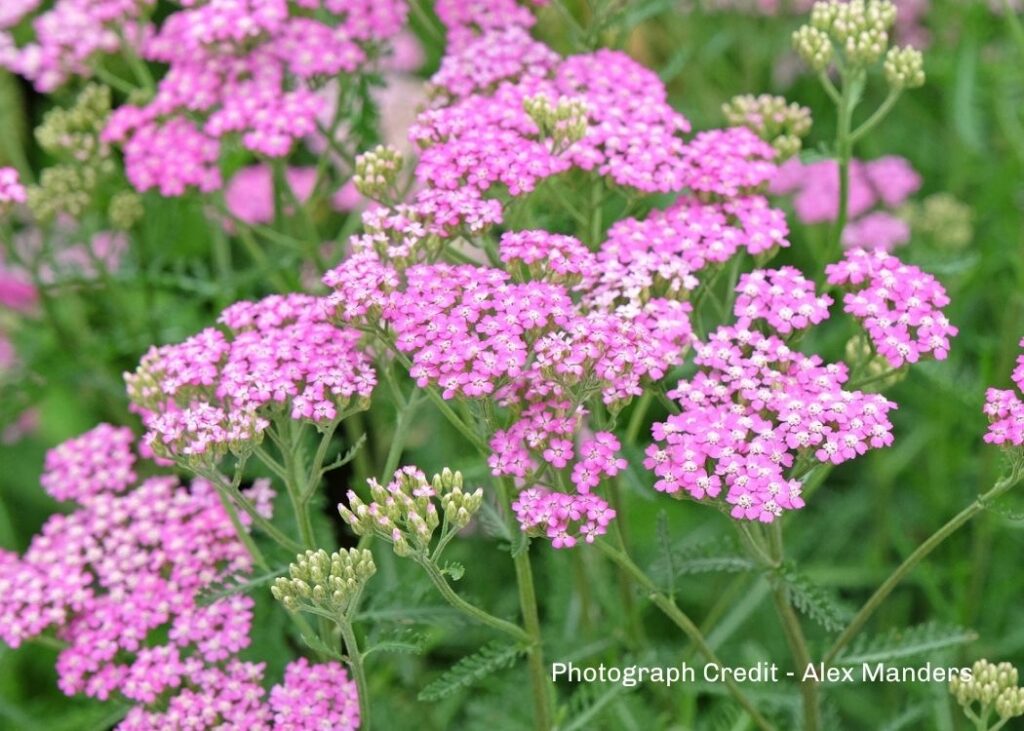
Leaving turf to grow even longer (to about 20cm/8 ins) will allow other flowers such as red clover (Trifolium pratense) and wild yarrow (Achillea millefolium) to flourish. You could even plant some bulbs such as snake’s head fritillaries (Fritillaria meleagris) and allow them to naturalise.
Wildflower lore:
In planting lawn flowers you’re tapping into a rich cultural heritage. The common names (of which there may be several for each plant) illustrate this. Scarlet pimpernel, for example, is also known as old man’s weathervane or shepherd’s weatherglass because its flowers close as bad weather looms and the atmospheric pressure falls. And many of the plants traditionally had medicinal uses. Eyebright was used to treat eye infections. Self heal was used to cure everything from boils and burns to sore throats and fevers. And speedwell was believed to bring good luck to travellers. If found by the roadside, wearing it in your buttonhole was said to ease your journey and speed you on your way.
Have mercy on moss!
This understated natural wonder is all too often seen as the enemy of lawns. But in fact it has a great deal to offer. It thrives in areas of damp shade where some plants and grass may struggle. It can survive dry conditions but sucks up an awful lot of water when it’s available, helping to prevent flooding. And half a square metre of moss is said to absorb more CO2 than a small forest – in fact sphagnum moss is increasingly being used as an ecosystem engineer to create carbon sinks.
Have you ever walked on a patch of moss in your bare feet? Soft, spongy and cool, it will give you a blissful foot massage on a hot day. And the tiny, intricate detail of its structure is mesmerising – it adds texture and interest to lawns. So my advice is to leave it alone and encourage it if you can. It will add considerably to the beauty and diversity of your lawn and to your quality of life.
https://www.newscientist.com/article/dn22313-scattering-moss-can-restore-key-carbon-sink/
If you love your lawn and want to keep your grass but make it a bit more eco-friendly then a wildflower-rich lawn is a good solution. Let’s face it, most of us don’t have a perfectly green, smooth sward anyway – we already have daisies and dandelions popping up here and there. So why not embrace what nature is trying to do and go with it? You’ll be glad you did.

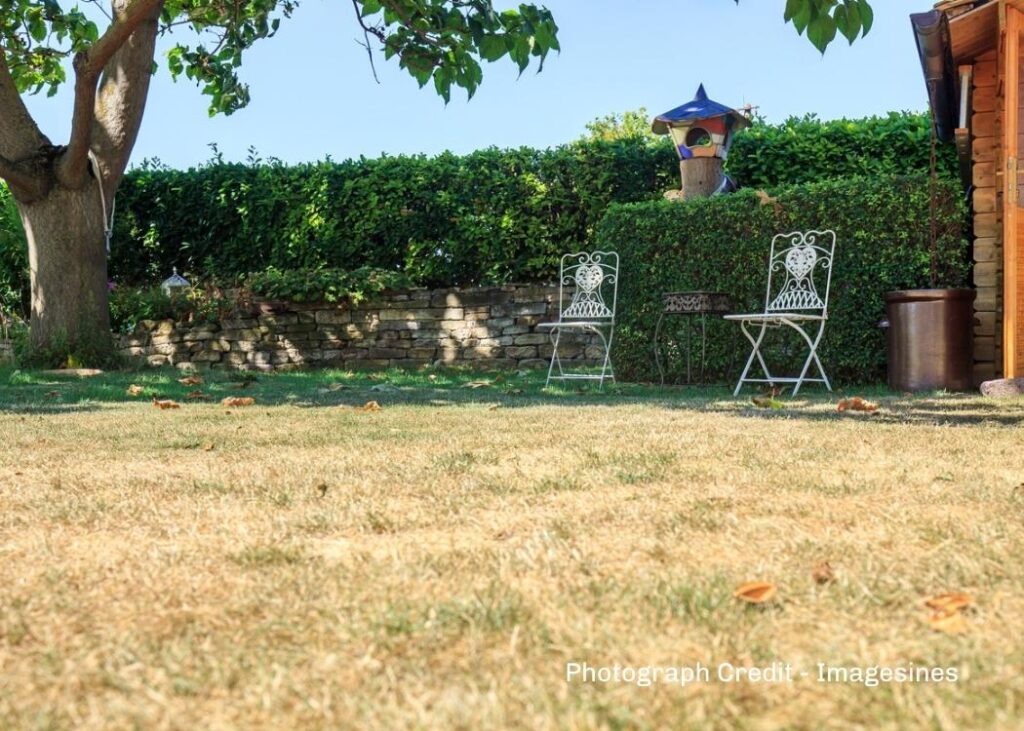






My house was built about 15 years ago on the site of a demolished school in North Norfolk, and the demolishers filled in the old cellars with brick rubble. Consequently the new turf was laid on a maximum of 2 inches of topsoil! It is difficult to get a garden fork to penetrate more than 3 inches! The many efforts in making a decent lawn have failed as also has an effort at making a clover lawn this year…..the very rainy spring and the very dry summer managed to create very large patches of bare earth. No sign of any clover anywhere. I refuse to cover this patch of ground with tarmac, paving stones, or gravel! However, dandelions seem to like the ground!
So, I am thinking of making my small lawn (approx 5m x 8m) into a small Wild Flower ‘pasture’!!
Possible?…if so, what do you suggest that I plant…how and when?
Thanks for any help.