Blog
Hellebores

Hellebores
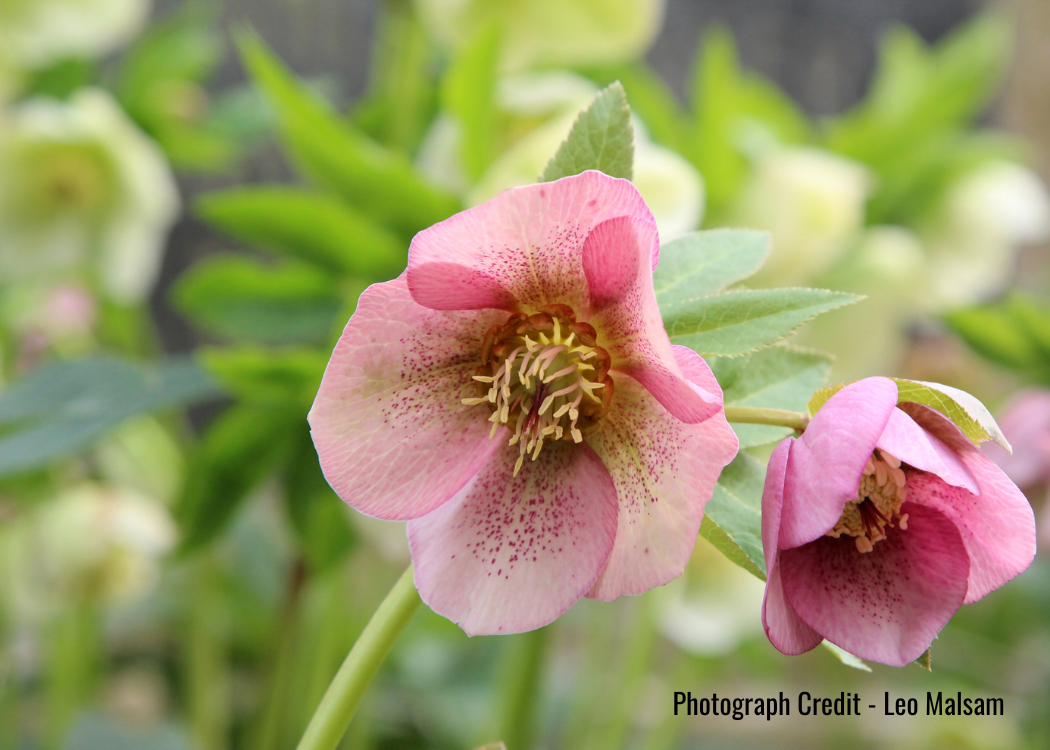
Gracing the winter garden with elegant, cup-shaped flowers in icy white, lime green, dusky rose and blackberry, hardy hellebores are a welcome antidote to bare beds and borders. Shrugging off inclement weather, they make excellent companions for other late winter and spring flowers like snowdrops, primroses and violets.
You may know them as Christmas or Lenten roses, but there are other species and cultivars too, some less delicate-looking but invaluable in the garden nonetheless, particularly in woodland plantings or as partners to evergreen ferns. Most are evergreen themselves, with striking, architectural leaves, often slightly serrated.
A much-needed source of pollen and nectar for insects at this sparse time of year, the flowers of most face slightly downwards and, whether by accident or design, protect foraging pollinators from winter rain.
Easy to grow, hellebores have tough, even leathery leaves, so are not usually bothered by slugs and snails. They generally do best in part or dappled shade but are also happy in full sun. Some will tolerate dark places too.
Hellebore lore
- They’re members of the buttercup family, which includes such surprising and diverse-looking plants as aquilegia, larkspur and clematis.
- What appear to be petals are in fact sepals, leaf-like structures which form the base of flowers and protect the buds.
- The name ‘Christmas rose’ is said to derive from a myth. This tells of a young shepherdess, saddened that she had no gift to give the newly-born Christ. As her tears fell to the ground, the flowers sprung forth.
Helleborus x hybridus (Lenten rose)
Forming a well-rounded colour palette all of their own, these vibrant hellebores proudly embrace both light and dark in jewel-like shades ranging through white, yellow, lime, raspberry and burgundy to almost-black. Some are bi-coloured or speckled with contrasting colours. The flowers may be single or double and the leaves are usually evergreen. Flowers in spring, hence the name. 45 x 45cm. Full sun or part shade.
Helleborus argutifolius
Native to Corsica and Sardinia, H. argutifolius has pale mint green flowers and large, deeply serrated, evergreen foliage. It prefers dappled shade but will tolerate full shade too. Height and spread approximately 75 x 60cm, although some will sprawl more than others.
Helleborus foetidus (stinking hellebore)
Long-lasting, bell-shaped, lime green flowers, often tinged with maroon or purple around the tips, are held on robust, sometimes rust-coloured stems. The finely cut leaves are more elongated than other hellebores. Tolerates full shade. The rather unflattering common name derives from a characteristic of the evergreen foliage, which is said to smell peculiar when crushed, but what it brings to the garden far outweighs this negligible and barely noticeable fault. 80 x 45cm.
Helleborus niger (Christmas rose)
Contrary to what you’d expect from the name (‘niger’ means ‘black’), the flowers are white with the occasional pink tinge and green centres. Preferring part-shade, its blooms are more open and upright than those of some other hellebores. The leaves are semi-evergreen. Why these plants should have been given the epithet ‘niger’ (by Carl Linnaeus, who formalised plant nomenclature) is something of a mystery, although there’s a suggestion that it refers to the colour of the roots. 45 x 45cm.
Helleborus viridis (green hellebore)
Unusual, vivid green flowers which are striking on their own as well as providing an excellent foil for other colours. These plants are semi-evergreen and prefer dappled shade. They’re dainty specimens which grow to approximately 30 x 30 cm.
You’ll find lots more ideas about what you might grow from a hellebore enthusiast here: https://www.thompson-morgan.com/hellebores-article
Hellebore care
Relatively trouble-free, they’re sometimes bothered by black spot, a fungal disease which causes brown and black patches on the foliage. However, cutting off the offending leaves should deal with the problem. Some gardeners remove the old leaves in November as a preventive measure but this means of course that the evergreen foliage – an important feature for many gardens and outdoor spaces – is lost. Others chop off the leaves in late winter (when they often look raggedy anyway) as the new foliage and flower buds begin to emerge.
Mulch in autumn with bark chippings, leaf mould or compost.
While not particularly amenable to transplantation, hellebores will self-seed in unexpected places. They don’t often ‘come true’ to (ie look exactly the same as) their parents, but this can make for some surprise, often exciting, developments in the garden!
Although the stems soon give up and wilt if cut and placed in a vase, the flowers themselves will last a good few days if floated gently in water in a wide glass dish.
Like many plants, hellebores are poisonous and the sap can cause some skin irritation, so it’s best to wear gloves or wash your hands after handling. This does mean though, that deer and other creatures will tend to avoid making a meal of them!
Hellebores’ nodding, often downward-facing flowers mean they really come into their own in gardens with changes of level. Elevated on a slope or in pots on steps, their best features are highlighted when seen from below. Blooming between late winter and spring, with long-lasting flowers, they add much-needed zest to the garden at a time when it can otherwise feel a little bereft of interest.