Blog
The tactile garden

The tactile garden
We know that gardening is therapeutic, supporting us emotionally as well as physically. And this is partly because it can engage several of our senses at once. We often think of the joys of the garden as being those of sight and scent, forgetting the impact of natural sounds on our well-being. Listening to the shushing of trees in the breeze or the soft rustling of grasses is soothing, slows our breathing and calms a panicky, pounding heart. The tactile world, too, is important. Touching soft or furry things, as dog, cat or rabbit owners are contentedly aware, makes us feel better. It releases ‘feel good’ hormones, reducing stress and other negative emotions and promoting happiness.
Our hands are particularly sensitive. This evolved as a survival mechanism, allowing us to pick up vital information about our surroundings and so navigate the world around us. Usually we feel with the tips of our fingers. But the palms of our hands are primed for touch too, with a total of 17,000 touch receptors and nerve endings.
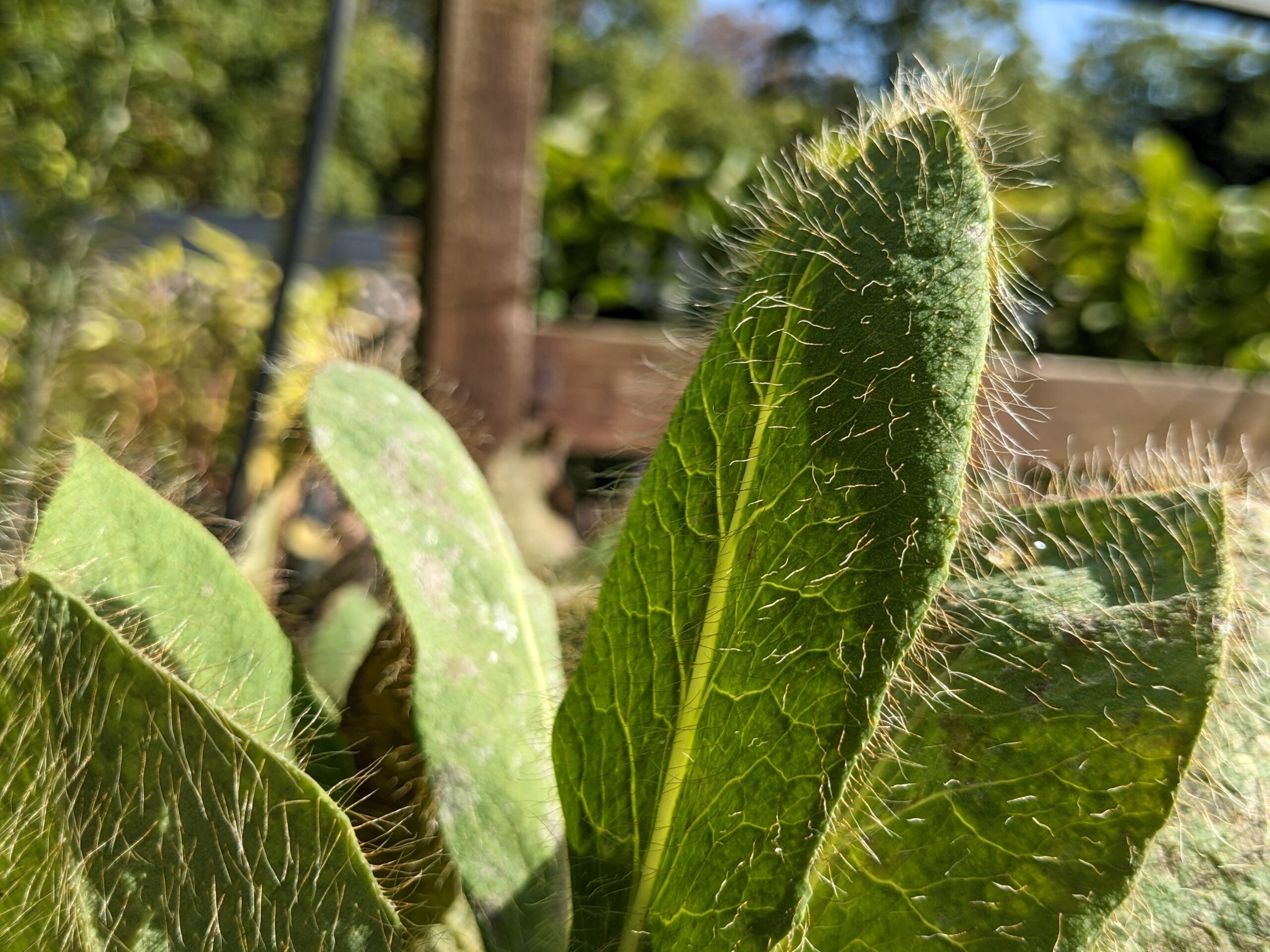
Soft and furry things can, of course, be found growing in the garden and some plants are well-known for their hairy leaves. But in fact almost every part of a plant – including flowers, stems, seeds and bark – can soothe and uplift through touch. The benefits of focusing on the present and being fully aware of our thoughts and sensations are now well established. And allowing ourselves to stop and feel as we move around our gardens means we engage with plants in a more beneficial way.
Velvety
Well-known for their velvety qualities are the grey, woolly leaves of lamb’s ear Stachys byzantina. Verbascums, too, with spires of open flowers in colours ranging from white through yellow to peach and pink, have pleasantly felty foliage. Both like a sunny spot and are popular with pollinators. And as you begin to explore the tactile possibilities offered by plants you’ll find unexpected, hidden gems such as the downy spent stems of scented geraniums.
Furry
Stroke the mature leaves of geums in late summer and you’ll find them surprisingly furry and the soft tufts that form the flowerheads of pennisetums are even more soothing to the touch. These sun-loving grasses have a tranquil, hazy look when planted in groups, particularly against the backdrop of early morning or late evening sunlight.
Tickly
Pass your hand over the airy sprays of evergreen grass Deschampsia cespitosa, or the clouds of frothy flowers of Cotinus coggygria (aka smoke bush). In a similar vein, Callistemon citrinus has masses of tiny flowers like scarlet bottlebrushes and contrastingly stiff, cardboardy leaves. Or lightly cup your hand over the multi-bloomed flowerheads of Thalictrum aquilegifolium or purple Alllium giganteum and feel their caress.
All will do well in sunny spots. Callistemon is half-hardy so grow it against a sheltered wall or in a pot that can be brought into a frost-free place for winter.
Feathery
Brush your fingers across the silvery leaves of Artemisia ‘Powis Castle’ or equally aromatic, sunny yellow, orange and copper-flowered French marigolds. The delicate, finely-cut foliage of asparagus-like dill and fennel and the hair-like flowerheads of grass Stipa tenuissima will all waft gently in summer breezes as well as feeling delightfully feathery, while the spidery seedheads of Clematis tangutica or C. macropetala, like the wild hair of a distracted Albert Einstein, add a touch of eccentricity.
Silky
The needles of pines are often spiky but the bright green cascading tassels of Pinus wallichiana are gorgeously soft and silky. It grows too big for most domestic gardens but if you spot one in a public place, do indulge in a fondle. There’s one conveniently placed by the picnic area at Scotney Castle in Kent. And the graceful, arching flowerheads of Miscanthus sinensis or silvergrass appear in late summer, providing interest through autumn when other plants are winding down.
Spongy
Also too large to grow in most private gardens are the giant redwood, Sequoiadendron giganteum and coastal redwood, Sequoia sempervirens. But their coppery bark has a wonderfully spongy, furry texture and is incredibly thick, sometimes up to 60cm in mature giant redwoods. This is a defence against fire, encountered routinely in their natural habitats as part of the natural cycle. These remarkable trees can grow to over 100m tall and it’s thought they’re able to live for an awe-inspiring 2,000 to 3,000 years, although sadly they’re now endangered as a result of climate change and other threats. Give one a hug if you find it in a public garden. Scotney Castle also has fine specimens of both. https://www.nationaltrust.org.uk/visit/kent/scotney-castle
Press your palm gently on the soft flowerheads of frothy cotinus, callistemon, or thalictrum and you’ll be rewarded by a delicious, springy softness.
Smooth and shiny
The rich, deep chestnut of Prunus serrula bark is matchless in its satiny sheen, but the ghostly white of silver birch Betula utilis var. jacquemontii in low winter light provides stiff competition. Also well-worth stroking is the pale copper paperbark maple (Acer griseum) which has the added attraction of fiery leaves in autumn. All three gradually shed their bark in peeling strips as the tree grows so the surface is both rough and smooth, enriching the textural experience. All are small or medium-sized too so can be accommodated in a modest-sized garden.
It’s not just the soft and furry that afford us a positive tactile experience, however. Some plants are rough or prickly without being disagreeable and in fact, touching anything that feels pleasant can boost our sense of tranquility.
Rough
The textures of tree bark can be extraordinary, from the elephant hide of ancient oaks and the gnarled, knobbly surface of aged apple trees, to the braided furrows of willow and the deep and flaking grooves of hawthorn.
https://www.treeguideuk.co.uk/mini-guides/bark/
Gently prickly
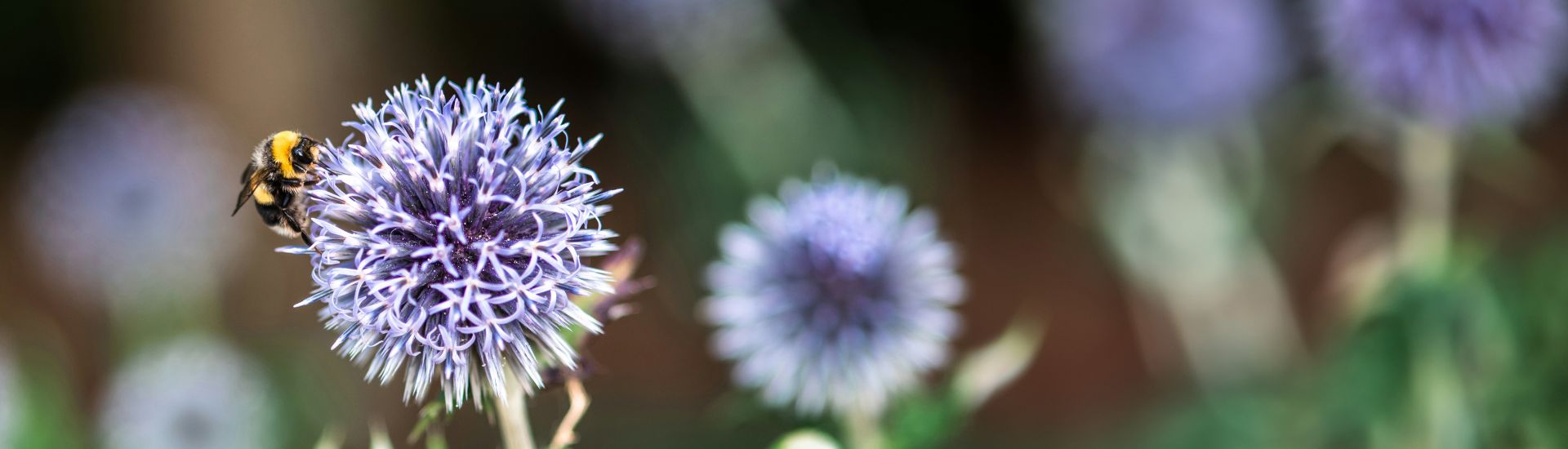
Spikey isn’t always bad! Cup your hand over the flowerhead of a rounded blue echinops or the coned centres of echinacea and eryngium and you’ll see (or feel) what I mean.
https://www.thrive.org.uk/get-gardening/engaging-our-sense-of-touch-in-the-garden#
So do go out and investigate the tactile pleasures of the garden. Brush, stroke, caress and fondle your plants and see what you discover. And perhaps extend the exploration beyond your hands. On a warm, late summer day, take your shoes off, wriggle your toes and with bare feet feel the gentle heat of paving stones or the soft coolness of grass. Damp, springy moss is especially delightful. You’ll find that enhancing your sensory experience in this way lifts things to a whole new level.