Blog
Autumn Colours

Now that the nights are drawing-in and temperatures are dropping you may not feel like venturing out into the garden, and if you do it is probably just to rake-up fallen leaves.
Autumn is a good time to tidy up, but it is also important to take time to enjoy Nature’s magical kaleidoscope of colour before the leaves finally drop.
Walk around your locale and you will see butter-yellow leaves on ash trees and peach tones on maples. Many other trees, shrubs, and climbers are now showing autumnal hues too.
Why does this fascinating phenomenon happen?
The trigger for the development of autumn colour is the reduction of day length combined with lower night temperatures.
Trees and shrubs use a green pigment called chlorophyll to produce sugar from carbon dioxide taken from the air, powered by energy from sunlight.
Deciduous trees and shrubs, those that shed their leaves at the end of the growing season, go through a process of shutting down photosynthesis as they head towards winter.
Chlorophyll is constantly being broken down and replaced during the growing months, but in autumn the process of replacement slows. This means that other compounds present in the leaves can be clearly seen as they are no longer masked by green chlorophyll.
Pigments such as yellow flavanols, orange carotenoids and red anthocyanins finally become visible, igniting the trees and shrubs in our gardens with brilliant colour. Anthocyanins help protect the leaves from cold and insect damage while valuable nutrients are being reabsorbed.
As a tree becomes dormant a chemical called abscisic acid builds and enables the old leaves to loosen and fall. Leaf drop is controlled by the tree – it often occurs as a simultaneous leaf-fall after the first sharp-frost. You have probably witnessed a tree suddenly dropping all its leaves on a still and sunny day and thought no more about it. By shedding its leaves in a controlled manner, they are not scattered by the winds, and instead decompose and improve the ground around the tree that produced them.
The Trees
One medium-sized tree I can recommend for outstanding purple foliage in autumn is Fraxinus angustifolia ‘Raywood’, the claret ash. Another good option is a multi-stemmed Parrotia persica, the Persian ironwood. Parrotia leaves turn yellow before flushing into red and purple.
The reliable sweetgum (Liquidambar styraciflua) is a large, deciduous tree with glossy maple-like leaves which turn to wonderful shades of orange, red and purple.
Japanese maples produce leaf colours in many rich colours and tints. I particularly like those with scarlet and crimson shades.
Fruiting and flowering cherry trees will add autumn glory to your garden with foliage that turns shades of gold, orange or red before shedding to fall to the floor, revealing the burnished beauty of their trunks.
Amelanchier canadensis is an excellent tree for a small garden. It is always early to get its autumn colour, and the leaves change through a series of colourful tints.
The smoke bush (Cotinus) and the sumac (Rhus typhina) are two large shrubs with leaves that turn red and orange in autumn, also suitable for smaller gardens.
Shrubs: Berried Treasure!
Shrubs carrying clusters of jewel-like berries add impact to the autumn garden. The firethorn (Pyracantha) produces abundant flame-coloured berries that are loved by both gardeners and wildlife. This prickly shrub responds well to hard pruning and can be trained up against a wall for a spectacular display. I particularly like the varieties ‘Red Column’, ‘Orange Glow’, and the yellow-berried ‘Soleil d’Or’.
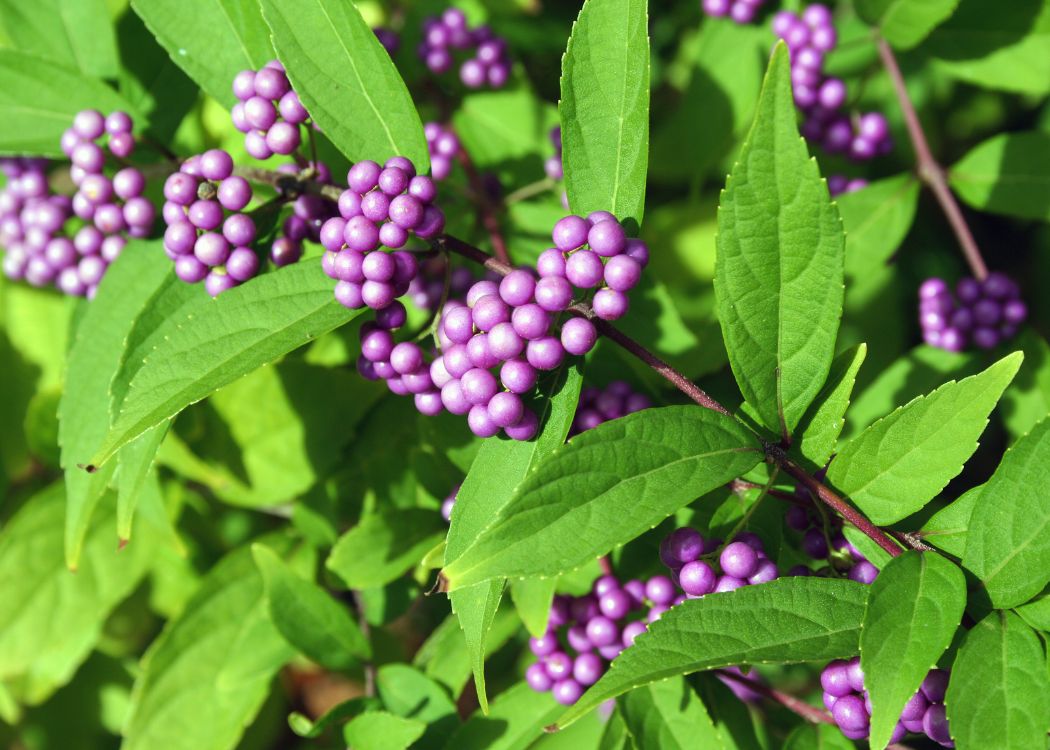
The beauty berry (Callicarpa bodinieri ‘Profusion’) is a shrub that always gets noticed. It produces clusters of small, violet berries amid its red-tinted autumn foliage. Callicarpa likes a sunny position. These amazing berries feature in the photograph at the top of this article.
The spindle tree (Euonymus europaeus) is a native shrub that has amazing autumnal foliage – the leaves flame red. To add to the display its pink-winged fruit open to reveal orange seeds. Spindles prefer a rich, well-drained soil in sun to partial shade.
Enkianthus perulatus is an underused shrub that produces deep purple-red foliage and dark berries in autumn. Enkianthus produces hanging umbels of white, bell-shaped flowers in spring. It requires ericaceous compost.
Clerodendrum trichotmum var. fargesii, Cotoneaster, Skimmia reevesiana, and Viburnum opulus are some more autumn fruiting shrubs that carry very attractive berries.
Coloured Stems
Salix ‘Golden Curls’ and ‘Scarlet Curls’ produces fascinating twisted stems of gold or scarlet, and foliage that turns golden-yellow before falling. These are useful plants for moist soils. They need to be cut-back hard in winter to encourage the production of brightly coloured new wands.
Common dogwood (Cornus sanguinea) has bright red stems that shine out in the garden in autumn and winter. To keep the stems fresh and colourful, cut back a third of the old stems to the ground each spring. Cornus sericea ‘Flaviramea’ has bright yellow stems that look great planted against evergreen shrubs.
Climbers
Chinese Virginia creeper (Parthenocissus henryana) is less rampant than other forms of this climber, but its foliage still turns a fiery crimson in autumn.
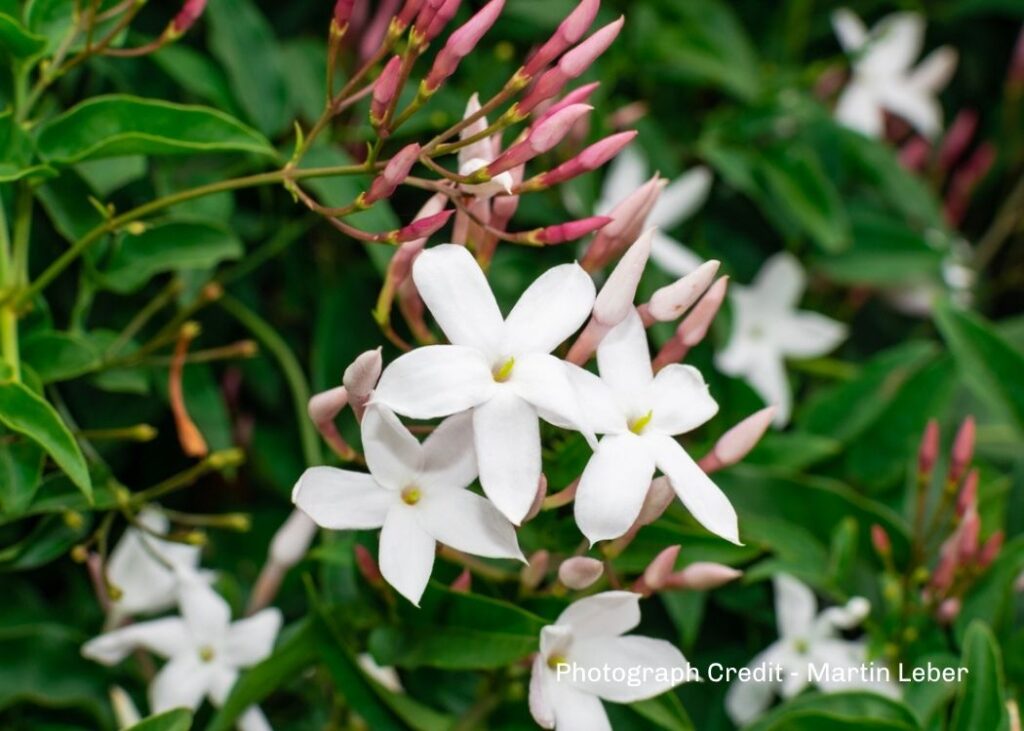
Star jasmine (Trachelospermum jasminoides) is valued for its white summer flowers and delicious perfume; however, it also adds a further season of interest with its red-bronze autumn foliage. I have found that the colour is best in established specimens that have been planted directly into the ground.
Purple-leaf grape (Vitis vinifera ‘Purpurea’) is an ornamental grape cultivated for its amazing foliage. Its green leaves turn purple in summer, changing to bright scarlet in autumn. Hanging bunches of black grapes add extra colour and interest in autumn, bringing the feeling of ‘mists and mellow fruitfulness’ to your garden. This classic vine looks superb when grown against a red brick wall.
Autumn Flowers
Autumn is not just coloured foliage and bright berries. It brings its own seasonal flowers. Autumnal species of crocus, cyclamen and oxalis share the same delicacy as their spring relatives. Colchicum, Sternbergia and Nerine add height and drama to garden borders.
Autumn-flowering cyclamen thrive in the dry beds under trees and hedges. The turf lily (Liriope muscari) can also be relied on to produce long spikes of purple or white flowers amid its grassy evergreen leaves in dry, shady situations.
Michaelmas daisies (now botanically known as Symphotrichum) and sedums such as ‘Autumn Joy’ (now classified as Hylotelephium ‘Autumn Joy’) are free-flowering, hardy perennials that thrive in free-draining soil in a sunny situation. The pink or white saucer-shaped flowers of Japanese anemones adds late season interest to borders. They grow well in sun or shade in a rich, well-drained soil.
In Conclusion
Even though summer maybe over, it doesn’t mean that enjoying your garden needs to stop. Gardens can still look good thanks to the many trees, shrubs, and perennials that come into their own during the season. A garden can be as stunning as a Burne-Jones’ stained-glass window thanks to autumnal flowers, bold foliage, fiery berries, and bright stems. Autumn is the perfect time to plant trees and shrubs while there is still warmth and water in the soil. So why not make room in your garden for some striking plants for the autumn months?
Where To See Autumn Colour:
Westonbirt Arboretum – home to a collection of 2,500 different species of trees.
https://www.forestryengland.uk/westonbirt-the-national-arboretum
RHS Wisley – a large and beautiful garden with an extensive arboretum.
https://www.rhs.org.uk/gardens/wisley
Myddelton House Gardens – a diverse collection of plants, at the former home of the garden expert and writer E.A. Bowles.