Blog
Some of us are looking at the stars: Growing asters in the garden

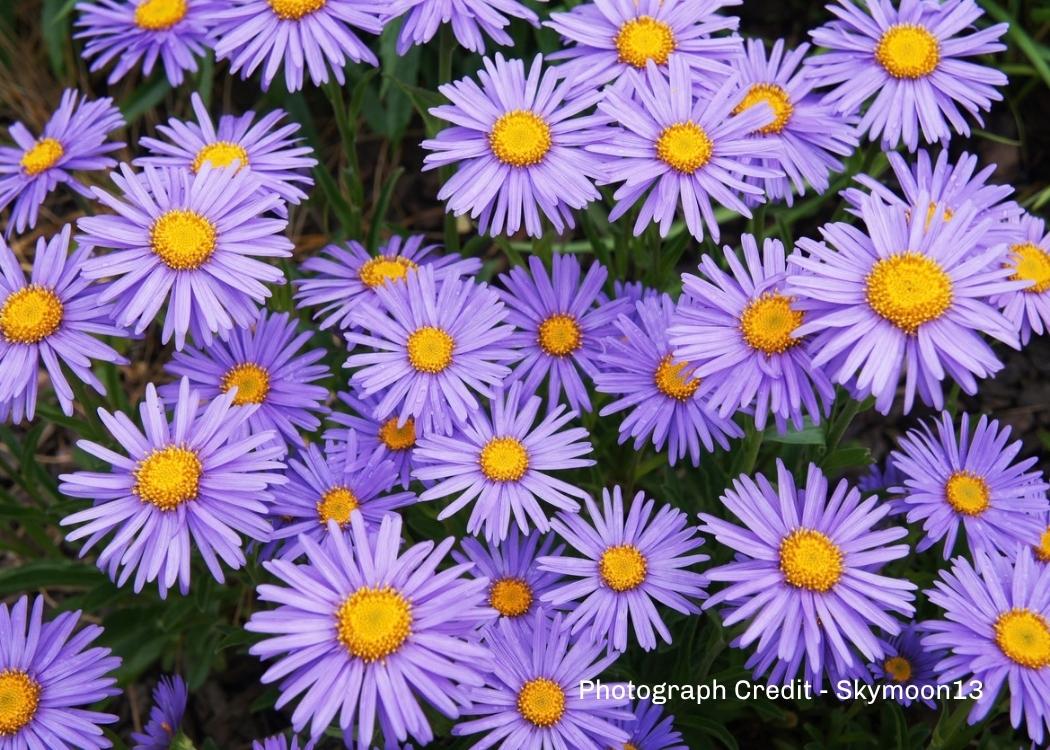
‘Skegness is SO bracing’ declares the Edwardian poster proudly advertising the merits of this Lincolnshire resort. And indeed it is, as is Rye Harbour, way down in East Sussex. These wild, blustery landscapes, which at first can seem a little bleak and empty, are in fact teeming with life, the mudflats and saltmarshes of their nature reserves home to flora including white sea campion, indigo viper’s bugloss and the pretty pale lilac sea aster. Blooming in late summer and autumn, defying the brisk coastal winds, its daisy-like flowers are the specialist food plant of the rare sea aster mining bee Colletes halophilus. It’s also an important source of sustenance for caterpillars of the star-wort moth.
‘Aster’ derives from the Ancient Greek word for ‘star’. Arriving late to the summer garden party but putting on a display that more than makes up for it, these luminaries bloom in purple, white, lilac or pink, mostly with contrasting golden centres. Herbaceous perennials, they’re generally hardy throughout the UK. Best grown in a sunny spot in moist and fertile but well-drained soil, many also do well in light and dappled shade.
Also known as Michaelmas daisies, their variety in height and size speaks to their origins, some from mountainous areas, others from the wide open spaces of the North American mid-west and adapted to hot summers, cold winters and low rainfall. This makes them a good fit for a host of garden styles, from rockeries and cottage gardens to prairie plantings.
For butterflies and bees
When it comes to planting for pollinators, asters are among the big hitters. Despite their simple appearance, the head of each flower is composed of many tiny florets, each making its own supply of pollen and nectar. That’s a significant amount of food in one place, meaning that pollinators can forage with minimal energy expended moving between blooms. Open flowerheads allow easy accessibility to nectar and pollen for short-tonged insects while their flat centres also make perfect landing pads. As a result, asters are popular with all sorts of insects – bees, ants, lacewings, hoverflies, beetles and butterflies.
(Did you know? The 1918 Hungarian Revolution was known as the aster revolution, the flower worn as a symbol by protesters.)
The group of plants commonly still thought of as ‘asters’ have in fact been reclassified after studies of their DNA revealed differences between them and subdivided, with two main categories, asters and symphiotrichum. Such is the world of plant nomenclature. Asters have their origins in Europe and Asia, while symphiotrichum (and eurybia) hail from the Americas. The latter have tended to flower slightly later, although it may well be that this distinction is being eroded by climate change. For ease of writing, both are referred to as asters here.
Asters in the garden
Give them free rein and plant in swathes in prairie plantings, where tall, bright pink Symphiotrichum novae-angliae ‘Andenken An Alma Potschke’ and smaller, royal purple S. novae-angliae ‘Purple Dome’ shine among salvias, rudbeckias and ornamental grasses. Or use the more muted lavender blue of ever popular Aster x frikartii ‘Monch’ to tone things down a little.
For rockeries choose small plants with mountain origins. Try lilac Aster x frikartii ‘Flora’s Delight’ or Aster alpinus. In beds and borders, pale rose pink S. novae-angliae ‘Harrington’s Pink’ sits well at the back while lilac Aster pyranaeus should be placed midway and S. novi-belgii ‘Little Pink Beauty’, at only 30-40cm tall, is perfect for the front. For woodland plantings with dappled shade try small-flowered, rosy stemmed white Eurybia divaricata or bushy, lilac flowered Symphiotrichum ‘Little Carlow’.
Aster care
Asters need good drainage, especially in winter. Although frost-hardy, having wet feet for prolonged periods in cold conditions may see them off. If growing in pots move to a rain shadow if possible.
Although they flower abundantly without deadheading, they tend to become ragged-looking if spent blooms aren’t removed. Pinching out the top shoots in midsummer encourages more flowers when their season arrives and lifting and dividing every four years in spring keeps them healthy and flowering well. Tall varieties may need staking.
Cut back to just above ground level in late autumn or leave the stems and faded flower heads in place as shelter for insects. Although not their first choice, hungry birds will take advantage of the seeds if other food sources are scarce.
Asters are fairly trouble-free although they can be prone to powdery mildew. The European forms are more resistant than some others. Good spacing of plants to ensure airflow helps keep it at bay, as does not allowing the soil to dry out too much. Water well when the soil is dry instead of watering more sparingly and often.
We may not have all the plants listed in our stores but staff will be happy to suggest alternatives.
The invigorating climes of Skeggy and Rye Harbour may not be for the fainthearted outside summer but are precious habitats and worth the occasional buffeting for fans of coastal flora and fauna. Most of our gardens, luckily, are rather balmier. And while sea asters may not be the first plants to spring to mind when planning your planting, their European, Asian and American cousins are stars of the late summer and autumn garden.
https://www.rhs.org.uk/plants/plant-families/asteraceae-plant-family
https://www.gardenersworld.com/how-to/grow-plants/how-to-grow-asters