Blog
Pumpkins: ghoulish gourds for Halloween


Pumpkins: ghoulish gourds for Halloween
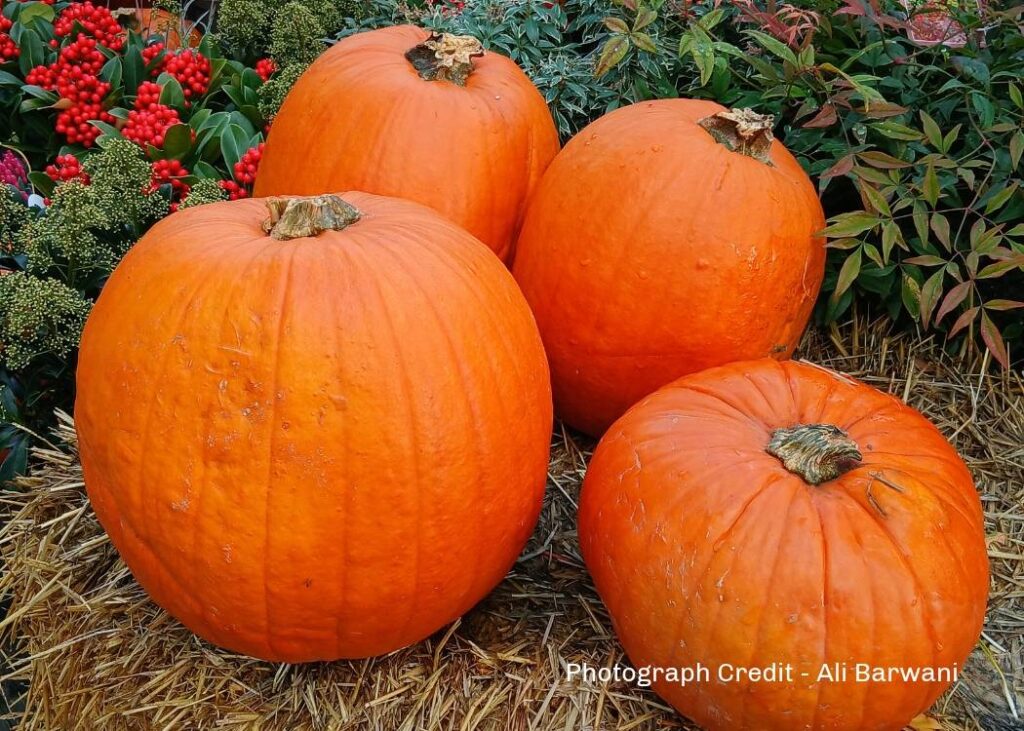
Autumn has well and truly arrived, and echoing the fiery leaf colour setting the countryside aglow is the flaming orange of pumpkins on display in porches, gardens and fields, telling us that Halloween is on its way.
Pumpkins, or Cucurbita pepo, are a type of squash native to North America. It’s thought that C. pepo was bred from small, bitter wild species and evidence of their cultivation has been found in Mexico dating back to approximately 7,000 years ago. Their flesh, flowers and seeds are all edible and young leaves are also consumed in indigenous and modern Mexican cuisine. High in vitamins A and C, pumpkins keep well over winter – a hungry season for many – lasting up to six months if stored correctly.
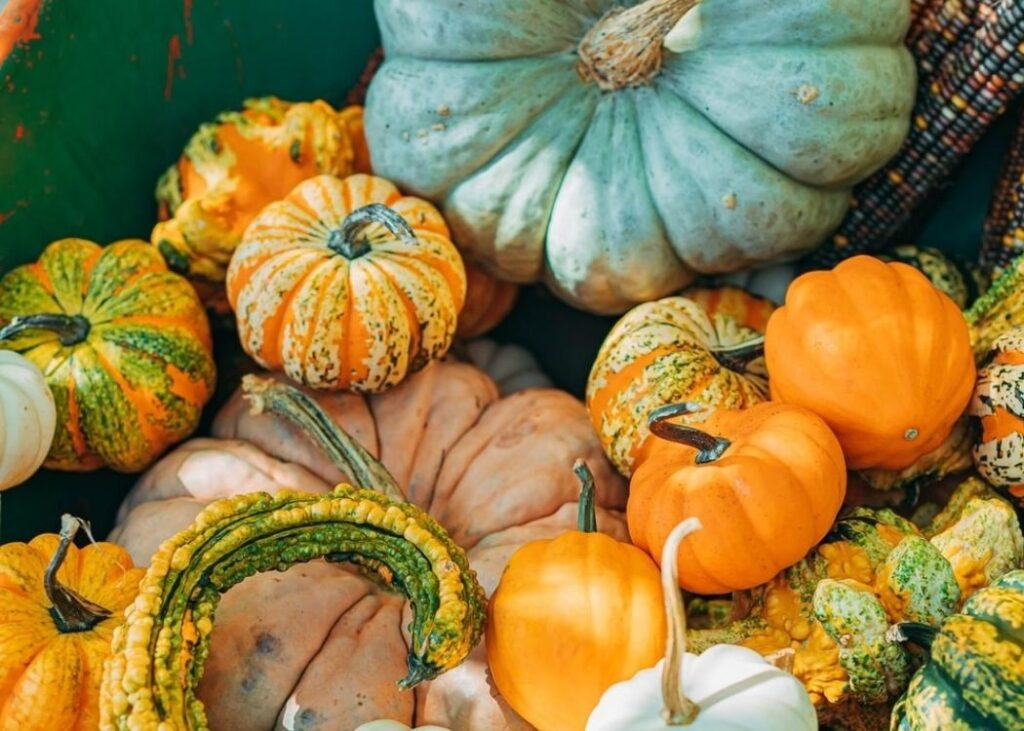
Pumpkins, other squash, cucumbers, melons and courgettes are all members of the same plant family, the cucurbits. Most are vines, with long stems in their natural forms,but varieties of pumpkin and squash have been bred with shorter stalks for easier cultivation. Dried and with the flesh scooped out, squashes lend themselves to a variety of uses, as ladles, bowls and for storing food and liquid. They can also be transformed into musical instruments.
Pumpkin trifles
· The record for the world’s heaviest pumpkin was set in October 2023 with a specimen weighing an eye-watering 1,246.9 kg (2,749 lbs.) That’s over a ton. For comparison, a fully grown adult male polar bear only weighs somewhere between 300 and 800kg, or 660-1,760 lbs.
· Although we think of them as vegetables, pumpkins, botanically speaking, are fruits.
· They first appeared in this country in Tudor times, introduced by the French, and quickly became popular as they were relatively easy to grow and stored well.
· ‘Pumpkin’ is thought to come from the French ‘pompion’ (meaning any kind of edible squash). But it seems likely that its original source was the word ‘pohpukun’ in the language of the Wampanoag people, who were native to Massachusetts and may have introduced the fruits to early English settlers.
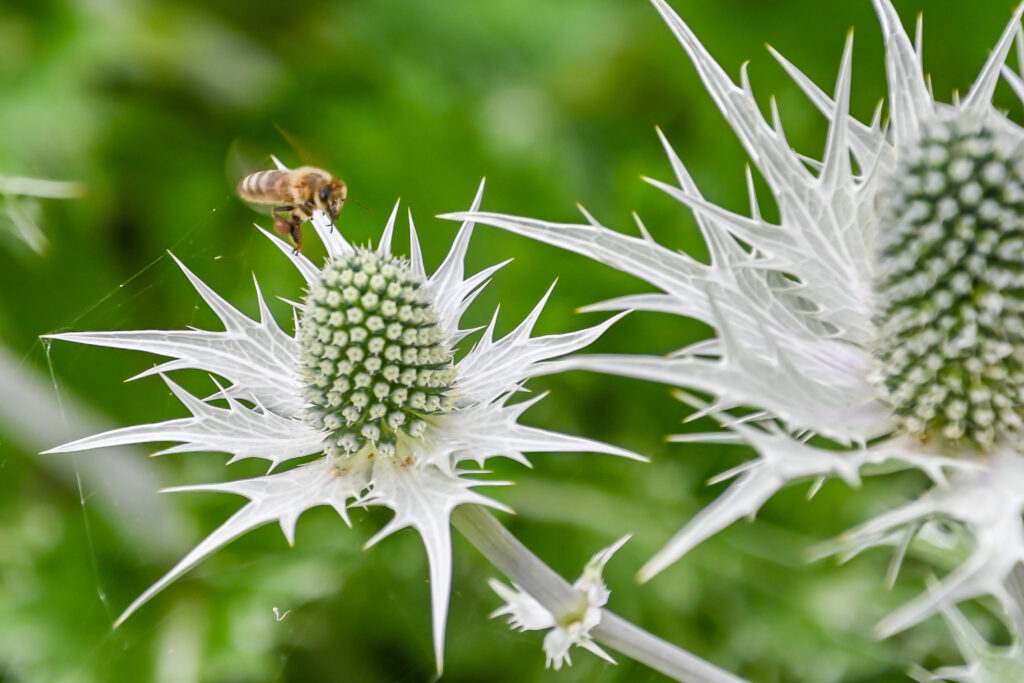
· Pumpkins and other squash have historically been pollinated by squash bees, who are adapted to and specialists of a number of cucurbits and whose leg hairs are shaped to accommodate the large, coarse pollen grains of squashes. Sadly, they’re now in decline due to pesticide use and other factors.
Why are pumpkins associated with Halloween?
Halloween, or All Hallows Eve, is a Christian celebration marking the start of a period of remembrance of the dead. However, it’s likely to have its roots in Samhain, a Celtic festival held at the end of summer and the beginning of the dark times of autumn and winter. This was believed to be a liminal time when the boundary between this world and the world beyond was thinned and supernatural beings from the other side were able to push through. The sprits of the dead were thus said to be abroad, visiting their former homes and requesting hospitality. So places were set for them at tables and firesides, and festivities included rituals and games like apple bobbing which still take place today.
Originally, large root vegetables such as turnips and mangel wurzels were hollowed out and carved into faces. These were made into lamps – either representing evil spirits or for the purpose of warding them off – and placed on windowsills or in doorways.
This tradition is said to have been brought to North America by Irish, Scottish and other Celtic immigrants. Gradually, pumpkins were substituted for turnips as they grew locally, were harvested at this time of year and were larger and easier to carve. These Jack-‘o-Lanterns, as they were called, then found their way back over the Atlantic to become a Halloween tradition here.
(Did you know? Jack-o’- Lantern is another name for will-o’-the-wisp, a ghost light or elemental spirit seen over bogs and swamps which leads travellers astray. Many countries have similar traditions.)
Pumpkins also play an important role in Mexican Day of the Dead festivals. Usually taking place on 1st and 2nd November and associated with Halloween, Dia de Muertos was, however, celebrated by indigenous peoples for thousands of years before the arrival of the Spanish. Intricately and colourfully decorated, pumpkins are placed as offerings on ofrendas – the altars created to commemorate the departed. Calabaza en tacha, candied pumpkin, is also prepared as a sweet treat.
Growing pumpkins
Pumpkins can be grown from seed sown indoors in April and May and planted out when all danger of frost has passed. A simpler alternative is to buy young plants in spring, although these will need protection from frost too. They’re hungry plants, needing lots of food, water and sunlight, so dig lots of compost or well-rotted manure in when planting. Not surprisingly, given their trailing habit, they need space too and ideally should be planted about a metre apart. However, the good news for those of us with small outdoor spaces is that they can be trained up and over walls, trellises and arches. Choose smaller and medium-sized varieties (better for eating) for this method though, as the stems may not be strong enough to support the large ones (better for carving). https://www.gardenersworld.com/how-to/grow-plants/how-to-grow-pumpkins-and-squash/ https://www.rhs.org.uk/vegetables/pumpkins/storing
Halloween pumpkin sales abound in garden centres including most of our very own Capital Gardens branches. Scoop the flesh out and relish roast pumpkin, pumpkin soup, toasted pumpkin seeds sprinkled on feta cheese or any number of other delicacies. Take a sharp knife (be careful) and let loose your imagination, carving devilish faces, animal silhouettes, woodland scenes or swirling floral patterns, according to your mood and inclination. https://www.bbcgoodfood.com/howto/guide/pumpkin-carving-templates