
Blog
A tree is not just for Christmas – some eco-friendly ways to re-use and recycle it

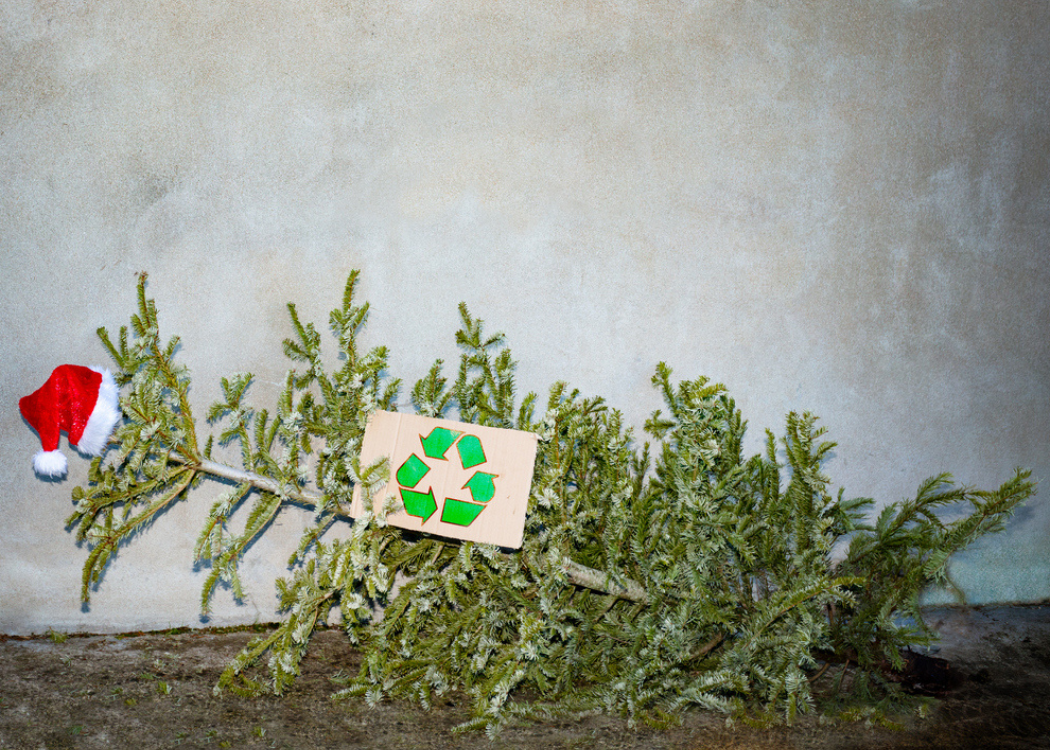
Seeing rejected Christmas trees dotted along the streets once we’ve come to the end of our celebrations can be a bit of a melancholy sight. But there’s really no need. Your tree, although very un-cat-like in most respects, has many potential lives. You may, for example, be able to keep it alive over the next 11 months and use it again next year. And if this isn’t an option there are other creative ways to re-use or recycle it.
The kind of life it leads once the festivities are over will depend on the type of tree you bought.
Container-grown trees
These have been planted in their containers as seedlings and grown on to their present size. This means they have full root systems. So assuming it hasn’t been sitting next to the radiator or become dehydrated, you should be able to plant it outside and bring it back in to swathe in tinsel and lights again next year.
What’s the best way to do this?
Plant your tree outside in a sunny spot, either in the ground or in a slightly larger container than the one it’s in at the moment. A pot is much the best as digging it up out of the ground is likely to disturb its roots and there’s a good chance it won’t survive. Make sure the container has drainage holes though. Root rot caused by waterlogging is another potential killer.
First, though, it will need to be acclimatised to the outside temperature. This can be done by moving the tree into a cooler position such as a cold conservatory if you have one. If not, place it outside in a sheltered area, for example next to the house wall, for a few hours each day and bring it in at night. Gradually increase the amount of time you put it out for over a couple of weeks. It then can be left outside.
Christmas trees, like all conifers, prefer well-drained, slightly acidic soil. John Innes No. 3 compost will do nicely. Several brands of John Innes No. 3 do contain peat, however. So if you can’t get hold of a peat-free one, try peat-free multipurpose compost with about 10-20% grit or bark chippings mixed in to improve the drainage.
Water regularly especially during long, dry spells. You’re aiming to keep the compost damp but not soggy.
Potted trees
These have been grown in the ground, lifted when they reach a certain size and replanted in a pot. They’re unlikely to last from year to year as some of their roots will have been cut when they were taken out of the ground.
Cut trees
As these have no roots at all they won’t survive either.
So how can I re-use my cut or potted tree?
Build a wildlife shelter
Use your handy saw (every home should have one) to cut up the branches, or borrow one from a neighbour who’s better equipped. Secateurs will also be useful for the thinner twigs. You can then create a pile of the chunky, larger pieces in a quiet corner of your outdoor space. This will attract creatures such as beetles and woodlice, which in turn provide food for frogs, hedgehogs and birds.
Mosses and lichens may also grow there. Both absorb and store carbon dioxide and other pollutants. Did you know that half a square metre of moss can absorb an astonishing 1kg of CO2? That’s more than a small forest. And fungi often colonise dead wood, thus adding an extra, fascinating layer to your homemade ecosystem.
The smaller twigs can be tied together in a bundle and hung from a bush or tree to create a hidey hole for insects.
https://www.wildlifetrusts.org/actions/how-make-log-shelter
https://www.rspb.org.uk/birds-and-wildlife/advice/gardening-for-wildlife/dead-wood-for-wildlife/
Support your plants
Once the needles have dropped, plant the bare tree in a bed, border or container. It can then be used as a frame for climbers and scramblers like sweet peas, nasturtiums or beautiful deep purple Cobaea scandens (aka the cup and saucer plant). Alternatively you can chop the branches into lengths to provide supports for veg crops such as French beans or peas, or save them for smaller herbaceous perennials that need staking in summer to prevent them from flopping.
https://dengarden.com/gardening/Top-10-Climbing-Plants-for-a-Small-Trellis
Use as a mulch
This is a layer of material spread over soil or compost. Pine and spruce needles make a useful mulch for plants, adding nutrients as they gradually decompose and helping to keep weeds down and soil moisture in. Simply keep the tree outside on a hard surface until the needles drop off. Then sweep them up and spread around the base of acid-loving (ericaceous) plants such as camellias, azaleas and blueberries.
There’s a bit of a myth that pine and spruce needles will change the pH of your soil, making it more acid. In fact the change is so minimal that it has no effect on your plants. Although the fresh green needles are fairly acidic, they quickly lose this as they turn yellow and start to break down.
They do make a good mulch for ericaceous plants, however. Not because they increase the acidity of the growing medium but because they don’t actually reduce it. Compost is often used as a mulch. But most compost that we buy has a fairly neutral pH and is a bit too alkaline in content for acid-lovers. (Home compost, though, is said to be slightly more acidic than pre-packaged stuff because of its composition. http://www.carryoncomposting.com/416920214 )
Wood chips from your Christmas tree are excellent for this purpose too. However, you probably don’t have a handy wood chipper at home! Local authorities do though (see below).
You can also cut up the branches into smaller pieces, needles and all, and place over tender plants for frost protection.
Compost it
Your Christmas tree can be composted but it’s not the most compatible form of green waste for your developing pile of black gold. This is because the needles are quite tough and take ages to break down. You’ll also need to chip the wood or chop it up into small pieces. So you may decide it’s not worth the bother when there are so many other re-purposing options.
Local authority collection
Most local authorities will take trees away under their green waste schemes. They’re usually chipped to make compost or mulch.
Donate your tree to charity
Charities have developed some really imaginative ways of giving old Christmas trees a new lease of life. One of the most exciting is their use to help prevent coastal erosion by stabilising sand dunes in the North West, Cornwall and Scotland.
https://www.nationaltrust.org.uk/formby/features/recycle-your-christmas-tree-at-formby
https://www.bbc.co.uk/news/av/uk-scotland-50985836
And in exchange for a donation, some hospices will collect and recycle your tree. This link is for one hospice in particular but the website has a helpful map of ‘Christmas Treecyling Locations’.
https://www.willen-hospice.org.uk/support-us/fundraise-for-us/challenges-events/trees/
And don’t be tempted to burn it…
Making a toasty fire out of your ex-Christmas tree may sound like a jolly idea for some late winter fun. But pine and spruce trees have a high sap content which is very flammable. It burns quickly and sometimes explosively, with a high potential for chimney fires and out-of-control bonfires. The needles will burn in a flash. Literally. Especially if they’ve started to dry out. And they’re high in nitrogen which can release poisonous gases. So your local fire brigade (and your neighbours) will thank you for not going there…
And finally, there are other ways to have yourselves an eco-friendly Christmas next year. Recycling bin full to the brim with cardboard packaging from your online purchases? Add some to your compost pile or start your own home compost project if you don’t have one. Cardboard (in moderation) is a really useful ingredient. Need new decorations? Hang mini-gourds and dried flowers around your home and on your tree. Less shiny than baubles, but less plastic too. Thinking of greening up your living space? Try planting left over pips and stones from tangerines, oranges and avocados. You’ll find more ideas here: https://www.rhs.org.uk/garden-inspiration/seasonal/farewell-christmas-tree
Happy New Year!